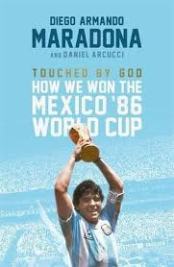
‘Touched By God: How We Won the Mexico 86 World Cup’ by Diego Maradona (2017)

You always assume books by footballers have ghostwriters.  While Daniel Arcucci is named on the book, I hope he was only a translator and that no one who calls themselves a writer put their name to this book.  Touched by God reads like a 3 or 4 hour long stream of Maradona’s consciousness as if someone asked him an open-ended question about the 1986 World Cup.
Maradona

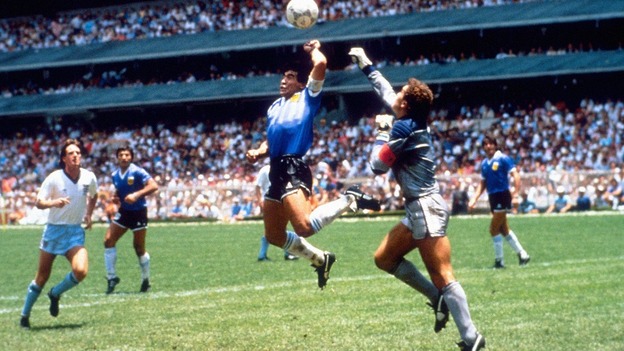
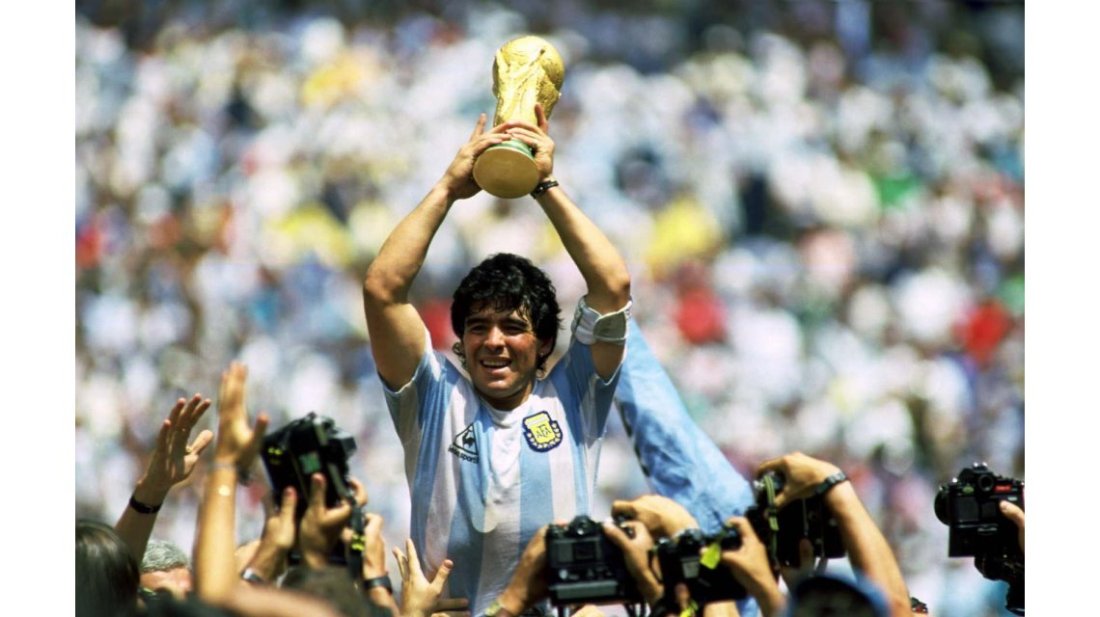
Maradona’s telling of this story is designed to big up his friends in the team and downplay the role of manager Carlos Bilardo who he fell out with when Bilardo criticised Maradona as Argentina manager in 2010.  Considering almost all football fans acknowledge Maradona won the cup largely single-handed, its amazing he sees the need to be so critical and dismissive of Bilardo.  Mardaona claims that the players, and himself, deserve almost all the credit for the team being well prepared and for their fitness levels by actively railing against Bilardo’s original plans.

Maradona’s personality certainly shines through – ego, craziness and an amazing ability to hold a grudge.  At times it feels like half the book is score settling with Bilardo and former captain Daniel Passeralla – with a little bit of spite left over for ‘that heartless turkey’ Platini. He has some kind words for certain teammates in particularly Brown and Ruggeri.

Probably the biggest flaw in the book is that it makes so many assumptions that you know who and what Maradona is talking about.  If you don’t already know a huge amount about Maradona, Argentina, the players of that era and the ’86 World Cup you will be totally and utterly lost for the first chunk of the book.
maradona 2

The book rambles around a lot at times covering random bits of Maradona’s life and a decent bit of detail about his time in Napoli where he was playing during the ’86 World Cup. He drops in complaints about Fifa, his love of Pope Francis and the bits of advice he gave Messi when he was Argentina manager.

There are interesting bits, some entertaining anecdotes and bits of genuine insight into the mindset of a great player as he faces the most important games of his life and plays at a level beyond compare.  However, the decent bits are totally drowned out by the terrible writing and rambling style.  You could read the section on the World Cup final and still have no idea what happened in the match bar Argentina winning, such is the rambling style.

Overall, I recommend giving this book a miss.  It’s almost as poor as his first memoir El Diego, poorly written, rambling and hard to read.  For a genuinely great book on Maradona, I’d recommend seeking out Hand of God by Jimmy Burns.
maradona3

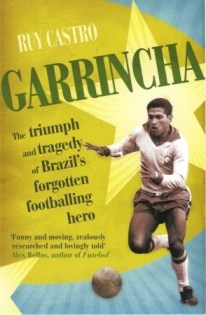
‘Garrincha: the triumph and tragedy of Brazilian’s forgotten footballing hero’ by Ruy Castro & translated by Andrew Downie (2004)

“The most amateur footballer professionial football ever produced”

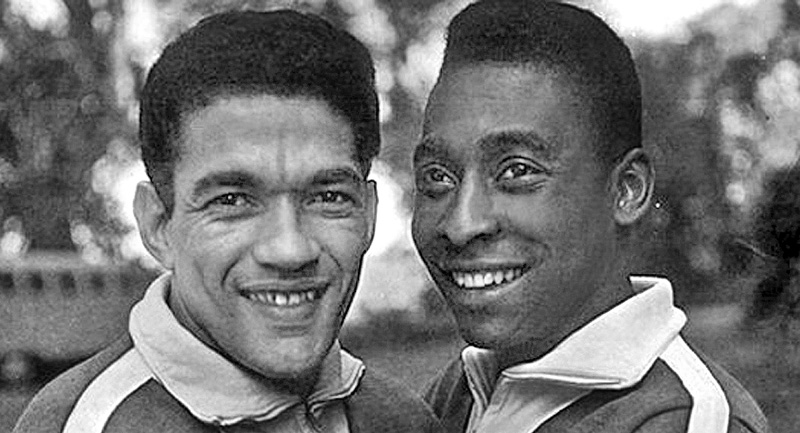
Garrincha was the epitome of the flawed sporting hero – the genius player whose personal demons led to an early death. Garrincha, the book, details his life from his childhood in Pau Grande through the length of his career and his eventual death from alcholism.  It captures his amazing talent, his playful charisma, his colourful personal life and his unique place in the hearts of Brazilian football fans.

Garrincha

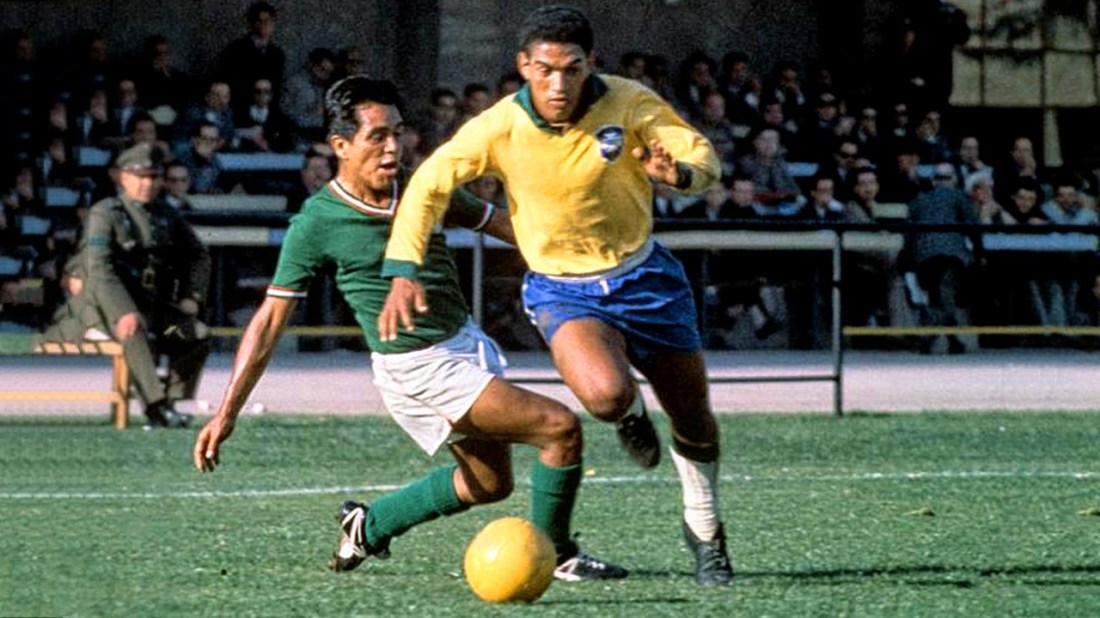
Born with crooked legs, he defied all expectations and became one of the most successful players in international football history, winning two World Cups and only once losing in a Brazilian shirt in 60 appearances.  Winning two world cups he became a cult legend in Brazil.

His life was incredible.  He lost his virginity to a goat, slept with hundreds of women and sired at least 14 children – his affair and subsequent marriage to the singer Elza Soares that caught the imagination of a nation and led to them both being vilified.  He was profligate with money, uninterested in football that he wasn’t playing in and totally incapable of being faithful.

By the age of forty-nine, Garrincha was dead, destroyed by the excesses that made him such a fascinating figure.  His downfall makes for depressing, but gripping reading.

z_p17-Garrincha

There is something that draws us to those genius sports stars who can’t conquer their demons and don’t get the change to live the post-retirement life they deserve.  Their flaws make them more relatable and more human. As an Irishman, you read the book feeling like its an alternate world story of George Best’s life or even how the great Paul McGrath’s life may have gone had he been born in Brazil.

Ruy Castro has written a thoroughly enjoyable and fascinating biography which is excellently translated by Andrew Downie.  It is a brilliant and detailed insight into a fascinating life of a genius player.  It is a comprehensive and worthy tribute to a footballer who had he played a few years later in the television era would be remembered as one of the all time greats.  The only downside for me was the lack of more detail on the social and cultural environment in which Garrincha lived – I feel I learned an incredible amount about Garrincha, but less than I expected about the Brazil of the 50’s and 60’s.

I first the read the book when the English translation came out in 2004 and I thoroughly enjoyed this reread.  I highly recommend it for any football fan and is a great companion book for watching Russia 2018.

garrincha 3

‘Kicks: The Great American Story of Sneakers’ by Nicholas Smith (2018)

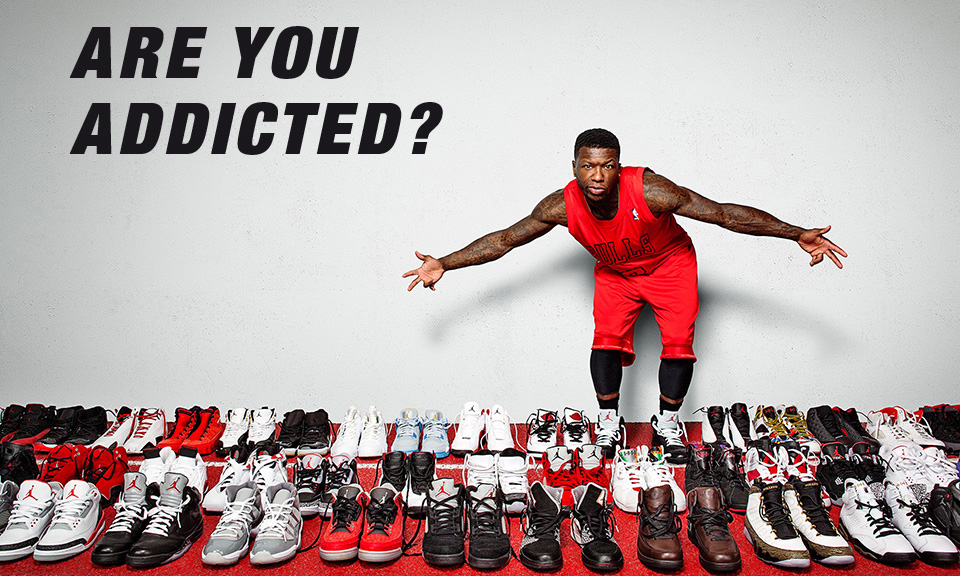
While I’m no ‘sneakerhead’ and have appalling fashion sense, runners are the one item of clothing that I  can actually enjoy shopping for.  I’m also the kind of guy who wears black Asics walking to work and doesn’t bother putting on suit shoes unless a meeting is very important so my views on anything shoes or fashion related should probably be ignored. Kicks

I had to ask myself if Kicks qualified as a sports book but given the heavy focus on the history of sport and sports companies, it definitely does.  Kicks traces the story of how sneakers (the American term for runners, trainers, sports shoes or tackies) were first developed and grew from being a sports specific shoe to the ever-present default footwear choice of billions.

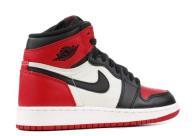
In telling the story, Smith traces the origins of numerous sports and even more sport shoe companies.  In particular he captures the rivalries that drove advances in technology and marketing as the sneaker business crossed over from sports wear to mainstream everyday wear.  From Converse v Keds, Addidas v Puma to Nike v Reebok, the battle to be number led to some much innovation and change in an ever growing market.   Each company would at some hit a gold mine – whether the Converse All-Star, the Reebok athletic shoe or Nike Air Jordan – before losing the lead as a competitor signed the next big name or launched the next must have shoe.

The book weaves together a lot of stories I already knew or was vaguely aware of.  I was surprised by how much of the source material I had read including Kenny Moore’s book on Bill Bowerman and the Men of Oregon, Phil Knight’s autobiography Shoe Dog (about Nike) and Pitch Invasion by Barbara Smit on the founding of Adidas and Puma.

airjordan

It also touches on the role non-sport elements popular culture, in particular Run DMC’s promoting of Adidas which landed them a $1 million endorsement deal, had on the marketing of sneakers. Finally, it talks about sneakerhead culture and the fan culture that the internet has enabled resulting in shoes selling for thousands online and sneaker theft becoming a worrying source of crime in US inner-cities. While it seems crazy to think of someone buying shoes they will likely never wear, I’m writing this looking at my library of 100’s of books I’m yet to read while I buy way more new books every year than I read.  I guess we all have a passion and for some people that passion is sneakers.

Overall it is a very interesting dive into the world of American sports shoes that becomes more interesting as you keep reading.  While the book could easily have become a boring repetition of facts, Smith’s writing style keeps it light and entertaining.

sneaker-shopping-addiction-000

‘The Soul of Basketball: The Epic Showdown Between LeBron, Kobe, Doc, and Dirk That Saved the NBA’ by Ian Thomsen (2018)

“Basketball is now the true sport of the American Dream”

The Soul of Basketball tells the story of the 2010-2011 NBA season – the season after LeBron James ‘Decision’ to move to Miami.  It paints that year as a pivotal season – the changing of the guard as LeBron’s generation seized control of the NBA.

soul 1

It isn’t simply a book about the season, but rather about the changing role of the NBA in American life as a new generation of players build on Jordan’s legacy and capture the public’s imagination.    The NBA was trying to find its way in the post-Jordan era but LeBron had turned himself into public enemy number 1 with his handling of the Decision and his promises of a decade of glory in Miami.  Players were arriving in the NBA already famous and already entitled.

Thomsen paints a compelling and illuminating portrait of the key individuals in that season’s NBA.   He takes readers inside the Heat, the Lakers, the Celtics, the Spurs, and the Mavericks and focuses on a key individual in each of those teams. For me the most compelling figures throughout the book are Dirk Nowitzki, Greg Popovich and Kobe Bryant.  Dirk Nowitzki was much less well-known to me and emerges as the most fascinating figure in the book.

Thomsen shows us who the players, coaches, scouts and executives really are, what motivates and drives them to succeed.  Thomsen’s ability to get key people to open up and share revealing insights is a real asset to the book.  There is also extensive and fascinating detail on the inside workings of team’s front office. Thomsen also captures the between old-school owners and the newer generation of owners like Mark Cuban at the Mavericks.

It is arguable that LeBron is treated a bit harshly at times in the book although the epilogue does recognise his achievement in returning successfully to Cleveland.   By detailing LeBron’s toughest year, Thomsen attempts to show some of what LeBron went through before becoming a champion.

It’s a detailed, engrossing and brilliant read which I highly recommend.  If there has been a better book written about the modern NBA, I’d be delighted to find it.

‘The Blueprint: LeBron James, Cleveland’s Deliverance, and the Making of the Modern NBA’ by Jason Lloyd (2017)

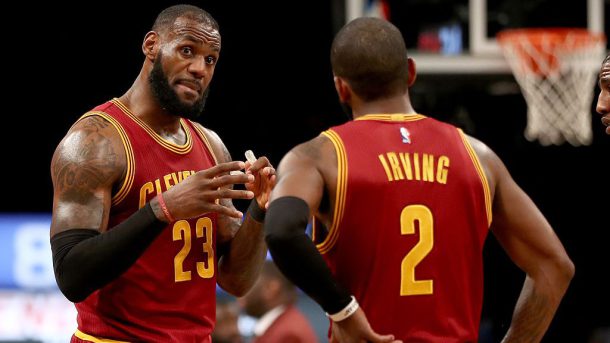
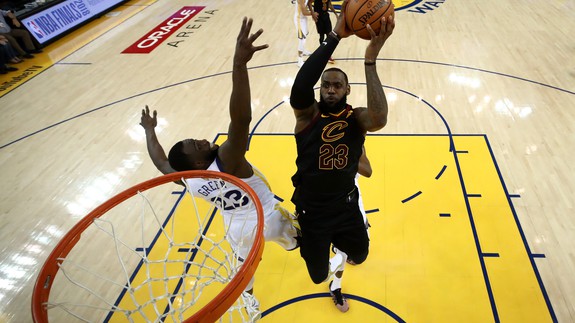
LeBron James is currently appearing in the NBA finals for the 8th year in a row.   The biggest superstar in a sport where superstars matter more than any other, James has been one of the biggest names in US sport since he was 18 years of age.

LeBron 1

After being drafted by his hometown Cleveland Cavilers, LeBron eventually got frustrated at never winning a title and joined Miami Heat in 2010 and combined with fellow stars Chris Bosh and Dwyane Wade as part of Pat Riley’s ambitious plans to build a championship winning team.  Riley was able to get LeBron because he understood that winning a championship was what he wanted most – he had the fame, the endorsement and the money and knew Riley could help him get championship rings.

The Blueprint tells the story of what happened in Cleveland after LeBron’s ‘Decision’.  Once the grieving process was over, the Cleveland front office launched an ambitious plan to ensure they would be in a position to get LeBron back once he entered free agency in 2014.   The plan incorporated several losing seasons, some high-risk draft picks, and a long term plan to build a championship winning team.   It was a risky, ingenious and amazingly succesful plan which provided a new roadmap for how to build a championship team over time.  Unfortunately for Cav’s fans, it’s unlikely to be a dynasty with some key players from the 2016 championship team leaving and the Golden State Warriors continuously standing in the way.

lebron 2

Llyod spent these and many other years as a reporter in Cleveland covering the NBA and the Cavs and couldn’t have been better positioned to write this book.   The book is also the story of Cleveland sports – the heartbreak and the tragic endings Lloyd takes us through all of the tragic endings that Cleveland sports die-hards had to endure since the Browns won the NFL championship in 1964.

Ultimately the book is primarily a testament to just how great LeBron James is.  More than anything, it highlights the transformative effect he had on both his teams. It paints a portrait of a player who learned from his mistakes, from being too brash and too arrogant in his public pronouncements.  Of a player who discovered what it takes to lead teams of all different talent levels.

The Blueprint is a very enjoyable and entertaining read. Llyod tells a fascinating story of  the relationship between a star and his city, of anguish and redemption and of how to build a championship winning team in the modern NBA.

LeBron 3

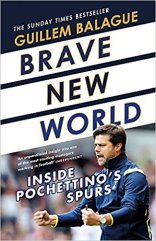
‘Brave New World: Inside Pochettino’s Spurs’ by Guillem Balague (2018)

Brave New World is an in-depth account of Tottenham Hotspurs’ 2016-17 season.  It’s a biography written in the first person and a diary that isn’t really a diary.

poch1

Balague was granted unprecedented access to Mauricio Pochettino and his backroom staff for the duration of the 2016-17 season.  He uses this insight to craft a biography of Pochettino that charts the remarkable transformation he has achieved in a very short time at Spurs.  Perennial bottlers who never live up to their potential, Spurs now are just a few steps (and winning trophies) away from truly belonging among the game’s elite.

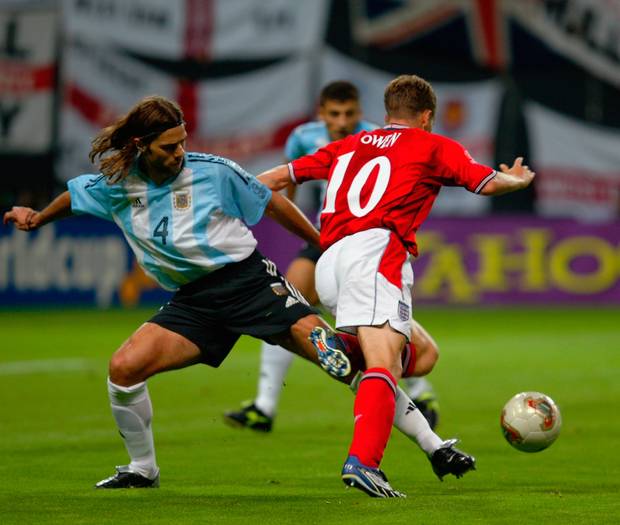
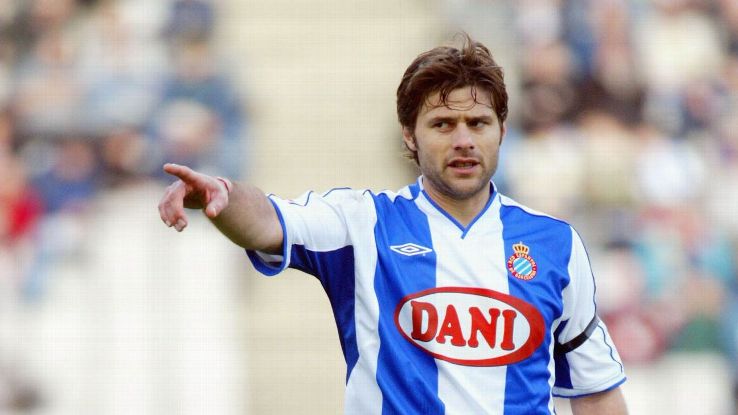
The book also serves as a wider biography of  Pochettino’s life – detailing his childhood, his career in Argentina, his special times at Espanyol and his move to the English south coast at Southampton.  It also discusses in detail his close and vital bond with his assistants who form a vital part of his success.

Pochettino comes across as a passionate, motivated and likeable character.  He can but ruthless but for footballing reasons rather than a personal grudge.  He is portrayed as being dedicated, at potential personal cost, to doing everything he can to be successful and to forge a Ferguson-like legacy at Spurs.

poch2

He is very well attuned to the psychological aspect of football – building incredibly close bonds with his players while still seemingly to keep an appropriate distance to enable him to judge their performance fairly. It’s clear that many of his players love him and see him as a vital part of their own ability to achieve greatness.

The book is a fantastic insight into a manager still very much on the up.  It’s a unique approach – putting words in Pochetttino’s own mouth creates great risk for him given he is writing about players still under his charge.  The prose and writing style felt like hard work at times – especially until I got used to it.  Balague is a very good writer however, so I’m inclined to believe that the style of prose was intentional to read more like Pochettino’s own voice.

Overall I would recommend Brave New World for anyone looking for an insight into one of English football’s most interesting coaches.

poch 3


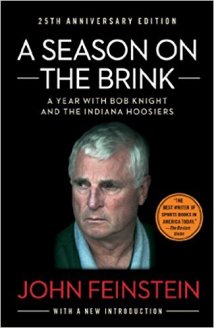
‘A Season on the Brink: A Year with Bob Knight and the Indiana Hoosiers’ by John Feinstein (1986)

I could spend months simply reading John Feinstein sports books such is quantity of high quality books he has produced over his career. Perhaps more than any, A Season on the Brink, is the book most would point to as both Feinstein’s breakthrough and most enjoyable work.a season

Feinstein followed the Indiana University basketball team through the entire 1985/86 season – the ups and the downs as the team sought to recover from a terrible performance the year before and regain their place at the top of NCAA rankings.

As Feinstein readily acknowledges, a large part of the brilliance of the book is due the intensely fascinating character of Bob Knight.   During the season covered, Knight had been at Indiana for 15 years, and would remain for another 15 more before his ignominious departure in 2000.

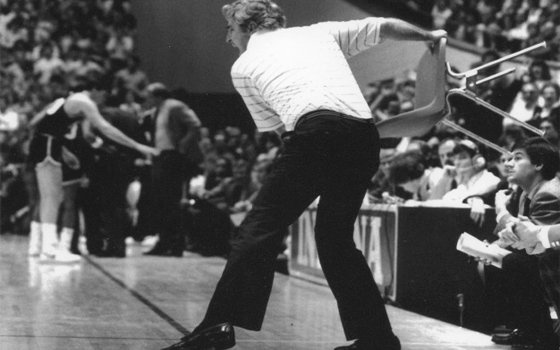
Already a two time national champion and Olympic gold medal winning coach, Knight remained intensely driven and passionate. Innovative and insanely successful, Knight was a controversial figure whose swearing and temper tantrums were already legendary.

Reading this book now, knowing how Knight’s story in Indiana ends, puts on interesting context on Feinstein’s coverage of Knight’s bad behaviour.  In this context, the recent ESPN 30 for 30 documentary, the Last Days of Knight, is a great companion piece for this book – especially to see how the standards of behaviour expected from a winning coach have clearly changed since Knight’s glory days.

a season 2

It is fascinating though how, far back in the mid-80’s, so many of Knight’s friends correctly predicted in comments to Feinstein that Knight’s reign would end badly because of his aggressive behaviour. Ultimately, details of physical abuse from ex players saw the Indiana leadership lose patience with Knight who ended up moving to the much lower profile Texas Tech and subsequently to ESPN’s basketball coverage.  Indeed, one of the players chronicled in the book, Todd Jadlow, has published his own book in recent years which includes specifics about the physical abuse he took from Knight – including getting punched in the back of the head with a closed fist.

Feinstein also captures the warm side of Knight – in particular his loyalty and his dedication to his friends.  It seems to me that Feinstein painted a very raw, but very honest portrait of a talented coach who constantly struggled with his temper and ego.

While Knight dominates the book, the players come across with a huge amount of credit, both for their talent and their ability to handle Knight’s abuse.  Steve Alford in particular is the leading man, who would achieve even more the following season by leading Indiana to Knight’s third national championship.

Make no mistake, this is a wonderful book.  Feinstein made the most of his incredible access to write a searing and insightful book that captures the highs and lows of high level amateur sport.  Its so well written that it grips you and is a page turning as any thriller. Feinstein has many great books but I don’t know if he has ever been able to top this genuine and deserved classic.

a season 3

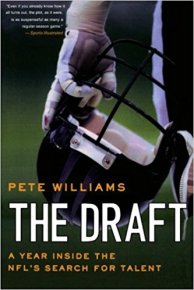
‘The Draft: A Year Inside the NFL’s Search for Talent’ by Pete Williams (2006)

The concept of a professional sports draft has always been intensely fascinating to me.  In theory it offers an ideal method to ensure that competitive balance remains in a league, particularly when combined with a salary cap.  Seeing Juventus win their 7th Serie A title in a row recently makes you think what soccer in Europe would be like if youth development was handled by schools and not professional teams and the best players divided up by draft.  It’s clearly not possible, but it would sure be interesting!

the draft

The Draft is a long and detailed account of the 2005 NFL draft told through the experiences of key people at every level – top 10 draft picks, lesser players, Atlanta Falcon’s General Manager, coaches and a whole host of sports agents. It’s a very thorough account that covers every aspect of draft day preparation by all those whose futures are heavily tied up with this two day extravaganza.

It is an interesting read and certainly achieves its goal of shining a light on the draft process.  Reading it at more than 10 years remove is fascinating with some players being instantly familiar from their subsequent achievements in the NFL – particularly someone like 49er’s great Frank Gore who didn’t get picked up until the 3rd round.

Frank Gore

The book’s length however becomes a weakness.  There is a lot of repetition gets tiresome if you read the book over a fairly short period.

The other big weakness of the book is the excessive focus on agents.  While the coverage of the role of agents and their interaction with players is interesting, there is far too much focus on which agents were successful in building their own rosters of players.  It’s very hard to care about which salesman managed to get himself a big payday and the book would have benefited from a lot of this material being cut.

All in all, however, it is an interesting and enjoyable read. It may inadvertently work best as a book to dip into – like a series of newspaper columns – otherwise the excessive detail and repetition could get annoying.

2005nfldraft

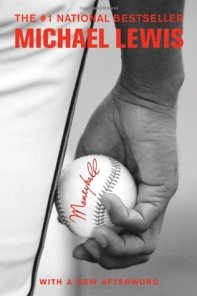
‘Moneyball: The Art of Winning an Unfair Game’ by Michael Lewis (2003)

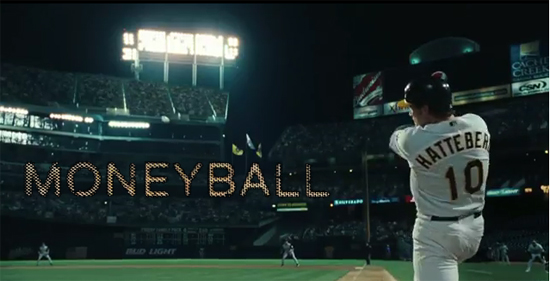
‘Moneyball’ might be the most influential sports books of the last 20 years.  15 years since it was first published, Moneyball is still synonymous with the ever-growing movement to use big data to improve the performance of professional sports teams.

moneyball

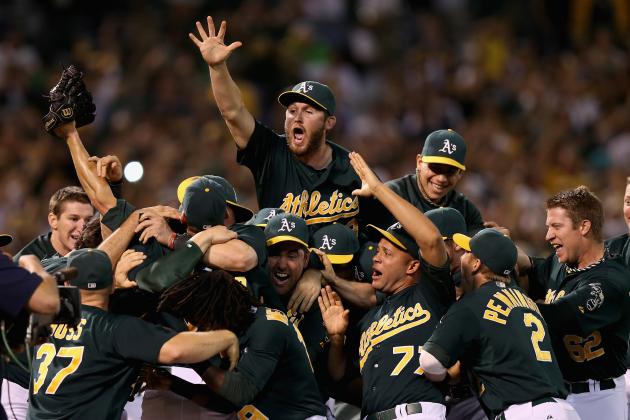
Lewis set out to answer the question of why the Oakland A’s consistently outperformed teams with much higher budgets.  He found a much bigger and more fascinating story about a sub-culture of baseball nerds both inside, but mostly outside, the sport who were determined to see the game as it really was.

At the heart of the book is Billy Beane, a former player who never fulfilled what others believed was his potential.  Lewis was given incredible access behind the scenes of the A’s management team as they prepared for a draft and throughout the 2002 season as Beane wheeled and dealed his way to improving his team at every turn.

Beane is a fascinating character  – charismatic but ruthless, a baseball insider who thinks like an outsider, a man obsessed with his team who refuses to watch the team he runs actually play a game.

oakland

The book is utterly engrossing.  Lewis is the master of explaining complex and insider ideas to a layperson.  Despite having a limited interest in baseball, I found the book easy to follow as Lewis leads the reader through the thought process of Beane and the various ‘sabermetricians’ who think more about baseball than anything else.

At the heart of the story is Bill James, a statisician who self published baseball statistics slowly building a fanbase and eventually influencing the next generation of General Managers.  Not being a baseball fan, its hard to grasp just how obsessive James and his followers are.  Being a fan of fantasy football does help me realise how obsessed a fan can become with watching certain players and being desperate to figure out what players are likely to outperfomr others.

Moneyball is an absolute must-read for anyone interested in the future of sport or anyone interested in a good story.  It’s the story of an underdog who out-thinks and therefore out-plays the bigger richer teams.   It’s a great book not just for sports fans, but for anyone who likes stories about disrption and people trying to shake up an established way of doing things.

As well as being a great read, Moneyball has had a significant impact on professional sports since its publication.  Many an article has been written on this over the last 15 years.

Reading Moneyball is a different experience than when I read it over 10 years ago.  Knowing broadly how the draft picks and other players mentioned in the book panned out changes how you experience the story.

moneyball (1)

‘The Man Who Saved F.C. Barcelona: The Remarkable Life of Patrick O’Connell’ by Sue O’Connell (2016)

The Man Who Saved F.C. Barcelona is a very different book from what I was expecting.  It’s the story of a family far more than it is a football story.

Barca man

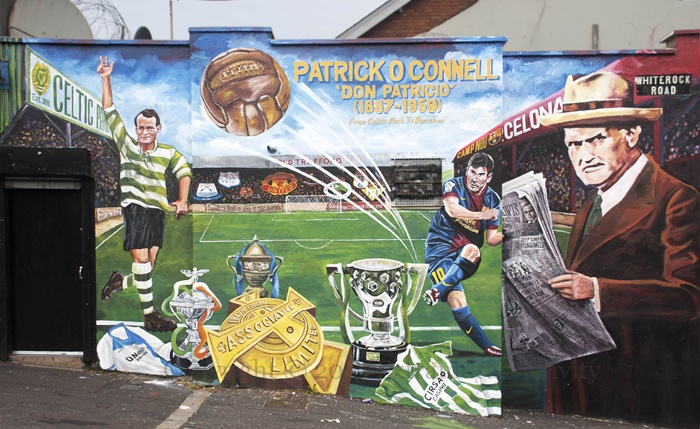
Patrick O’Connell was a forgotten figure of Irish football history until the sterling efforts of his family to ensure his legacy was remembered.   A former captain of Manchester United and Irish international, his achievements as a manager in Spain far surpass anything achieved by an Irish manager since then – he won La Liga with Real Betis, led Barcelona through the Spanish Civil War and the respect he was held in is speculated to be the reason why Spanish managers are today called “mister”.

His grandson’s wife, Sue O’Connell, has laboured to find the historical record of Patrick and his immediate family’s life.  The story is told largely through letters sent by Patrick, his second wife and his kids and diary entries of one of his daughters.  The rest of the story is filled in dialogue heavy prose which I found a bit mawkish and unnecessary – a more factual style of joining the dots would have worked better for me.

As O’Connell notes in the final paragraph of the book, “Patrick O’Connell was an outstanding sportsman, but as a husband and father he was a non-starter”.  The bulk of the book focuses on this later part – the wife and four kids he abandoned in Manchester.  No attempt is made to sugar-coat his behaviour.  In many ways is more a story of abandonment and emigration than a football book.  It also captures well the sense of time and place – in particular an outsider’s view of Spain and Barcelona during the Spanish Civil War.

His footballing legacy is not covered in the kind of detail I was expecting.  The saving of F.C. Barcelona involved the wise decision to bring the team to the America’s on tour and raise enough money to keep the team going.  However, after reading the book, I don’t know much more about just how he achieved success or how he contributed to the evolution of the game.

The book is a clear labour of love and I admire the efforts to promote O’Connell’s legacy while being honest about his failings as a man.  However, the book really wasn’t for me and isn’t one I would recommend for someone coming at as a sports book rather than a chronicle of the emigrant experience of an Irish family.

A documentary film about O’Connell’s life, Don Patricio, premiered in Dublin this week and I’m looking forward to checking it out.

oconnellmural