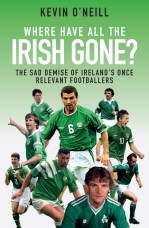
‘Where have all the Irish gone? The sad demise of Ireland’s once relevant footballers’ by Kevin O’Neill (2017)

It goes without question that no player on the current Irish national football team are likely to get signed by Juventus or Inter Milan. Or earn the nickname ‘God’ at a club that has won the European Cup. Or even smash the British transfer record.

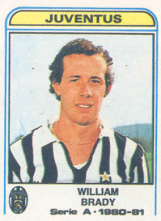
Kevin O’Neill’s book, Where have all the Irish gone? The sad demise of Ireland’s once relevant footballers, starts with the important (to Irish football fans) question of why this is the case? Why do we not have players like Liam Brady, Robbie Keane, Paul McGrath, or Roy Keane?
Irish.jpg

O’Neill appears to be very similar to me – Ireland fan, child of the 80’s, who spends too much time thinking about the Ireland team. At times O’Neill is a bit too much like me in that passion may cloud serious analysis.

The answers to the central question – more competition in the Premier League and the total lack of investment in the Irish game/coaches aren’t rocket science but each is discussed in detail.

O’Neill could have done with better editing. The first few chapters jump around from diagnosing the causes of the problem to reliving the glorious past. The book jumps too much – with Liam Brady’s career, for example, talked about in two completely different segments. While parts of the nostalgia trip are enjoyable, it feels a bit too much like reading the wikipedia entries on the careers of Keane, Quinn etc. The chapters are reasonably long and paragraphs flow into each other in a way that jars. A few breaks for new segments would have helped put some structure on what can be a slightly rambling narrative.
brady2.png

The book is at its best in Chapter 3 and 4 when O’Neill interviews a series of people connected to the game who don’t normally get the spotlight shined on them – players who never made it and youth coaches in particular. These chapters add genuine insight in to the challenges for young Irish players and are the best part of the book.

When O’Neill turns his gaze to the FAI and the structures to improve the game, he makes a reasonably simple diagnosis – bring back Brian Kerr (most successful underage manager in our history and a man steeped in the Irish game). However, he then doesn’t point out anything that the man in the job, the wonderfully named Ruud Docktor, is actually doing wrong. It seems O’Neill would just feel more confident if Kerr had the job. While I agree its a disgrace that Kerr is not involved in some capacity with the FAI, I think its a bit too simplistic to point to him as such a major part of any solution. The comparisons to Iceland and Belgium are justified however.

kerr

The book turns to wistful nostalgia of days gone by – when kids played ball on the streets (is it better to be poor but have better footballers to cheer on?). O’Neill talks about some of the great South American players as examples of how street football (poverty?) helps create great players. In reality though, it should probably be pointed out that a continent with more than 400 million people where football is a very popular sport is likely to produce 100 great players for every 1 Irish star.

O’Neill’s passion for Irish football is evident and his worries are genuine. The book gives a good insight into the lives of those who made it and those who didn’t. It doesn’t offer too much in terms of where we should go (beyond Kerr and summer football) – its instead a realistic chronicling of the woes rather than much of a diagnosis for where to go from here.

The interviews in the book capturing many previous unheard voices make it a welcome addition to the library of football books in Ireland. However, I can’t help feeling there is a better book in there waiting to get out.
Brady

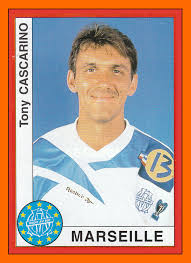
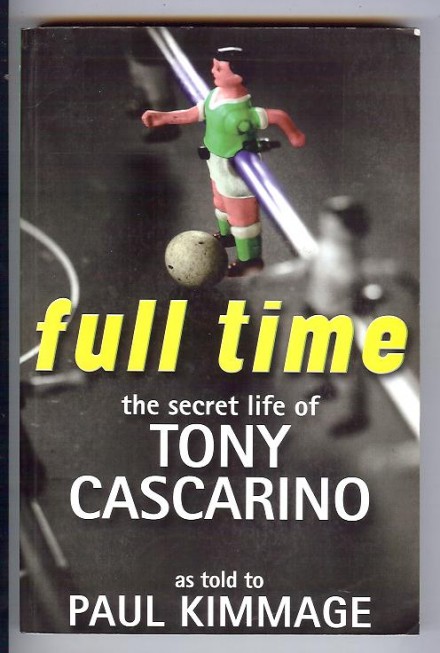
‘Full Time: The Secret Life Of Tony Cascarino’ by Paul Kimmage (2000)

I’ve always loved Tony Cascarino. From the joy of an Italian named striker playing for Ireland, his 7 goals in our ill fated qualification group for 98 World Cup and the sheer strangeness of an Irish player playing his club football in France. While I remember bits of Italia 90, my real (as in total recall of where I was and how it all felt) football memory begins with the final qualifier in Windsor Park for the 94 World Cup. By that time Cascarino was half way through his Ireland career, and his best days were presumed to be behind him – but his resurgence at club level in France and his goals in World Cup qualifying (albeit against pretty crap teams), meant he was one of my favourite Irish players.

I bought Full Time as soon as it came out in 2001 – at a time I was finally old enough to travel to Ireland games in Dublin with my mates.  The Irish team became my sporting passion as we cruised to Japan / Korea.  I read Full Time over one night, staying up all night and suffering like hell in school the next day. I couldn’t believe how good the book was. 17 year old me was definitely very shocked by the candid admissions of his demons, his affairs and his inner self doubt. I read Rough Ride immediately after it and became a huge fan of Kimmage (to my mind the best sports interviewer I’ve read with the possible exception of the great Donald Mcrae).

fulltime

Rereading it this week, it struck me that the book is even better than I remember. Its short, its personal, and its very very honest – Cascarino does not present himself as a nice guy but rather as who he is – a complicated, compelling figure who has made a lot of mistakes.   It is easy to judge him but the fact that Cascarino wanted his true self to be displayed is what makes the book so fascinating.  None of us are all good or all bad – but we don’t usually publish books about arguably the worst things we have done.

The book jumps through different periods in Cascarino’s life with the first quarter painting a picture of his recent life (as of 1999/2000) – his new life in France at Nancy, his new family life with his French partner and their child and his later days in the Ireland squad. Already we are introduced to his inner critic – the little voice in his head that tells him he is crap at very unfortunate moments. Its Chapter 5 before we hit the backstory of his childhood – which is told very quickly and focuses on his Dad, Dominic.

News report when it emerged Cascarino never qualified to play for Ireland

The story of his early career is told in a brilliant engaging manner – as much about his self doubt, his growing ego and the his relationship with others – like Teddy Sheringham at Gillingham, Niall Quinn and Jack Charlton at Ireland, Glenn Hoddle at Chelsea and Liam Brady at Celtic.  The stories with the Ireland team paint a great picture of the team that Jack built – but Cascarino remains the focus of the narrative throughout. Most strikingly, once Cascarino pulled a muscle in the build up to USA 94, he doesn’t even mention the game he played in (2nd round exit v Holland) but is straight into the unlikely tale of how he signed for the defending European Champions.

The days of “Tony Goal” in France are the most interesting football wise for me – as he bangs in goals while being unforgivably bad as a husband and father.

Tony

Ultimately, its a difficult read with a happy ending (for Tony) tinged with sadness (for others mostly) – on the pitch in France he ended with a great performance but with Nancy still being relegated. Off the pitch he committed to a new family but the impact of his behaviour on his ex and first two kids still a long long way from healing.   Ultimately, it feels like the writing of the book and the searingly honest admissions it contains is Tony’s attempt and understanding himself.

Kimmage’s quality as a writer really shines through in the books narrative structure – the use of two separate series of diary entries captures the Tony of 1999/2000, and the telling of his life through the rest of the book helps explain how he became the man he is.

As Eamonn Dunphy said of this book, if it was fiction it would win the Booker Prize. It is as much about life as it is about football.  It is a book I will reread every few years and enjoy every single time.

The closest we have ever come to a sequel to Full Time is a 2014 interview between Kimmage and Cascarino that updates a bit on Tony’s life since 2001.   A book is also coloured by what happens next so don’t read it until after you finish Full Time.