🏀 The autobiographies of Scottie Pippen, Charles Oakley and Muggsy Bogues.

The Last Dance documentary series on the Jordan era Chicago Bulls was the undoubted sports hit of Covid Lockdown 1.0. I think every sports fan I know watched and loved it. The fact that it doubled up as a PR exercise Jordan might have diminished its objectivity but had little impact on how entertaining it was (and it holds up well for a repeat viewing).

The series helped lead to a revival of interest in the NBA’s arguable Golden Era, as Jordan helped the league transform the rising tide of the Magic/Bird era into a level of global attention more akin to today’s English Premier League than the current NBA. A (probable) knock-on effect has been the publication of a number of autobiographies from other players of that era. Three recent or upcoming of these books are The Last Enforcer by Charles Oakley, Unguarded by Scottie Pippen and Muggsy by Muggsy Bogues. Three very different books from three very different players and personalities.

Pippen is likely the best known of the three from his co-starring role in 6 NBA title wins alongside Jordan for the Chicago Bulls. Unguarded (written with Michael Arkush) is a direct consequence of the popularity of The Last Dance as Pippen uses the book to tell ‘his side’ of events in the documentary that painted him in a negative light. The overwhelming takeaway of the book is Pippen’s residual negative feelings towards.. well, plenty of people (none more so than the late Bulls GM Jerry Krause). The book could easily have been titled “I Still Hold A Grudge”. Pippen does praise plenty of people too, but the criticism is inherently more interesting. The retelling of his own career is interesting if not particularly revealing.

Primarily, Pippen is trying to set the record straight and puncture the narrative that Jordan won titles single-handedly. He seeks to define himself as Jordan’s opposite in so many ways – a better teammate and an underappreciated contributor. Overall, a reader is left with the sense of a man less satisfied than he should with a remarkable career due to lingering feelings of never being valued enough given just how remarkable he preformed.

The Last Enforcer by Charles Oakley (written with Frank Isola) gives the perspective of someone with a very different relationship with Jordan. Oakley played with the Bulls just before (and again after) they won 6 Championships and formed a life long bond with Jordan. He then spent 10 years as a New York Knick during the period wonderfully told in Chris Herring’s book Blood in the Garden.

Like Pippen, Oakley sets out to air his many grievances with players, coaches and many other people from his life and career. Unlike Pippen, Oakley never comes across as bitter (except when taking about Knick’s owner James Dolan) but more mildly irritated and dismissive of those he dislikes or simply just holds in lower esteem than you might suspect (Charles Barkley he dislikes, Patrick Ewing he is pretty dismissive of).

Oakley is also very fulsome in his praise of those he likes and, more importantly, respects. The acknowledgements section of the book is remarkable for how many people Oakley thanks and how genuine his thanks appears to be. For all his dismissive comments about others in the book, Oakley seems much more at peace with himself, his legacy and his place in world than Pippen.

For many readers, his relationship with Jordan will be of most interest. The friendship comes across as genuine and Oakley isn’t afraid to highlight that some of Jordan’s legacy is the result of his own mythmaking.

Overall, Oakley’s book is entertaining even if it struggles to fully live up to the subtitle promising ‘Outrageous Stories’. Any 90s NBA fan will enjoy the trip down memory lane.

Of the three books, Muggsy by Muggsy Bogues (written with Jacob Utitti) is a much more positive and joyful retelling of a career in the NBA. Bogues, famously the smallest player to ever play in the league, forgoes score-settling and instead celebrates his remarkable achievement of making to the league and sticking around for more than 10 years.

Bogues recounts his childhood in Baltimore in detail (which included getting shot!) but he refuses to dwell on the negatives or challenges he had to overcome. He gives more time to his remarkable high school basketball career at Dunbar which has separately been told in the book Dunbar Boys and a 30 for 30 documentary.

In discussing his life, Bogues focusses heavily on the endless skepticism about his ability from his own coaches, his opponents and their fans, some of whom would laugh when he ran onto the court. The retelling of his career is enjoyable, especially as it focusses on teams whose seasons may be less memorable than those of the Bulls or Knicks.

Interestingly, Bogues had previously published an autobiography in 1994 which I read many many years ago. Post career second autobiographies usually focus on spilling the dirt but Bogues focuses instead on more positive and interesting ancedotes. You don’t feel like he is holding things back, rather that Bogues is genuinely someone who is proud of his accomplishments and secure in his achievements.

Reading the three books what strikes me is how the amount of success a player had is no guarantee of how satisfied they will be post-career. Pippen, with 6 titles, looks back at how he was underappreciated. Oakley, who appeared in NBA finals, looks back with some regret but with pride for always being himself. Bogues, who never made it past the Conference semi-finals, looks back with the contentment of beating the odds and achieving far more than anyone thought he could.

🏀‘Coach K: The Rise and Reign of Mike Krzyzewski’ by Ian O’Connor (2022)

As a non-American, I’ll never quite understand the passion and pride generated by collegiate sports in the US. I really enjoy watching college football and basketball, but the reverence and status given to the games and especially to the coaches suggests a strange miscalculation of priorities for academic institutions!

The constant turnover of players provides a fascinating dimension to the sports. No other leagues give you an absolute maximum of four years with any player while also preventing the signing of experienced players to help guide the young players (who are almost exclusively under 23). Longevity and culture is therefore primarily provided by the coach and supporting staff.

It’s in this context (and overlooking the ludicrous salaries relative to other employees of the college or State!) that I find the careers of successful college coaches utterly fascinating. The reverence for successful coaches across the US is remarkable and is evident across sports media and popular culture. As one the most successful coaches in college basketball, arguably no coach is quite as revered as Mike Krzyzewski (universally referred to as Coach K).

Coach K was a player and subsequently coach for the US Army’s college team (talk about an educational institute with odd priorities!) and a protégé of world class coach and bully Bobby Knight. Krzyzewski ultimately, and surprisingly to most observers given his limited success at the time, became head coach of Duke University, a perennial basketball powerhouse. Over the ensuing decades he would amass one of the most successful records in the sport’s history.

O’Connor is a masterful biographer grappling with the challenges of competing narratives and telling the story of a complete life in a limited amount of space. Capturing 50 plus seasons of action requires a delicate touch and wise judgment in where to focus and no-one does it better. The book is especially strong in telling the story of Krzyzewski’s youth and identifying how his early days and playing career helped to shape the man and coach he would become. It also rightly delves into greater detail on some of his most famous teams – none more so than the era of Bobby Hurley, Christian Laettner and Grant Hill.

Coach K’s more recent seasons however feel somewhat out of character as he embraced the one-and-done superstar era. O’Connor explains this approach as a combination of the coaches his own adaptability and his growing taste for coaching the very best players acquired during his stints coaching Team USA.

The best biographies are those that realize every life story can only be properly told through the person’s relationships. Most obviously Krzyzewski’s ever-changing relationship with his mentor Knight stands out. Coach K is often described as possessing many of Knight’s best qualities but much less of his ridiculous, fiery temper.

The other key relationship in Krzyzewski’s life is, unsurprisingly, his marriage. A major failing across lesser sports biographies (and all biographies really) is a failure to capture the role that spouses play in athlete’s and coaches professional lives. O’Connor avoids this mistake and highlights Mrs’ Krzyzewski and the wider family’s role in Coach K’s success and thought process.

O’Connor ultimately paints the picture of a man who combined a relentless desire for success with a genuine affection for other people. This is an excellent biography of a fascinating basketball coach and highly recommended for any college basketball fan.

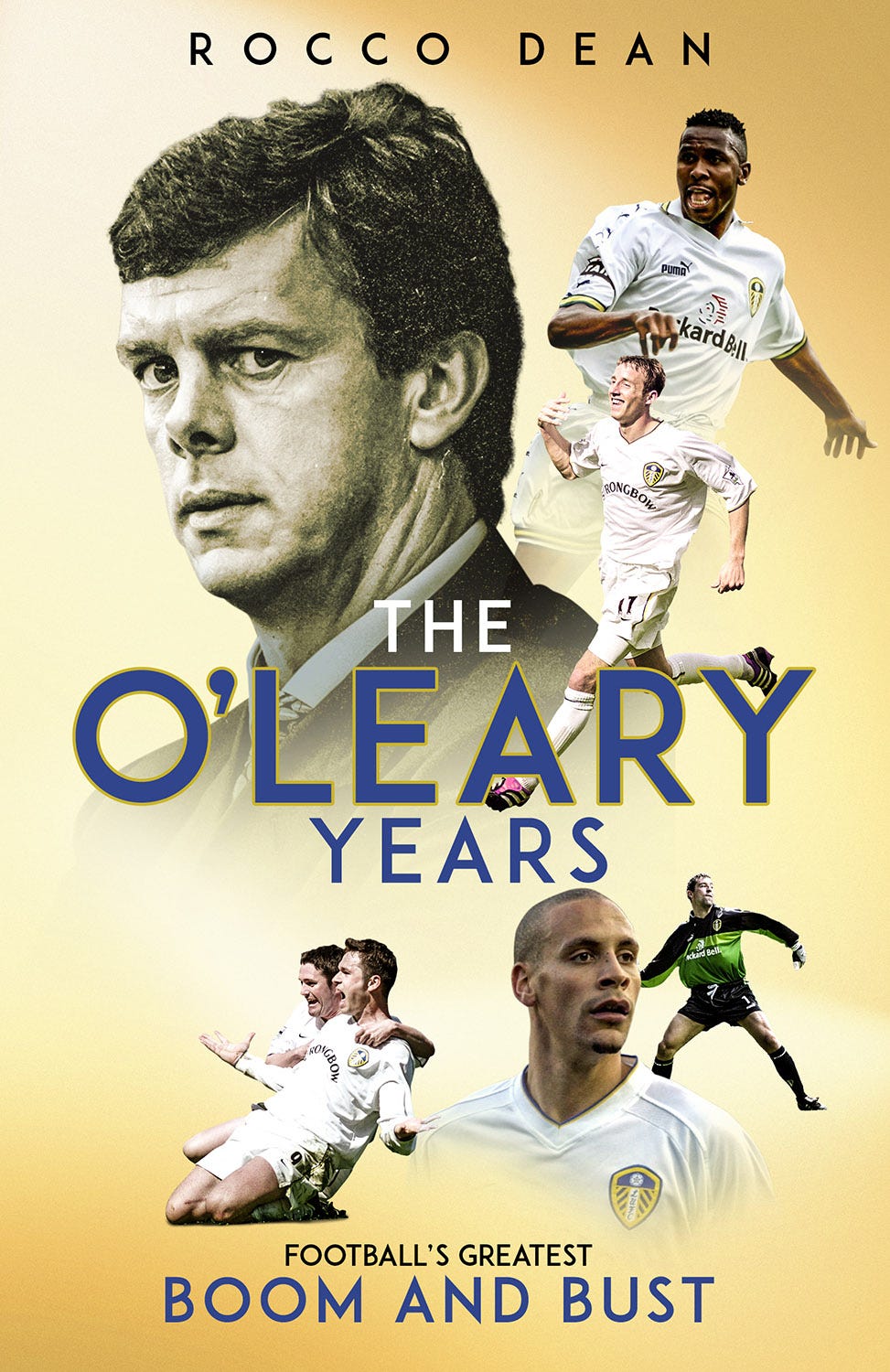
⚽ The O’Leary Years: Football’s Greatest Boom and Bust by Rocco Dean (2022)

The O’Leary Years recounts the four seasons during the late 1990’s and early 00’s when Leeds United returned to the top echelon of English and European football. A side blessed with talented young players and a host of big money signings briefly challenged at the top of the table and in famous stadiums across Europe. There was plenty of off the pitch drama too before the financial recklessness of the owners brought the club crashing down to depths it has only recently recovered from.

Dean recounts the story through his own memories and match reports from the time as he grew from a 14 year old travelling the country with his dad, to an 18-year-old equally fanatic adult. It’s very much a book about the nature of fandom, about nostalgia and the relationships that following sport can bring us. It’s a love letter to a unique team at a special time in the author’s life. It’s very much aimed at Leeds fans who will bask in nostalgia and their own reminisces as they read it.

I would still love to read a more detailed book on the rise and fall of that Leeds team. One that goes behind the scenes and captures the recollections of the key protagonists and sheds more light on where it all went wrong.

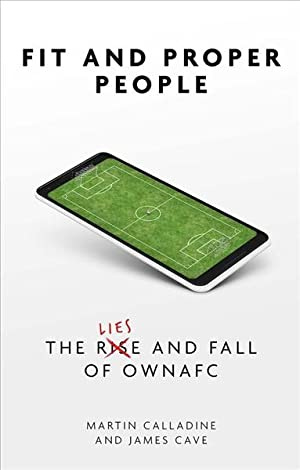
⚽ ‘Fit and Proper People: The Lies and Fall of OWNAFC by Martin Calladine and James Cave (2022)

OwnaFC promised to allow football fans the chance to become part owners of a club and have a genuine say in running it for a small up front cost. Sounds too good to be true, because it was.

Very soon it became apparent that the project was in trouble. Calladine and Cave investigated and became the leading critics of the scheme. The book recounts their investigations and the violent reactions of its instigator as his lies became more and more unbelievable.

The OwnaFC fraud, and the story of how the authors tried to expose it, frame a broader reflection on the concept of owning a community institution like a football club and the failings of the powers that be, both sporting and political, to protect the interests of fans.

This is a brilliant, important book on the value of clubs to their fans + community and the dangers posed by the variety of people seeking to exploit fans. Reporting like this, which came at a steep personal cost as told in the book, is vitally important. It reduces the chances of repeat schemes succeeding, increases pressure on authorities and refuses to simply accept that football and football fandom are fair game to be exploited.

I’d recommend the book to any believer in the importance of football and sport more generally as a way of uniting communities and people.

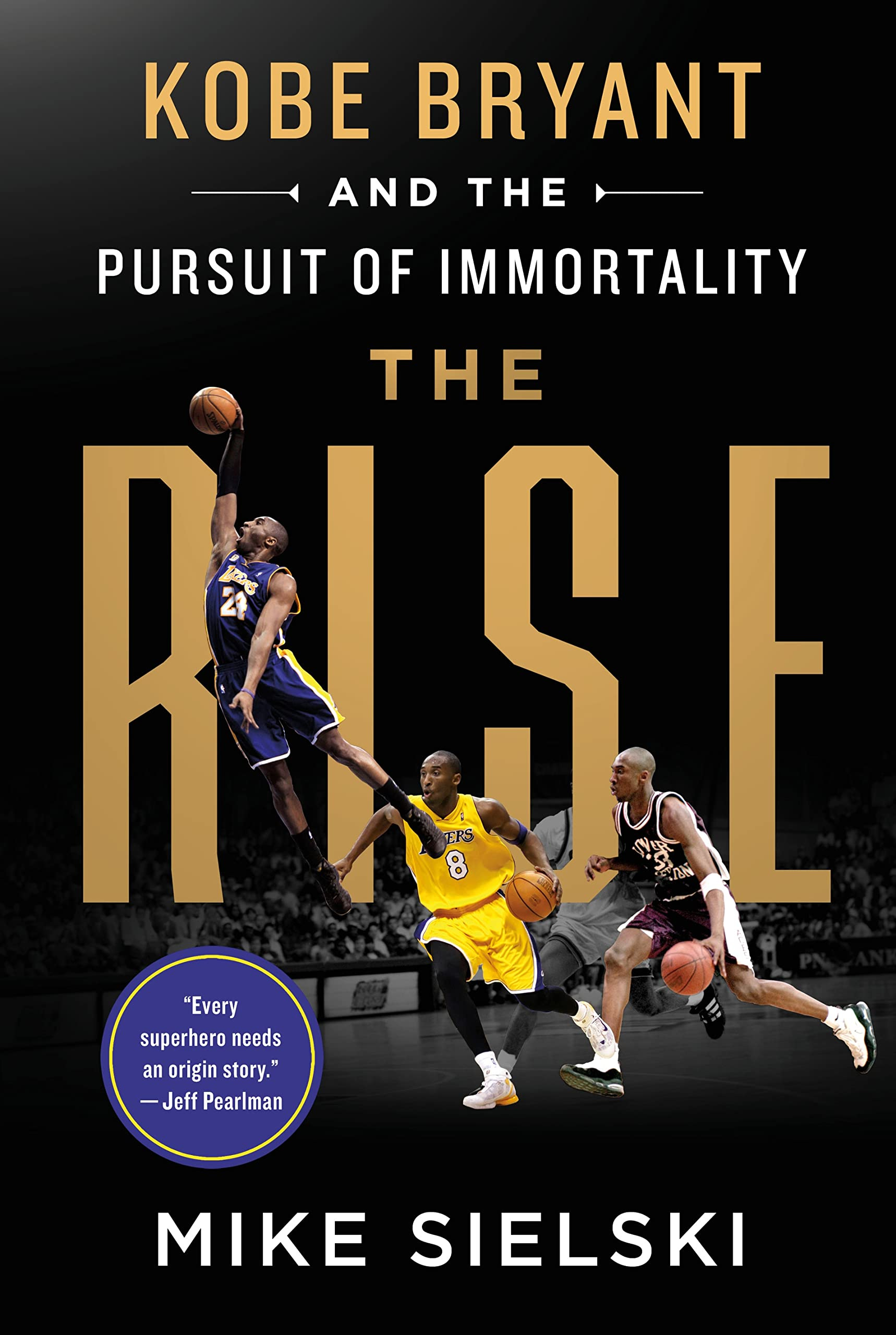
🏀‘The Rise: Kobe Bryant and the Pursuit of Immortality’ by Mike Sielski (2022)

The cover quote from Jeff Pearlman on this book sums it up perfectly – every superhero needs an origin story. The Rise is very much the origin story of Kobe Bryant, a singular talent and force of personality who shot to prominence as a high schooler and eventually became one of basketball’s modern greats.

The Rise seeks to navigate a path through the myths and urban legends that have sprouted about Kobe as the last great high school phenom of the pre-internet / smart phone era. Kobe finished high school at a time when holding a press conference to announce your next step seemed like an absurd indulgence rather than the routine event it is now.

The book ultimately paints the picture of a kid with a rare talent but an even rarer level of determination and commitment to make it to the top. It also captures the more relatable human side of the teenager – his shyness, his friendships and his desire to win a high school basketball tournament. The book is all the more powerful knowing how Kobe’s story ultimately developed, both on and off the court – the journey from phenom to villain to champion to ‘girl dad’ to legend.

Sielski has carried out a huge amount of research and spoken to over 100 people who knew Kobe during his childhood. He also had access to previously unpublished interviews with Kobe from his high school days. It’s a hugely impressive work of biography and a unique addition to the growing number of Kobe books since his untimely death.

If you like this book, also check out: Showboat: The Life of Kobe Bryant by Roland Lazenby.

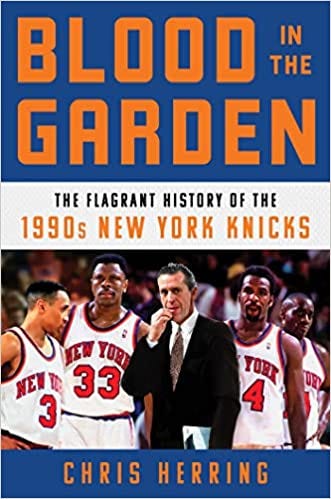
 🏀‘Blood in the Garden: The Flagrant History of the 1990s New York Knicks’ by Chris Herring (2022)

For younger basketball fans accustomed to the Knicks, for want of a better word, sucking, it can be hard to remember that during the 1990s, they were one of the great NBA teams. For 10 years they make the playoffs each season and made it to the NBA Finals twice. Had they not coincided with the Jordan era Bulls, it’s highly likely they would have achieved even more.

Blood in the Garden tells the story of the Knicks from the arrival of former Lakers coach Pat Riley in 1991 to the departure of coach Jeff Van Gundy in 2001. Herring brings the central cast of players, coaches, and executives to life in vivid detail but also builds the wider picture of a club, an organization and a wider league.

Condensing 10 years of playoff seasons into a book that is also packed with anecodtes and vivid profiles, Herring zooms in on particular events and games that reflect the the essence of the 90’s Knicks. It was a team built around Patrick Ewing and a philosophy of playing hard, letting the other teams know they were in a contest. The book strikes a perfect balance of insight, anecdote, game action, and narrative. It’s strength is its focus on relationships, on the dynamics between various characters and how those men and those dynamics shaped the team’s performance.

Blood in the Garden is an excellent book due to both the quality of writing and the immense depth of research undertaken. But what fascinates me most is that the book is ultimately about a team that didn’t win a Championship. There are great books about various NBA championship winning teams and dynasties, and books about great players (whether they ultimately won a title or not), but we rarely get great books about teams that ultimately don’t get that moment of glory. Herring has shown that a well told, well researched and well crafted story of sport at the highest level can be just as (or more!) compelling without that final moment of ever lasting glory.

If you like this book, also check out: Showtime: Magic, Kareem, Riley, and the Los Angeles Lakers Dynasty of the 1980s by Jeff Pearlman or When the Garden Was Eden: Clyde, the Captain, Dollar Bill, and the Glory Days of the New York Knicks by Harvey Araton.

Sports Book newsletter

I’ve set up a free newsletter for distributing my sports book reviews and lists of upcoming sports books – I find it a better way to receive content so hoping others like the approach too. I’ll still be posting some reviews here but more timely content on the free newsletter.

If you are interested, you can sign up here – https://allsportsbookreviews.substack.com/p/new-year-new-sports-books-issue-1

Thanks for reading!

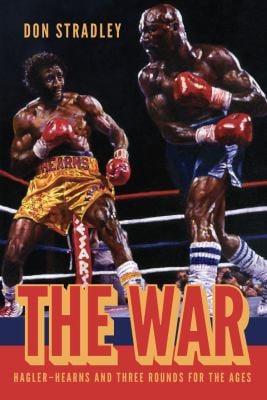
‘The War: Hagler-Hearns and Three Rounds For The Ages’ by Don Stradley (2021)

A whole book about 8 minutes of boxing? Yep, and it’s one of the best books I read in 2021.

The era of the Four Kings continues to occupy a revered place in boxing lore. A large part of that reverence stems from the willingness of the contenders to fight each other but also the personalities and achievements of Leonard and Duran in particular. Not all crowns are equal and Hagler and Hearns are undoubtedly somewhere below Leonard and Duran in their place in the boxing pantheon. However, they both elevated their legacy and the sport when they faced each other in April 1985.

Hagler v Hearns took place at a time when boxing was struggling to recover from Sugar Ray Leonard’s retirement and a growing focus on the dangers of the sport. The book tells a number of stories all centered around three rounds of boxing that are simply unforgettable in their intensity and drama.

At it’s heart, the book is a character study of two fighters seeking fame, fortune and recognition. Two men who had enormous talent but lacked the natural charisma of Leonard, the compelling energy of Duran and who just couldn’t seem to break through the barrier that separates champion from superstar. Above all, it’s about two men who were searching for greatness and were willing to leave everything behind in the ring to achieve it.

It also tells the story of boxing in the 1980’s, it’s rise with Leonard, and it’s fall before Iron Mike Tyson would again draw US TV audiences in the same kind of manner. It captures the politics, the money, the frustration, the marketing and above all the audacity of Bob Arum in promoting a fight that wasn’t as natural a sell as Leonard v Anybody but which proved a huge success using any metric.

And of course it’s also a story about 8 minutes of boxing. The first round in particular has gone down as one of the greatest rounds of all time. The second and third offer no less drama, intensity, and passion. Stradley captures this through commentary and reflections of many of those present and paints the scene in Vegas, the glitz and glamour, the danger and the risk, in wonderful compelling detail.

The Hagler–Hearns fight played a significant role in cementing the legacy of the Four Kings. The War tells the story of the fight and the fighters but also captures what the fight meant to the sport and the sport meant to America at a time when boxing, and even middleweight boxing, could bring the country to a standstill.

Read the book, watch the fight, pick up Four Kings by George Kimball and watch the recent Four Kings Showtime documentary. Then thank me after.

What an amazing painting on the cover by @kelley_AK

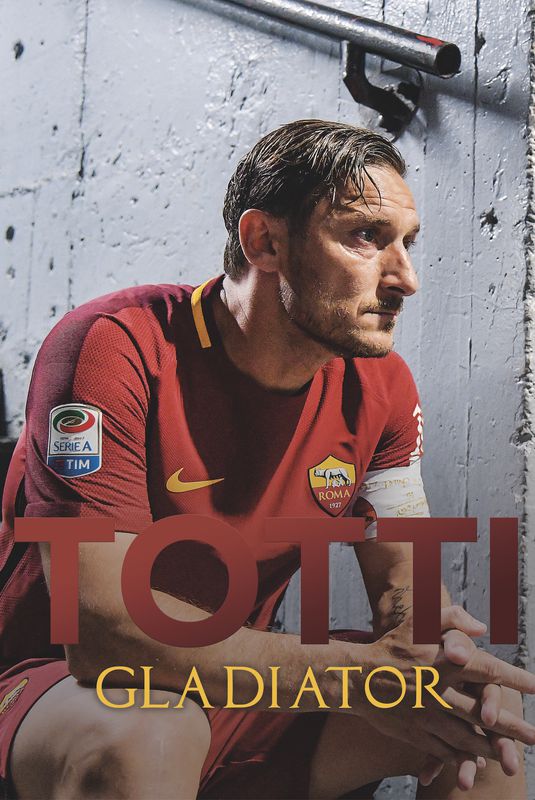
Gladiator by Francesco Totti with Paolo Condo, and tr. by Anthony Wright (2021)

I’ve long commented on the lack of availability of translated versions of non-English sports books. So many interesting stories and insights that those of us who sadly don’t speak French, German, Spanish etc. miss out on. Thankfully this seems to be changing with a growing number of Italian football books getting an English translation – perhaps building on the success of Pirlo’s excellent book a few years ago.

2021 saw two such books which were of massive interest to me. Firstly, and I’ve tweeted repeatedly about this one, Arrigo Sacchi’s book on the great Milan ‘Immortals’ team was published in English by the excellent Backpage Press. A brilliantly interesting and enjoyable book, it shed a light on his tactics, his players, Berlusconi and Italian football of the late 80’s.

Even more recently, deCoubertin Books has published the autobiography of the A.S. Roma and Italy legend Francesco Totti. The uncrowned 8th King of Rome, Totti played and scored for the Gallorossi more times than any other player (indeed he even got more Serie A goals than any other footballer since the 1940s). He was club captain for 20 years and played a pivotal role in Italy’s World Cup win in 2006.

Totti was a player who could make anyone fall in love with football. A number 10 in the most perfect sense of the phrase. In an era of great playmakers in Italian football, he stood out for his consistency, the quality of his passing and his demeanor on the pitch. He operated as a world class playmaker, a world class goalscorer and a scorer of world class goals. On top of this, his commitment to Roma at the expense of even greater fame and fortune endeared him not just to the red half of Rome but to fans around the world. Players who stay at single club for their whole careers, particularly international stars, are so rare that they achieve a unique place in fans’ imaginations.

A montage of ridiculous moments of skill

Gladiator is a relatively typical autobiography in terms of format and structure, recounting Totti’s life story and peppered with insights into players, managers and others who played a big role in Totti’s life. The book dives deeper into some select areas including Roma’s Scudetto victory, Antonio Cassano’s entertaining time at the club and Italy’s World Cup win in 2006. It also highlights specific times in his career when his destiny nearly changed – being offered a contract first at Milan, Bianchi trying to sign Litmanen and rejecting the chance to become a Galactico in Madrid. Unsurprisingly his departure from Roma as a player (he remains as a director) is also covered in depth The choices of areas to focus on are well made and the book remains interesting throughout.

Most fascinating to me is Totti’s own description of his talent. From an early age he knew just how good he was. At each point of his early career, his experience reinforced to him that he was in fact better than almost any other player in Italy. Yet somehow this knowledge didn’t lead to his destruction but instead gave him the confidence to emerge as a leader and club captain at a very young age. In the book he manages to capture this understanding of his ability without the arrogance of a Zlatan Ibrahomivic but without displaying false modesty either.

The book also captures what he means to the city of Rome (the red half at least) and the price that love had on Totti personally. Repeatedly in the book he laments (but doesn’t whinge) about not being able to enjoy living in one of the world’s great cities because to walk around outside is to be inundated by hundreds of fans. He shares some funny anecdotes which capture the intensity of his celebrity in the city.

For any fan who smiles when remembering Totti at his peak, this is a must-read. If you made it this far without watching the YouTube video montage of his greatest pieces of skill scroll back up right now. The book is coauthored by one of Italy’s foremost sportswriters, Paolo Condo, and translated by Anthony Wright and published (in English) by deCourbtin books.

Not a bad looking chap to be fair

‘The Great Nowitzki: Basketball and the Meaning of Life’ by Thomas Pletzinger (2022)

For any basketball fan, Dirk Nowitzki, the former 2007 NBA MVP and 2011 NBA Champion needs no introduction. It is not an exaggeration to call him a basketball revolutionary, a 7 footer who played like a guard and a man who helped make the sport more variable, creative and smarter.

Pletzinger, a German novelist and sportswriter, traveled with the Mavericks superstar Dirk Nowitzki for seven years, seeking the secret of his success and longevity. Most interestingly he spent this time with Nowitzki in the later years of his career – the period between his 2011 NBA title and his 2019 eventual retirement after a remarkable 25 years as a Dallas Maverick.

As a result, like a normal biography, the early years of Nowitzki’s career are told through the memories of the vast number of people Pletzinger spoke to. However, at no point does this feel like a typical biography as the time Pletzinger spends with the player himself and his personal coach Holger Geschwinder, leads to an openness that is both refreshing and rare.

Central to Nowitzki’s career, and his life since turning 15, is the fascinating figure of Geschwinder. Described alternatively as a shooting coach, master coach, manager, psychologist, janitor, clairvoyant, consultant and friend, Geschwinder was the mentor who helped Nowitkzi turn his potential into world beating talent. Together player and coach identified the importance of sacrifice, discipline, and to work without compromise with the book capturing their legendary personal workouts to hone Nowitzki’s body and shooting. It’s impossible to do justice to their relationship without capturing the minutiae of their dynamic as Pletzinger so excellently does.

Trailer for ‘Nowitzki: The Perfect Shot’ a 2014 feature length documentary on Nowitzki’s career (available free on Roku in the USA)

The strongest parts of the book are those which capture Pletzinger’s personal interaction with Nowitzki and the surrounding ‘Dirkmania’. They capture Nowitzki’s life, his personality, his way of carrying himself in an intimate manner denied most biographers. They also cover the most interesting part of any player’s career, those post peak years when Nowitzki is both an active player and a legend. As Pletzinger says, the book is his ‘quest to find the significance of Nowitzki… [his] attempt to make sense of Dirk Nowitzki’. The Nowitzki he ultimately finds is remarkable for his ordinariness while living, and making the sacrifices required to live, an extraordinary life.

This is a special book. A really great read that captures the uniqueness of Nowitzki, his impact on basketball & Dallas and the sacrifice & dedication required to play at the top level for so long. It works not just as biography but as a story of sporting fame and fandom. Of the symbiotic relationship between a superstar and his city, country and the broad range of people touched by his feats of sporting greatness. Comparison’s to The Breaks of the Game, David Halberstam’s masterpiece of sport’s writing are valid in how engrossing, engaging and special this book is – and there is no greater praise I can give a book than that.

The book was published in German a couple of years ago shortly after Nowitzki’s final game. However the translation has been done very carefully – Pletzinger describes it as a ‘cultural translation’ with parts being edited, added and removed to suit the intended US audience. It is clearly a successful approach from how readable the book is.