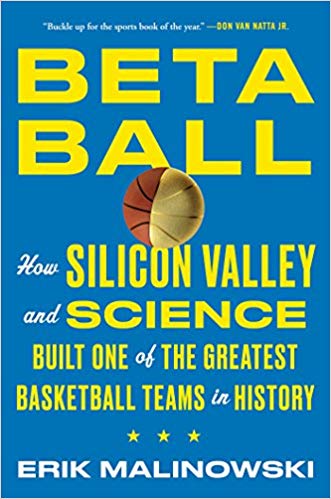
‘Betaball: How Silicon Valley and Science Built One of the Greatest Basketball Teams in History’ by Erik Malinowski (2018)

As a kid, Channel 4’s decision in 1995 to start showing the NBA led me to fall in love with the sport of basketball.   The Bulls of Jordan’s second stint were the dominant team with Shaq led Orlando Magic also a particular favourite. Its only in recent years that I have rekindled a keen interest in the sport and got properly interested again after getting to watch Team USA play live at the Rio Olympics.  This season Sky Sports have bought the rights to show NBA games in Ireland so I finally have regular access to games again (and highlight shows at more Irish timezone friendly hours).

All of which means I kinda missed the rise of the Golden State Warriors – all of a sudden they were not just a new Championship contender, but a contender for the best team of all time.   I was really excited to read Betaball and figure out just how this happened.

Betaball is a very enjoyable read.  It’s a detailed retelling of the rise of the Warriors under its current ownership and the key personnel decisions that led to the creation of an elite team.  It’s also a pretty detailed blow-by-blow account of the key matches of the 14/15 and 15/16 seasons.

The book however promised more with its subheading of ‘How Silicon Valley and Science Built One of the Greatest Basketball Teams in History’.   The book talks about the use of analytics, the reliance placed on unconventional hires and the importance of a harmonious working environment it.  While there is a lot of talk about collecting and using data there really isn’t much insight into how or why their use analytics helped them win.  There are suggestions that the Warriors were better at focusing at rest and conditioning than other teams may have been but the thread isn’t fully drawn out in the book.

In many ways the story feels quite conventional – a new owner arrives and makes some really good personnel decisions, the unrealised potential of an existing player (Steph Curry) is finally realised, some really good draft picks (including a bit of luck in Green turning out better than anyone expected) are made and free agency is used wisely to secure the final missing pieces.

The book does give some interesting insights into the managerial and organisational culture introduced by the new owners.  In particular it was interesting how the new owners waited a full season before making radical changes.  It’s rare to see a sports team owner show such patience and not immediately try to remodel the team in their own image.  The process for decision making seems to have been very collegiate with everyone seemingly willing to listen to all viewpoints before making key decisions.

I don’t mean to be overly negative.  If the book was subtitled differently this would be a more positive review about how interesting the book was, the keen insight it gives into Steve Kerr in particular, and the interesting ways in which small changes can have a big impact on an team’s performance.

Overall, Betaball is a very interesting look at the rise of the Warriors, but not quite the book its subtitle promises it would be.
betaball


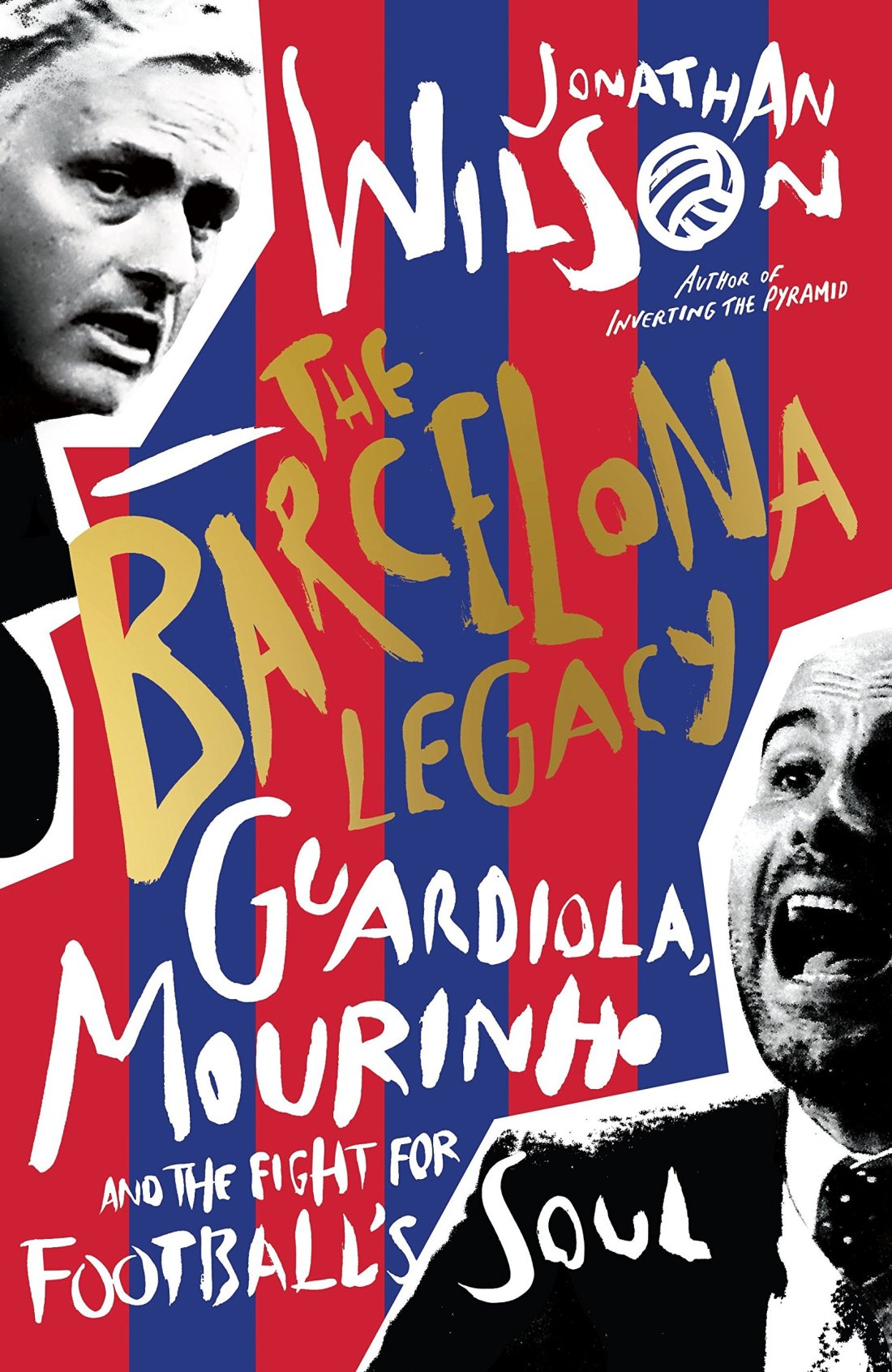
‘The Barcelona Legacy: Guardiola, Mourinho and the Fight For Football’s Soul’ by Jonathan Wilson (2018)

In my early twenties I spent a two week holiday in Thailand with friends.  Typically such holidays involve full moon parties, buckets with mystery booze, and magic mushrooms on ‘Mushie Mountain’. While I was there I spent more time reading Inverting the Pyramid, Jonathan Wilson’s seminal book on the history of football tactics than I did doing basically anything else.  I say this to provide the context that I’m not an objective reviewer of Wilson’s work as I probably enjoy his broad stroke analysis of football’s evolution more than your average reader.

More than the Barcelona Legacy, Wilson tells the story of Johan Cruyff’s legacy and how the modern game has been shaped by coaches who were at Barcelona in some capacity in the early 90’s.   The book traces the tactical evolution of Pep Guardiola, Louis van Gaal, José Mourinho  Ronald Koeman, Luis Enrique, and Frank de Boer, and the impact those coaches have had on the game’s overall evolution.  It’s a story of football philosophy and what it means to play football “the right way”.

The clash of Pep and José in Spain is the box office centrepiece of the story – Pep’s Cruyffian ideals versus vs Mourinho ‘s cynical counter attacking football.   Wilson avoids taking sides and presents an unbiased assessment of how the game has developed across Europe.  This is perhaps the best thing about the book as the most popular books to present on any of these figures are generally very biased either in favour of their subject (like Marti Peraneu’s books on Pep) or against (like Diego Torres trashy, brilliant and totally unreliable book on Jose).   Given their current fortunes, it would have been very easy to fall into the trap of declaring Pep the victor in a battle of good vs evil.

Many of the individual details of the book will be familiar to the type of person who generally reads Wilson’s books (i.e. football nerds) who will likely have read many of the books Wilson cities throughout.  However, the book is very well researched with Wilson adding the views of key players like Javier Zanetti or Ricardo Carvalho either from interviews or from biographies that aren’t available in English.  It ensures some fresh and interesting material even for those of us who have devoured the many biographies of the key figures and clubs at the centre of the story.

I enjoyed particuarly the bits of the book that I hadn’t read about elsewhere – Mourinho’s origin story (well he is basically a super-villian), Van Gaal’s post Barca evolution and the turmoil at Ajax were all areas I was less familiar with that are covered well.

Like all of Wilson’s books he can’t resist showing off his literary knowledge with the occasional digression showing how well read he is.  I quite like this about Wilson’s writing – and The Outsider shows this side of his work off the best – but I can imagine it will alienate some readers.  Those interludes are brief and the book quickly gets back to more familiar territory.

What this book excels at is providing a clear joining of the dots by setting Pep, Jose and the others in the context of Cruyff.  Above all it is a testament to Cruyff’s influence on the game and how his approach shaped 25 years of tactical evolution.

Like all Wilson’s work, its a very enjoyable, interesting and thought provoking read.  It leads immediately to a YouTube binge as you try track down some of the more memorable matches and moments.  I think you can tell if you’ll like this book by your response to someone using the phrase post-Cruyffian.  If it makes you think of Guardiola’s possession based football this is the book for you.  If it makes you think ‘tosser’ then it might not be the book for you!

One thing the book left me wondering about is Athletico Madrid’s rise which is noted but not quite explained.  I’ve since ordered Hijacking Laliga by Evan McTear which promises to answer that very question!

The book is accompanied by a 6 part podcast which narrows in on 6 key games covered in the book.  An interesting, and to my mind successful, way of promoting the book while also enhancing the experience for readers.  Hopefully something that catches on.

Barca Legacy.jpg