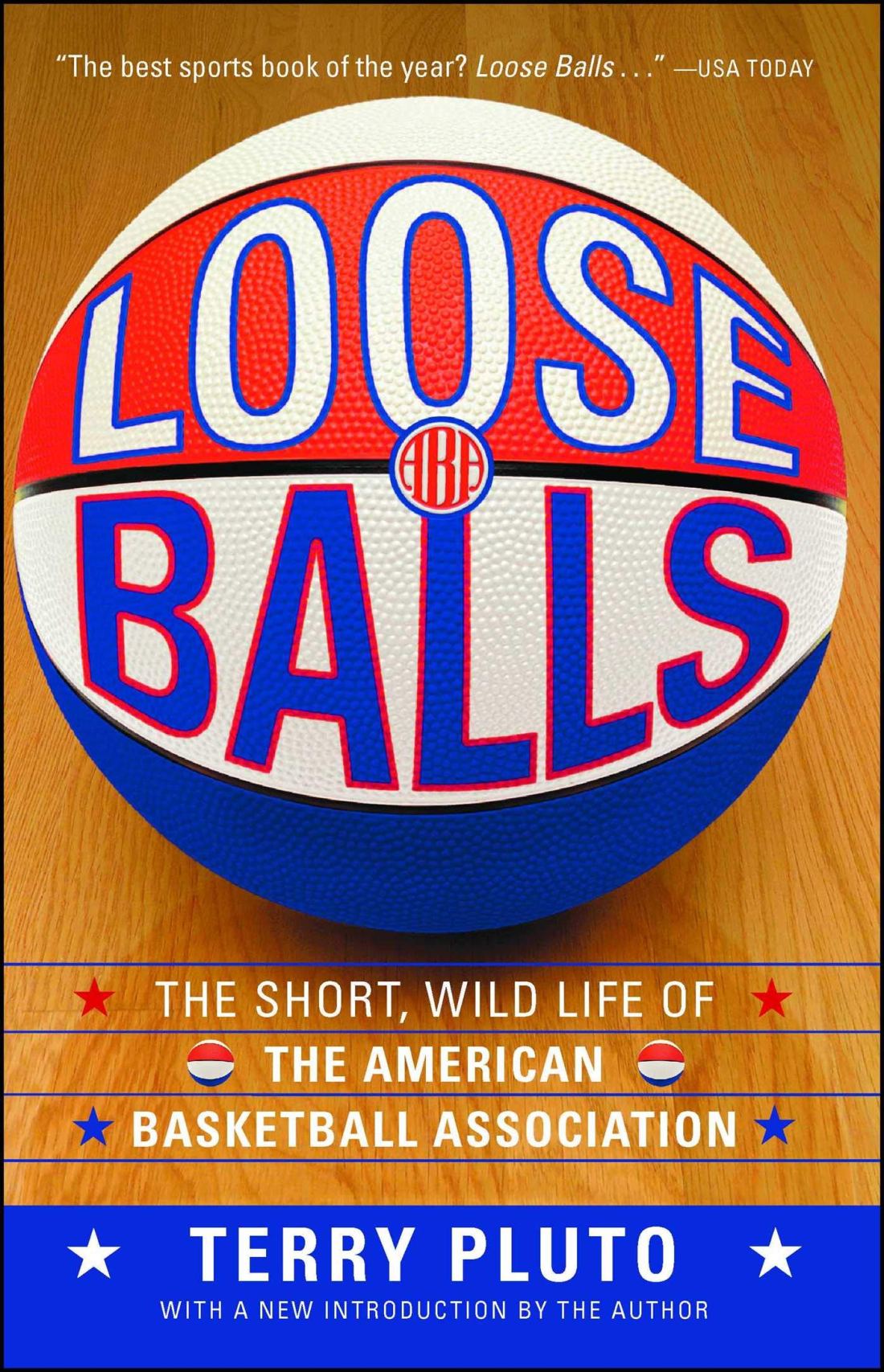
‘Loose Balls: The Short, Wild Life of the American Basketball Association’ by Terry Pluto (1990)

The American Basketball Association was as an upstart professional league which lasted 9 years before eventually merging with the NBA in 1976.  Well, 4 teams were absorbed into the NBA –  the other 2 teams were left to die (a well-compensated death) and 4 other ABA teams had already folded.

Loose Balls is an oral history of the ABA, the crazy stories, and the impact it ultimately had on the NBA.  It’s remarkable that the ABA survived 9 years with almost no television exposure and very scant newspaper coverage.  The lack of a strong written or video record meant that Pluto wisely chose to write an oral history detailing the often contradictory but always entertaining memories of the key characters in the ABA story.

The ABA’s formation seemed to have been quite haphazard.  In many ways it came into existence because of one man, Dennis Murphy’s, determination to set up a sports league.  Key decisions such as the use of a red-white-and-blue ball and the introduction of a 3 point shot were made on whim rather than being part of a grand design.

The book is exceptionally funny because the characters involved and the shenanigans they got up to funny, bizarre and entertaining.  The story is a wild ride of crazy characters, marketing stunts and, importantly, some very good basketball players.  The business side of the story is also fascinating as teams scrambled to survive and to try and pressure the NBA into a merger.

All of those interviewed by Pluto share the view that the ABA fundamentally changed professional basketball.  These changes included the move to a faster paced game, the 3 point shot, the drafting of younger players and the overall focus on entertainment.   It’s also remarkable just how successful many of the ex-ABA players were after crossing over to the NBA.

There is something I find incredibly interesting about attempts to create a new sports league rivaling a well-established league.  It seems like a crazy idea doomed to fail.  Jeff Pearlman’s recent Football for a Buck brilliantly told the crazy story of the failed United States Football League. And Vince McMahon’s determination to bring back the XFL in 2020 shows there will always be dreamers willing to risk big bucks to break the monopoly of major sports leagues.

Loose Balls covers all 9 seasons, all 10 teams and most of the major players involved in the ABA.  It’s the definitive history of the ABA told by those who lived and loved it.  It is a classic sports book that deserves its place on the list of the all time greats.

As a companion piece, I’d highly recommend the ESPN 30 for 30 documentary Free Spirits which interviews many of those who spoke to Pluto, as well as Pluto himself.  It focuses on the Spirit of St. Louis team who lasted only two years, had a crazy cast of characters and whose owners secured the best financial deal in sports history when being denied a place in the NBA.
loose

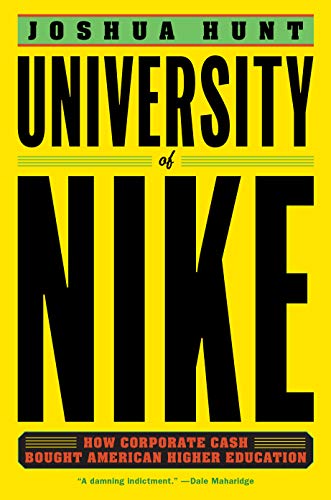
‘University of Nike: How Corporate Cash Bought American Higher Education’ by Joshua Hunt (2018)

Having read ‘Shoe Dog’ by Phil Knight and ‘Bowerman and the Men of Oregon’ by Kenny Moore, I have a good understanding of the Nike origin story. One thing that always struck me was just how comfortable Phil Knight was with taking risks and with screwing over business partners.

University of Nike shines a light on the dark side of Nike’s growth – the money it pumps into US schools and universities to ensure that the Nike brand is closely associated with collegiate sports. Hunt uses the relationship between Nike, Knight and his alma matter, the University of Oregon, to shine a light on the troubling commercialisation of public education in the US.

Hunt traces the rise of this commercialisation back to the reduction in public funding in US academic institutions. Unsurprisingly corporations began to fill the void but the money often comes with strings attached. Some of the background to corporate influence in US education is shocking. Hunt highlights, in particular, stories of school districts signing exclusive deals with Coke or Pepsi which rewarded the school district for every drink sold on their premises.

Knight made huge personal donations to the University of Oregon to build a wide range of facilities – both academic and sporting. Nike also provided huge resources in terms of PR and marketing to building the Oregon Ducks brand. It appears that the line between the University and Nike often became quite blurred.

Oregon used the money to build their sporting profile. They then used sporting success as a brand builder to encourage out of States students to apply to study there as such student pay more in tuition than Oregon native students pay.

Hunt outlines the downside of this commercial support. In a sporting sense, the aims of the University became twisted towards sport rather than learning. In non sporting situations limits can be placed on the publication of research that doesn’t align with the interests of corporate donors. This ultimately calls into question the very essence of what a public university should be. Additionally, Hunt shows how unforgivable behaviour by student athletes can be swept under the carpet to avoid embarrassment being caused lest the money tap be turned off.

University of Nike is a well researched, well written and extremely interesting read. Hunt has done an excellent job in highlighting really serious issues that go well beyond sporting concerns.   This book is an excellent case study in the need for public funding of public goods – of which education may be the most important.

univ of nike

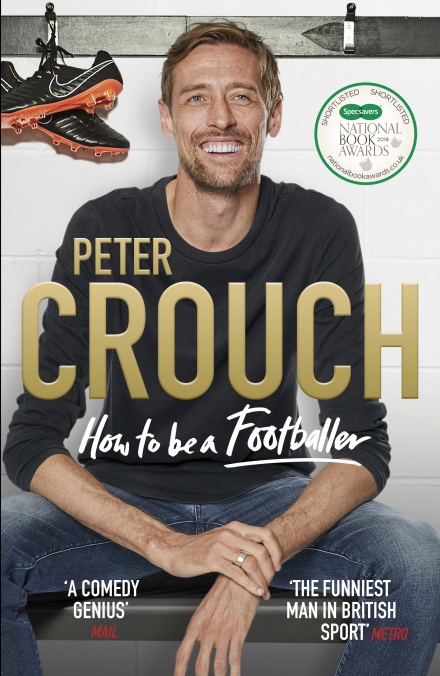
‘How to be a Footballer’ by Peter Crouch (2018)

I don’t think there’s a more likeable footballer in England than Peter Crouch.  Immediately memorable as, at 6’7, he towers over any other Premier League player, Crouch went from early ridicule to broad recognition as a pretty talented player.   He holds the record for most Premier League headed goals, he appeared in Champions League final for Liverpool, scored at the World Cup finals for England and has an impressive 22 goals in 46 England international appearances.  He is also very very funny as his twitter usage and widely quoted one-liners reveal.

Likeable as Crouch is, I’m not sure I’d want to read his autobiography (turns out he published one at age 26 in 2007!).  The USP is that he is really tall and got some stick until he proved he’s actually quite a good player – not the stuff of a bestseller.  Wisely, Crouch has written a very different book to the standard footballers fare.  How to be a Footballer is a wide lens look at the game from a multitude of angles – the dressing room, transfers, agents, etc.  Crouch dips into his vast stock of anecdotes to illuminate life behind the scenes in the Premier League.

It’s an entertaining read that any fan of English football will enjoy.  The jokes work, the anecdotes are never too cruel, and there’s plenty of the self-depreciating humour you’d expect from the man who famously answered the question of what he would be if he wasn’t a footballer with the answer “a virgin”.  It’s light, informative and very funny.  An ideal Christmas present for any football fan.

EDIT:  I’ve also just read the follow up book “I, Robot, How to be a Footballer 2”.  It’s equally as entertaining  as the first book.  Wouldn’t recommend reading them back to back as the anecdotes all merge together in memory.  


crouchie

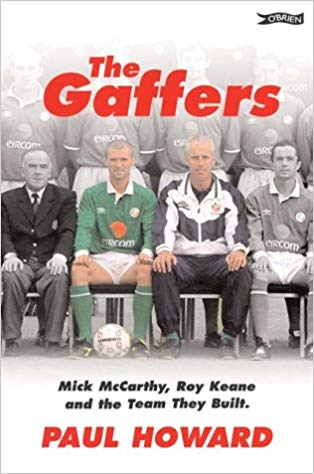
‘The Gaffers: Mick Mc Carthy, Roy Keane And The Team They Built’ by Paul Howard (2002)

When a writer decides to select an ongoing event or situation to cover for a non-fiction book, there’s always the unknown question of what happens if the situation changes radically?  The coach gets fired, the team turns out to be crap, the player gets a drugs ban etc. etc.

Howard decided to write The Gaffers in 2001 looking at how the awkward double act of Mick McCarthy’s management and Roy Keane’s captaincy had driven Ireland to the 2002 World Cup in Japan & Korea.   Little could Howard have known that the dynamic of their relationship would become the biggest story in world sport as Keane ultimately ended up leaving the squad in the incident that will forever be known simply as ‘Saipan’.  Howard ultimately ended up writing about a relationship that was dissected over in immense detail – I’ve no idea whether it was good or bad for sales but it certainly made it a different book than would have been intended.

handshake

The Gaffers has sat in my ever expanding to-read pile for about 10 years.  McCarthy’s re-appointment as Ireland manager (as Keane departs as assistant manager) has led me back to books from that era of Irish football.

Howard paints a picture of both McCarthy and Keane through the eyes of the other members of the Ireland squad.  McCarthy was the former captain who showed great loyalty to players and knew how to handle nervous young stars.  Keane was the champion who refused to settle for second best and resented time away from home if it wasn’t being put to maximum use.

Howard’s thesis is that the combination of a supportive manager and a driven demanding captain inspired a team of mixed talents to outperform their individual abilities.  In hindsight, it seems obvious that the relationship could only continue for so long, but all logic suggested they would make through a few more weeks till the end of the World Cup.

The book takes us through the background to their relationship and the qualification campaign that saw the memorable 1-0 win vs. Holland in Landowne Road. By necessity, the later stages of the book become a retelling of the Saipan story and an overview of Ireland’s World Cup games.  Unfortunately the great ‘what-if’ remains whether the Keane/McCarthy dynamic could have driven Ireland further in what remains the weakest World Cup in years.

The book was an enjoyable nostalgia trip and a good insight into the dynamics behind the Irish team in the later stages of McCarthy’s first spell in charge (it also brought back much more painful memories of Ian Harte’s spell as a starting international centre-back). It’s a short and well written book that any Irish football fan would enjoy.

As McCarthy takes the reins again, it will be fascinating to see whether he can recreate the team spirit and dynamism in a team that no longer has the world class talents of Robbie Keane, Damian Duff, and the one and only Roy Keane.

  The Gaffers


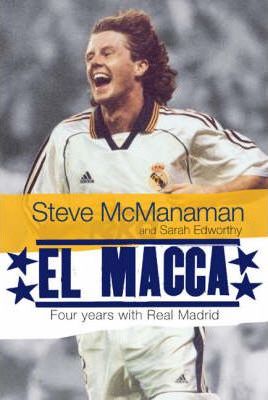
‘El Macca: Four Years with Real Madrid’ by Steve McManaman and Sarah Edworthy (2004)

Steve McManaman was a footballer who was impossible to dislike.  Talented and entertaining to watch, he also came across as a decent guy.  Off the field, he was known for wisely investing his money, his love of horseracing and marrying a lawyer.

After nine years at Liverpool, during which time Liverpool had to come to terms with no longer winning Championships, he moved to Real Madrid in 1999. The transfer was one of the first high profile Bosman free transfers and McManaman one of the few English players to move to the Continent and succeed.   And succeed he did, despite at times relatively little attention being paid to his time at Madrid by the British media.  He became the first English player to win the UEFA Champions League with a non-English club in 2000, and the first English player to win the Champions League twice.

El Macca is a detailed look at the 4 years McManaman (known to all as Macca) spent at Real Madrid.   His first year was incredibly successful as he became a regular starter in a Champions League winning side and scored a spectacular volley in the final against Valencia.

Following the installment of Florentino Perez as Real President, McManaman found himself sidelined as the club looked to get him off the wage bill to pave the way for the Galactico era – the plan of Zidanes & Pavons – that was intended the club combine global superstars with youth team graduates.    McManaman refused to complain, worked hard, and eventually made himself indispensable.  As the Galactico era continued, he became a more regular substitute than starter for his last two seasons.  Despite this, he seems to have remained a key figure for his coach Del Bosque, often having a significant impact when brought off the bench.

The book provides a really interesting insight to an era of change at the biggest football club in the world.  Every player at the club was a household name and the very biggest names in the game found themselves all in the same team at Madrid.   All the players come across quite well with Figo and Hierro standing out as interesting characters who got on very well with McManaman.  After he left the club, it would take another 12 years before they managed to win another Champions League and complete La Decima.

In many ways the book reads like a book written solely by Edworthy as its mostly written in the 3rd person.  However, with McManaman’s seal of approval, its highly unlikely that other players would have spoken so openly and candidly.   The warmth the player feel towards McManaman is clearly evident as is the impact he had at the club at a personal and professional level.   The book also serves as a partial biography of McManaman who speaks openly about his disappointment about missing out on the 2002 World Cup and a look at what the England camp was like under Glenn Hoodle.

Overall, El Macca is an enjoyable read and an interesting look behind the scenes of the most fascinating club in football during its most fascinating era.

El Macca


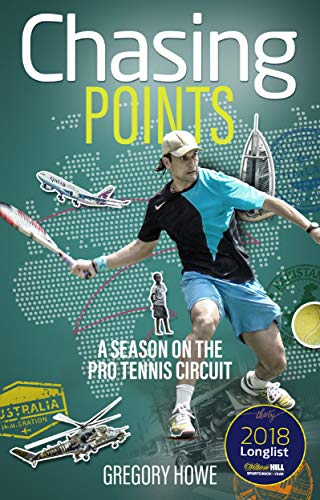
‘Chasing Points: A Season on the Pro Tennis Circuit’ by Gregory Howe (2018)

I think we all have fantasies about our dream careers.  Something we showed a little bit of aptitude and passion for, but were never realistically going to get paid to do.   The rise of reality talent shows suggests this question – could I have made it? – sits inside an awful lot of us.

For me, I did some stand-up comedy in college alongside a few people who have gone on to make a living in the comedy/entertainment world.   I was good but I knew I’d never have enough strings to my bow to achieve much more than getting laughs from a crowd of peers who shared all of my cultural references.  But getting the opportunity to tell jokes while giving speeches at weddings over the last few years, and getting brilliant feedback stirred up the old feelings of  – could I have made it? Or at least, should I have tried?

This long-winded introduction is all to make the point that when reading Chasing Point, the story of a 34 year old man’s attempts to play professional tennis, I cannot emphasis enough how much I wanted Howe to succeed.   I wanted to stop reading after each loss – and unsurprisingly there are a hell of a lot of them – and I genuinely smiled at each moment of success.

Howe had been a very good tennis player but, by his own account, not good enough that a career in the game seemed inevitable or even likely.   He continued to play in tournaments into adulthood and used tennis as a way to see the world – combining holidays with entering some local tournament.

At 34 however, Howe decided to give the game one last shot.  The book covers a year spent mostly on the Futures tour, the third rung of professional tennis, where players fight it out for a tiny number of ATP Tour points with a view to moving on to Challenger Tour and ATP Tour tournaments.   Howe set himself the challenge of winning a solitary ATP Tour point that would give him a World Ranking and access to the ATP Tour.  To achieve this, he would need to win at least three consecutive games against typically much younger players who were trying to launch a career in the game.

Chasing Points exposes the incredibly unglamorous life of the majority of players who try to play tennis professionally.  Trailing across Continent’s, sleeping in crappy hotels, paying to enter tournaments and having to win three consecutive games to see any return (either financially or in Tour points), Howe paints a picture of young men unable to let go of a dream until they had no other choice.  It’s the dual nature of the story that makes Chasing Points so interesting – it’s not just Howe’s journey but also an insight into the struggles of thousands of others on the way up or the way down as they try and try to make it as professional tennis players.

The book has been published 10 years after the season it chronicles.  It’s therefore really interesting to be able to know what eventually happened the various characters Howe meets along the way.   The majority end up drifting into obscurity with some never playing another professional game after Howe beats them.

Howe’s ambitions were relatively modest and highly personal in nature – there’s almost no reward for being ranked the 1,200th best player in the world.  But it’s this personal satisfaction that makes the challenge worthwhile – Howe set his sights on something and commits to trying whatever he can to achieve it.  It’s not a tale of extreme sacrifice – Howe spends a bit of money on the quest but he isn’t poor. It’s not a tale of extreme obsession – Howe doesn’t destroy relationships or his health (in a major way) to achieve his goal.  It’s not a tale of life changing moments or triumph against all the odds.  Instead it’s the story of what success means to each of us and the satisfaction of the journey.  It speaks to that desire to never give up on our dreams and never stop doing what you love.

Chasing Points is a really enjoyable read.  Howe tells an interesting story and he tells it well.  There is a real risk of repetition as each tournament blends into another but Howe gets the balance right – sometimes telling a game in lots of details, sometimes simply mentioning that he lost 6-2 6-2.  Overall I’d highly recommend it for any sports fan or anybody who asks themselves am ‘I too old to try and live my dream?’.

As a 34 year old man who is writing this review in Brussels Airport on the way home from a work trip, in the breaks between taking work related phone calls, I can’t help but reflect on those long-ago dreams of stand-up comedy.  If I end up attempting an open-mic night anytime in the next few months, Greg Howe is getting the blame.

Chasing Points


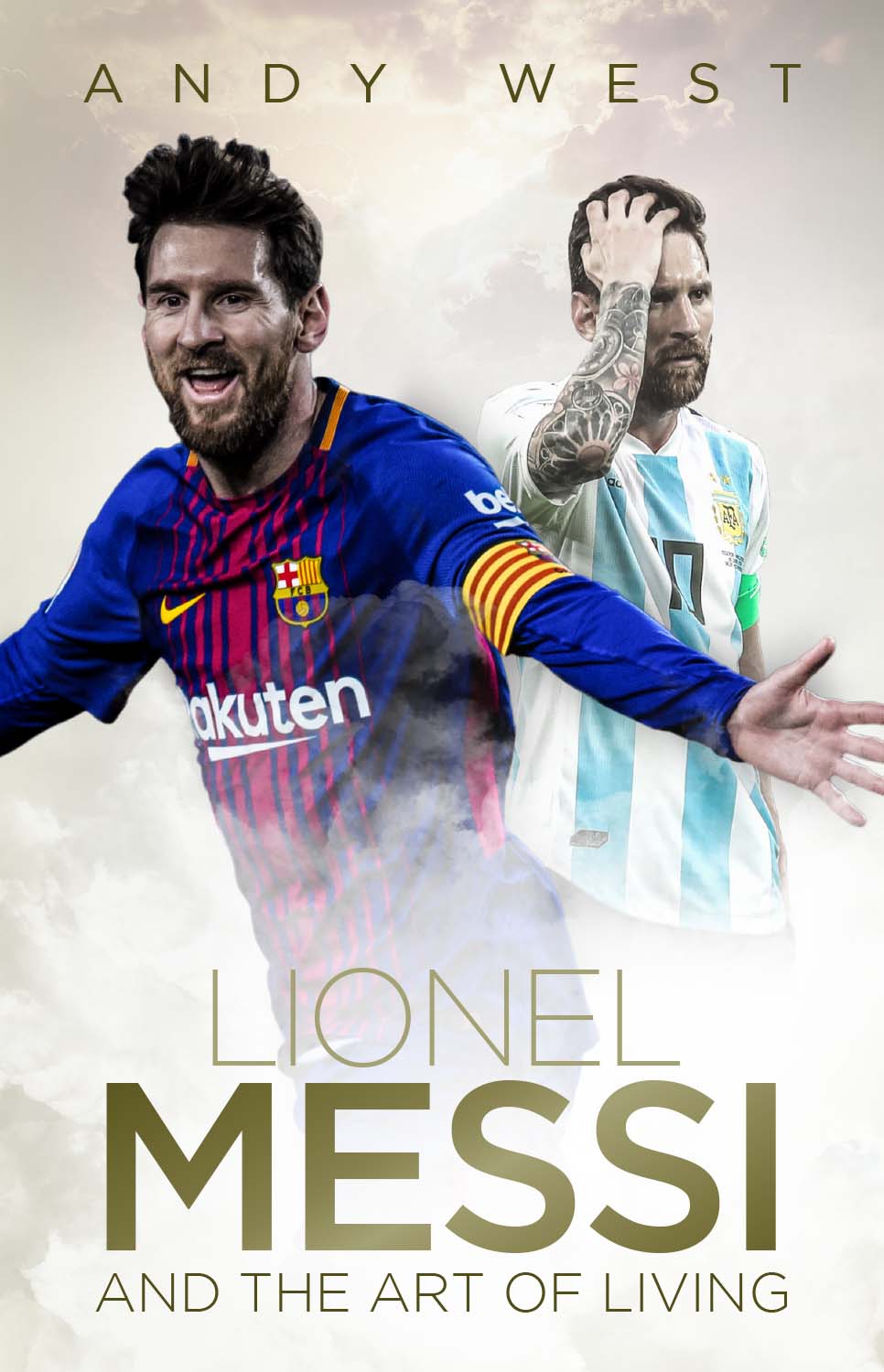
‘Lionel Messi and the Art of Living’ by Andy West (2018)

Every book has a target audience.  For sports books, it’s always a question as to what ‘fandoms’ the book will appeal to, what’s the Venn diagram of people who would like this.  Do you have to follow the sport? Do you have to be a fan of that team? Would a non-sports fan enjoy it?

About half-way through reading Lionel Messi and the Art of Living, I realised that, for this book, the target audience is me.  I love Messi, I’ve read plenty of philosophy, and plenty of pop social-science books.  I read the book during my commutes to and from the office during the toughest week in work I’ve ever had.  I read it while also in a very reflective mood having spent the weekend buying baby clothes for the first time (my wife is heavily pregnant with our first child).  I’ll never be in a more receptive place for some insights into how to live and never more willing to learn than from the greatest footballer of all time.

Did I mention that I love Messi?  I’ve loved him from the first time I saw him play. I sound like one of the 5 million Liverpool fans who claim to have been in Istanbul but I was boring enough to have watched almost all of the U20 World Cup in 2005 when he first emerged.  My brother’s childhood sweetheart had just broken his heart the day we both finished undergrad and, being freshly graduated and jobless, I spent 6 weeks trying to cheer him up with a diet of rented movies and sport on TV.  I probably don’t love Messi as much as my friend who has ‘Messi 10’ tattooed on his arse, but for me, he is the footballer that defines the last 10 plus years of my enjoyment of the game.

Returning to the book, it is very hard to categorise.  It’s part biography, part philosophy, part self-help book, part Zen and the Art of Motorcycle Maintenance. In some ways it could be read as the foundational book for the Church of Messi – a New Testament built around our one true saviour (from the evils of CR7).  But that may just be by me.

A more balanced, less emotional, review it’s that the book is an interesting approach to examining the factors that breed success in life – by whatever metric you judge that.  West seeks to examine Messi’s football career as a potential guide for how to live – he explores the characteristics which Messi displays and are essential to his success and, by analogy, to success in life in general.

West took the approach of interviewing just 7 people – some in football, some who knew Messi and others with interesting things to say.  Each chapter interweaves these interviews with a study of how Messi demonstrated one of the key characteristics needed to be successful.   The format works really well, the writing is very readable and it’s a book you could easily dip in and out of.

If you want a flavour of what the book is about, West has a great twitter thread (@andywest01) that gives a summary of each chapter.  If you like the sound it from that summary, you’ll love the book.  While I think the overall approach of the book might alienate some readers looking for something more traditional, West has gone for something different and he executes his vision brilliantly.

In summary, I loved it.  You might not like it quite as much but you should definitely give it a shot.

Lionel Messi Art of Living FC 1500px

‘The Binman Chronicles’ by Neville Southall (2012)

I’ve always liked Neville Southall – the legendary Everton and Wales goalkeeper who played into his 40’s.   By the time I was a football obsessive 8 year old, he was already in the later years of his Everton career and the team were a long way away from the League and FA Cup winning teams of the mid-80’s.  Southall appeared to be a throwback to an earlier era as football became increasingly commercially driven.

The Binman Chronicles is a fairly standard ex-footballers autobiography.  It follows an old-school format of focusing heavily on his playing career and, after covering his early years and how he got into professional football, chronologically detailing season-by-season.   The book reads in Southall’s voice but the book could have done with tighter editing with a bit too much repetition – every off-season was boring, he doesn’t like holidays, just loves playing football etc.  It feels too much like interviews with Southall were transcribed directly rather than a ghostwriter editing to capture Southall’s voice and story.

While the book can at times be a bit bland, Southall himself is an interesting character – as anyone who follows him on twitter will know.  Arguably the best goalkeeper in the world during the mid-80’s, he never pushed for big money or a glamours move abroad. A tee-totaller but a piss-taker, he seems to have somehow been both a loner and a senior figure in the Everton dressing room.  Never one to follow the crowd, Southall wears his differences as a badge of pride and seemed to have totally resisted any pressure/temptations to be ‘one of the lads’.   There is a limited amount of detail on his own personal life – apart from his love of Wales and his daughter – but he is ultimately open about his failings and his affairs during his first marriage.

From a footballing perspective, any Everton or Wales fan will be fascinated by the insights into those teams at the times Southall played.  He is open in both his praise and criticism for coaches and fellow players – he has warm words for Howard Kendall and Joe Royle despite some pretty negative experiences with both them, bit is damning in his criticism of Mike Walker’s ill-fated time as Everton manager.   For those who are too young to have experienced English football in the 80’s, the book paints an interesting picture of Everton’s rise to rival Liverpool without really detailing what exactly led to the remarkable improvements during Kendall’s first spell in charge – it seems simply have been better players and good man-management.

I would have enjoyed more about his present work which involves teaching troubled young people.  His own early struggles in education seem to help him build relationships with those who are struggling to find a place in society.  It’s clear that Southall has found a passion that rivals football and is committed to helping.

binman


‘Steroid Nation: Juiced Home Run Totals, Anti-aging Miracles, and a Hercules in Every High School: The Secret History of America’s True Drug Addiction’ by Shaun Assael (2007)

Steroid Nation sets out to tell the story of how steroids and steroid use became a significant part of sporting life in the USA.  Assael paints a broad canvas that stretches from the mavericks that started an underground steroid movement to the very highest levels of professional sport.  The book follows a chronological timeline from Gold’s gym in LA in the 80’s right up to the BALCO case in 2007.

This is the second of Assael’s books I have read, and like ‘The Murder of Sonny Liston’ it contains a cast of characters that at times seem too unbelievable to be true.   The book is at it’s best when it tells the untold story of the likes of Dan Duchaine and the underground bodybuilding scene of the 1970’s and 80’s.  At times these chapters reminded me of movies like Blow that focus on the emergence of a drug empire from a largely unexpected source.   Assael paints an intoxicating picture of excess, greed, muscles and risk – young men embarking on a journey with a self-righteousness that left them blind to the inevitable tragedies that would befall them.

Some of the other material deserves (and has received) full length books of their own and Assael can understandably only scratch the surface of Ben Johnson, Mark McGwire and BALCO for example.  What it does do brilliantly is tie the various streams together and paint the wider cultural issue of steroids-  it’s a problem at every level of sport – from gym users, to high school to the major leagues and Olympics. The political background of how supplements/steroids became (badly) regulated in the US is also really interesting.    Overall, the book is a brilliant introduction to the world of sports doping and would send a curious reader towards other really good books like The Dirtiest Race in History or League of Denial 

Assael also shines a light on the crusading drug enforcement officials – if anything the focus on the likes of Travis Taggart has gotten even brighter since this book was published. The book paints the origins of the USDA’s move to start to ban people on the basis of documentary evidence rather than relying on a failed test – the approach that ultimately led to Lance Armstrong confessing.  These parts of the book flow less smoothly or quickly than the rest – I found them very interesting though and it’s clear that Assael has enormous respect for those law enforcement officers who dedicated their careers to this fight. It’s slightly depressing reading about these guys at a time when WADA is being discredited for its favourable treatment of Russia and an apparent lack of objectivity.

I really enjoyed Steroid Nation. I’m conscious that I’ve just read this book 10 years after it first came out.  It feels like a sequel (or a revised and updated edition) would be a similarly fascinating read with Lance Armstrong now exposed, the Russian doping scandal and plenty of additional material available.  If anything, I would suspect that the term Steroid Nation remains as apt and relevant to describe sporting culture as it did a decade ago.

st nation

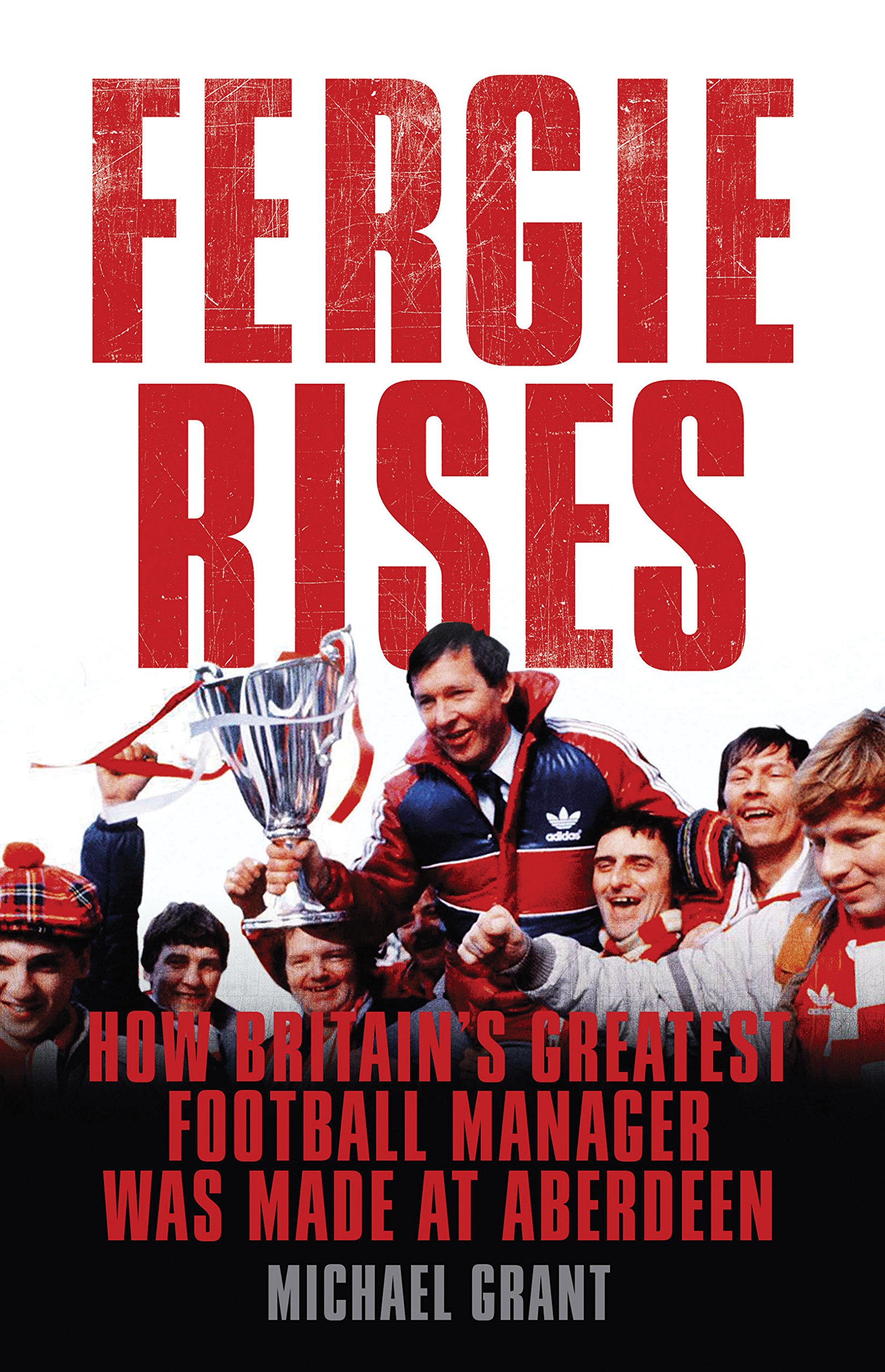
‘Fergie Rises: How Britain’s Greatest Football Manager was Made at Aberdeen’ by Michael Grant (2014)

Alex Ferguson’s legacy continues to grow everyday as, over 5 years after his retirement,  Man Utd fail to live up to the standards set during the ‘Fergie era’.  Ferguson stands almost unquestioned as the greatest manager of the Premier League era with his consistent success placing above rivals like Arsene Wenger.

Fergie Rises is an in-depth look at the job which made Ferguson’s reputation and made him the obvious choice as Man Utd manager.  After a relative successful, if at times frustrating playing career, Ferguson took over East Stirlingshire for a year before a 4 year spell at St. Mirren.   Losing his job there, largely due to personal differences rather than the team’s performance, worked out exceptionally well as he was free when Aberdeen needed to replace the Celtic-bound Billy McNeill.

The scale of Ferguson’s achievement at Aberdeen is probably overlooked by many fans.  He won three Scottish League titles, four Scottish Cups, a League Cup and most remarkably the European Cup Winners Cup and the European Super Cup.  Since he left 34 years ago they have never again won the league – although this partly relates to the rising financial dominance of the Old Firm as Celtic and Rangers benefited disproportionately from the growing commercialisation of the game.

While Ferguson inherited a very strong team, his initial genius was to recognise that fact and limit his changes in the early days.  While he struggled to win over some players in his first season, he had the support of key dressing room figures and was able to mould the team in his own image through introducing young players like Alex McCleish.  Ferguson also seems to have been able to learn from mistakes – he came close to losing the dressing room on occasion but always managed to bring the team back together.

All of the characteristics that the world would see in Ferguson as Man Utd manager are evident from his time at Aberdeen – man management skills, use of youth team talent, selective use of praise, creating a siege mentality, displays of extreme anger, an eye for talent players, and above all, a relentless need to win.

Fergie Rises is brilliantly written and a great read.  Grant has read widely and picked up various of discrepancies among how certain events are remembered.  He also appears to have conducted countless interviews with seemingly every major character from the book who are open and frank in their memories of the period.   From the detailed quotes from the players it really struck me that, looking back, they all see their years under Ferguson at Aberdeen as a key period in their lives.

Overall, I highly recommend Fergie Rises for any football fan.  It works as a standalone brilliant story of the rise of a provincial football team to national and international glory.  It’s also a brilliant insight into the formation of one of modern football’s greatest managers. Grant gives a real sense of who Ferguson was at this time in his life and the influences that shaped him before he embarked on the job that would come to define him.

BBC Scotland Documentary on the team that won the European Cup Winners Cup
Fergie

P.S. Fergie has written a fair few books himself, including one covering this period called A Light in the North – I’m hoping to track down a copy and add some further thoughts to this review.  I have read his two autobiographies – one from 1999 and another from 2013.  I loved the 1999 book but found his much-hyped later book almost unreadably bad.