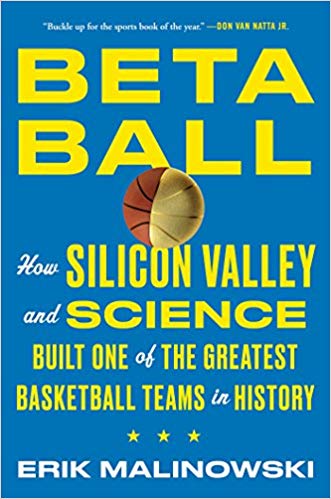
‘Betaball: How Silicon Valley and Science Built One of the Greatest Basketball Teams in History’ by Erik Malinowski (2018)

As a kid, Channel 4’s decision in 1995 to start showing the NBA led me to fall in love with the sport of basketball.   The Bulls of Jordan’s second stint were the dominant team with Shaq led Orlando Magic also a particular favourite. Its only in recent years that I have rekindled a keen interest in the sport and got properly interested again after getting to watch Team USA play live at the Rio Olympics.  This season Sky Sports have bought the rights to show NBA games in Ireland so I finally have regular access to games again (and highlight shows at more Irish timezone friendly hours).

All of which means I kinda missed the rise of the Golden State Warriors – all of a sudden they were not just a new Championship contender, but a contender for the best team of all time.   I was really excited to read Betaball and figure out just how this happened.

Betaball is a very enjoyable read.  It’s a detailed retelling of the rise of the Warriors under its current ownership and the key personnel decisions that led to the creation of an elite team.  It’s also a pretty detailed blow-by-blow account of the key matches of the 14/15 and 15/16 seasons.

The book however promised more with its subheading of ‘How Silicon Valley and Science Built One of the Greatest Basketball Teams in History’.   The book talks about the use of analytics, the reliance placed on unconventional hires and the importance of a harmonious working environment it.  While there is a lot of talk about collecting and using data there really isn’t much insight into how or why their use analytics helped them win.  There are suggestions that the Warriors were better at focusing at rest and conditioning than other teams may have been but the thread isn’t fully drawn out in the book.

In many ways the story feels quite conventional – a new owner arrives and makes some really good personnel decisions, the unrealised potential of an existing player (Steph Curry) is finally realised, some really good draft picks (including a bit of luck in Green turning out better than anyone expected) are made and free agency is used wisely to secure the final missing pieces.

The book does give some interesting insights into the managerial and organisational culture introduced by the new owners.  In particular it was interesting how the new owners waited a full season before making radical changes.  It’s rare to see a sports team owner show such patience and not immediately try to remodel the team in their own image.  The process for decision making seems to have been very collegiate with everyone seemingly willing to listen to all viewpoints before making key decisions.

I don’t mean to be overly negative.  If the book was subtitled differently this would be a more positive review about how interesting the book was, the keen insight it gives into Steve Kerr in particular, and the interesting ways in which small changes can have a big impact on an team’s performance.

Overall, Betaball is a very interesting look at the rise of the Warriors, but not quite the book its subtitle promises it would be.
betaball


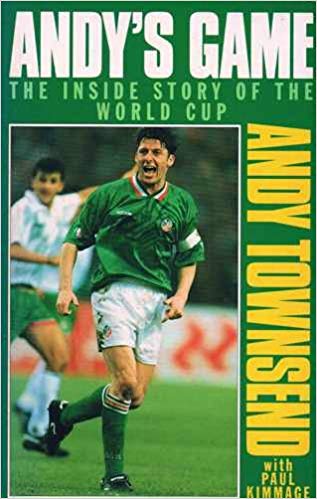
‘Andy’s Game: The Inside Story of the World Cup’ by Andy Townsend with Paul Kimmage (1994)

While reading  ‘The Gaffers: Mick McCarthy, Roy Keane And The Team They Built’ by Paul Howard (2002) I spotted a number of references to Andy’s Game.  Once I realised it was ghost-written by the great Paul Kimmage I was on to the library ordering system immediately!

Published shortly after the USA ’94 World Cup, Andy’s Game is part tournament diary and part autobiography of Ireland captain (and future ITV pundit) Andy Townsend.  It’s written in a style that will be familiar to Kimmage fans with the chapters jumping between different phases of Andy’s life interspersed with the World Cup diary.

As a 10 year old soccer obsessed kid, the summer of USA ’94 was the happiest time of my life.  As I was only 6 for Italia ’90, the qualifying campaign for USA ’94 was my first really clear memory of international football.  I devoured everything I could about the tournament during the build up.   I spent the tournament at a holiday resort (i.e. in a tent) in France with my family where I played football all day and watched football all night.  It was perfect.   I say this because any book that examines USA ’94 is getting a 5 star review from me regardless of whether it deserves it.

Reading Andy’s Game know, 24 years on, is primarily a nostalgia trip.  It’s an interesting insight into the way the Irish team operated under Jack Charlton, and into Andy’s own career.   He touches on his own developing sense of Irishness as well as the stories behind his transfers between Southampton, Norwich, Chelsea and Villa.

It is well worth a read for any Irish football fan.  Any sports fan would also enjoy the insider view on life at major football tournament – things have likely changed quite a lot since ’94 but the basic concept of 23 young men heading on a 30 plus day adventure to take on the very best in the world remains at the heart of every World Cup campaign.

andy

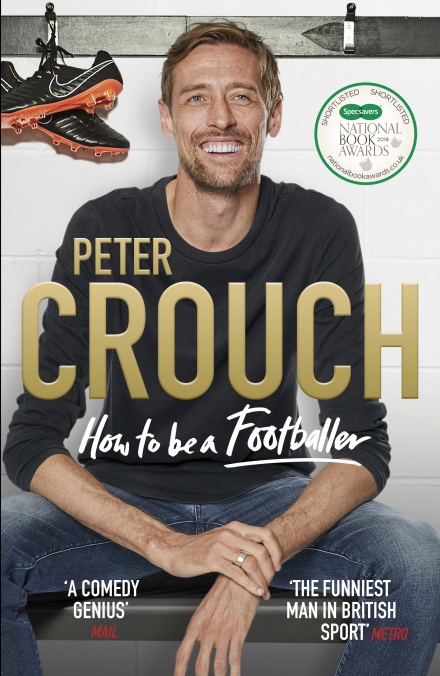
‘How to be a Footballer’ by Peter Crouch (2018)

I don’t think there’s a more likeable footballer in England than Peter Crouch.  Immediately memorable as, at 6’7, he towers over any other Premier League player, Crouch went from early ridicule to broad recognition as a pretty talented player.   He holds the record for most Premier League headed goals, he appeared in Champions League final for Liverpool, scored at the World Cup finals for England and has an impressive 22 goals in 46 England international appearances.  He is also very very funny as his twitter usage and widely quoted one-liners reveal.

Likeable as Crouch is, I’m not sure I’d want to read his autobiography (turns out he published one at age 26 in 2007!).  The USP is that he is really tall and got some stick until he proved he’s actually quite a good player – not the stuff of a bestseller.  Wisely, Crouch has written a very different book to the standard footballers fare.  How to be a Footballer is a wide lens look at the game from a multitude of angles – the dressing room, transfers, agents, etc.  Crouch dips into his vast stock of anecdotes to illuminate life behind the scenes in the Premier League.

It’s an entertaining read that any fan of English football will enjoy.  The jokes work, the anecdotes are never too cruel, and there’s plenty of the self-depreciating humour you’d expect from the man who famously answered the question of what he would be if he wasn’t a footballer with the answer “a virgin”.  It’s light, informative and very funny.  An ideal Christmas present for any football fan.

EDIT:  I’ve also just read the follow up book “I, Robot, How to be a Footballer 2”.  It’s equally as entertaining  as the first book.  Wouldn’t recommend reading them back to back as the anecdotes all merge together in memory.  


crouchie

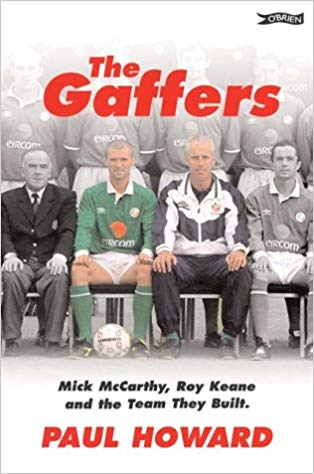
‘The Gaffers: Mick Mc Carthy, Roy Keane And The Team They Built’ by Paul Howard (2002)

When a writer decides to select an ongoing event or situation to cover for a non-fiction book, there’s always the unknown question of what happens if the situation changes radically?  The coach gets fired, the team turns out to be crap, the player gets a drugs ban etc. etc.

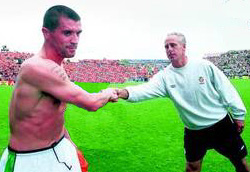
Howard decided to write The Gaffers in 2001 looking at how the awkward double act of Mick McCarthy’s management and Roy Keane’s captaincy had driven Ireland to the 2002 World Cup in Japan & Korea.   Little could Howard have known that the dynamic of their relationship would become the biggest story in world sport as Keane ultimately ended up leaving the squad in the incident that will forever be known simply as ‘Saipan’.  Howard ultimately ended up writing about a relationship that was dissected over in immense detail – I’ve no idea whether it was good or bad for sales but it certainly made it a different book than would have been intended.

handshake

The Gaffers has sat in my ever expanding to-read pile for about 10 years.  McCarthy’s re-appointment as Ireland manager (as Keane departs as assistant manager) has led me back to books from that era of Irish football.

Howard paints a picture of both McCarthy and Keane through the eyes of the other members of the Ireland squad.  McCarthy was the former captain who showed great loyalty to players and knew how to handle nervous young stars.  Keane was the champion who refused to settle for second best and resented time away from home if it wasn’t being put to maximum use.

Howard’s thesis is that the combination of a supportive manager and a driven demanding captain inspired a team of mixed talents to outperform their individual abilities.  In hindsight, it seems obvious that the relationship could only continue for so long, but all logic suggested they would make through a few more weeks till the end of the World Cup.

The book takes us through the background to their relationship and the qualification campaign that saw the memorable 1-0 win vs. Holland in Landowne Road. By necessity, the later stages of the book become a retelling of the Saipan story and an overview of Ireland’s World Cup games.  Unfortunately the great ‘what-if’ remains whether the Keane/McCarthy dynamic could have driven Ireland further in what remains the weakest World Cup in years.

The book was an enjoyable nostalgia trip and a good insight into the dynamics behind the Irish team in the later stages of McCarthy’s first spell in charge (it also brought back much more painful memories of Ian Harte’s spell as a starting international centre-back). It’s a short and well written book that any Irish football fan would enjoy.

As McCarthy takes the reins again, it will be fascinating to see whether he can recreate the team spirit and dynamism in a team that no longer has the world class talents of Robbie Keane, Damian Duff, and the one and only Roy Keane.

  The Gaffers


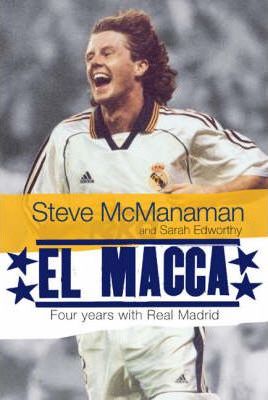
‘El Macca: Four Years with Real Madrid’ by Steve McManaman and Sarah Edworthy (2004)

Steve McManaman was a footballer who was impossible to dislike.  Talented and entertaining to watch, he also came across as a decent guy.  Off the field, he was known for wisely investing his money, his love of horseracing and marrying a lawyer.

After nine years at Liverpool, during which time Liverpool had to come to terms with no longer winning Championships, he moved to Real Madrid in 1999. The transfer was one of the first high profile Bosman free transfers and McManaman one of the few English players to move to the Continent and succeed.   And succeed he did, despite at times relatively little attention being paid to his time at Madrid by the British media.  He became the first English player to win the UEFA Champions League with a non-English club in 2000, and the first English player to win the Champions League twice.

El Macca is a detailed look at the 4 years McManaman (known to all as Macca) spent at Real Madrid.   His first year was incredibly successful as he became a regular starter in a Champions League winning side and scored a spectacular volley in the final against Valencia.

Following the installment of Florentino Perez as Real President, McManaman found himself sidelined as the club looked to get him off the wage bill to pave the way for the Galactico era – the plan of Zidanes & Pavons – that was intended the club combine global superstars with youth team graduates.    McManaman refused to complain, worked hard, and eventually made himself indispensable.  As the Galactico era continued, he became a more regular substitute than starter for his last two seasons.  Despite this, he seems to have remained a key figure for his coach Del Bosque, often having a significant impact when brought off the bench.

The book provides a really interesting insight to an era of change at the biggest football club in the world.  Every player at the club was a household name and the very biggest names in the game found themselves all in the same team at Madrid.   All the players come across quite well with Figo and Hierro standing out as interesting characters who got on very well with McManaman.  After he left the club, it would take another 12 years before they managed to win another Champions League and complete La Decima.

In many ways the book reads like a book written solely by Edworthy as its mostly written in the 3rd person.  However, with McManaman’s seal of approval, its highly unlikely that other players would have spoken so openly and candidly.   The warmth the player feel towards McManaman is clearly evident as is the impact he had at the club at a personal and professional level.   The book also serves as a partial biography of McManaman who speaks openly about his disappointment about missing out on the 2002 World Cup and a look at what the England camp was like under Glenn Hoodle.

Overall, El Macca is an enjoyable read and an interesting look behind the scenes of the most fascinating club in football during its most fascinating era.

El Macca


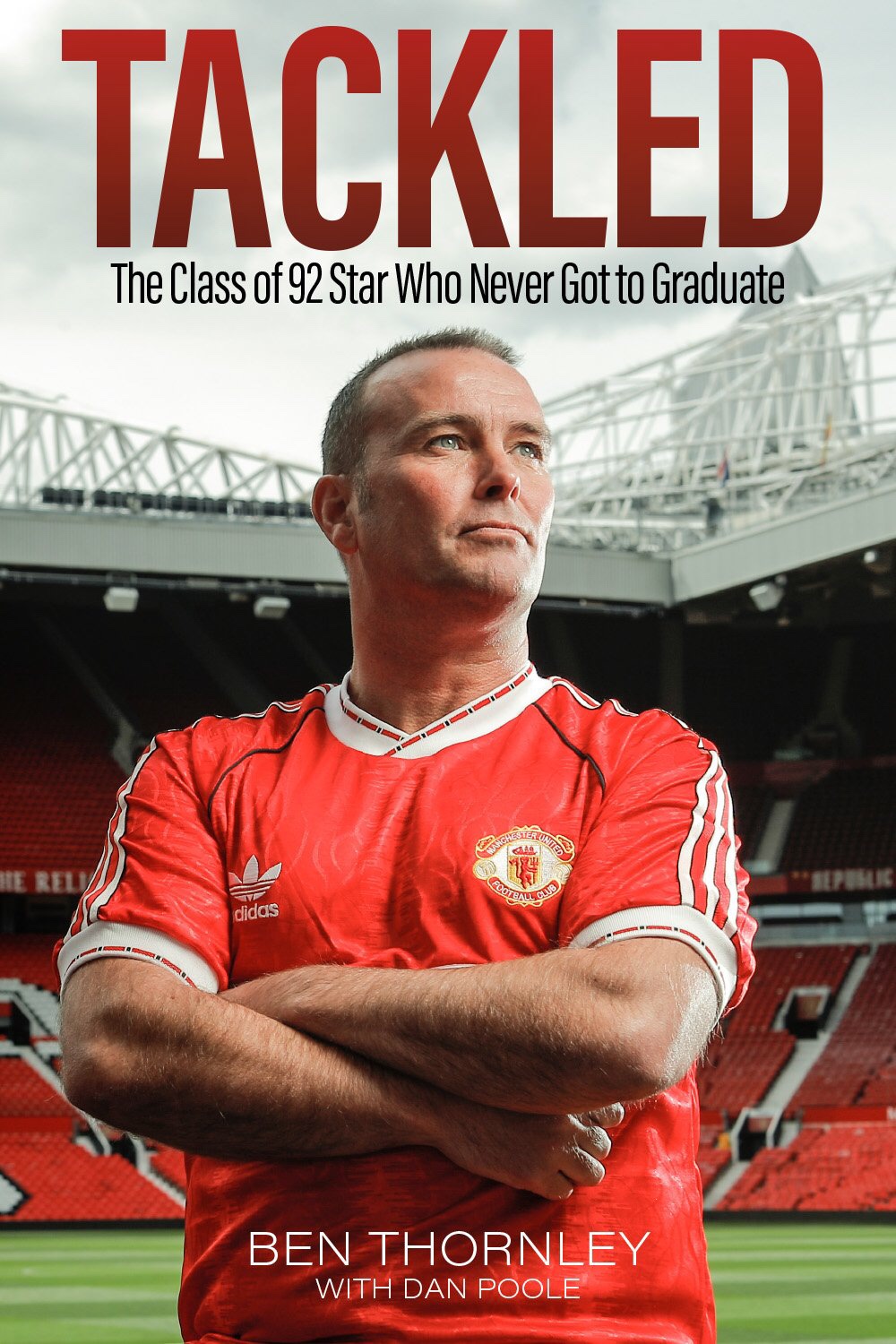
‘Tackled: The Class of ’92 Star Who Never Got to Graduate’ by Ben Thornley & Dan Poole (2018)

Ben Thornley was a professional footballer who played for the same Manchester United youth team as the fabled Class of ’92 – David Beckham, Ryan Giggs, Paul Scholes, Gary Neville etc.

With Beckham-esque looks and Giggs-esque skill, Thornley was tipped for greatness by many. However, a horror tackle in a reserve game, just weeks after his first team debut, severely damaged his knee and ultimately his chances of making it to the very top.  Thornley recovered and played for a number of years but was never able to fulfill his vast potential.

Tackled tells the story of Thornley’s life in football.  The book jumps back and forward between the time before his injury and the time afterwards.  The earlier periods are told through many voices including his family members the likes of Beckham, Giggs, Scholes etc.  The later periods are told in a more orthodox autobiographical style.

The format works very well.  The book feels really genuine and the style captures the interaction among friends and family really well.   There is a lot of humour in the banter among friends and many of the anecdotes may not have been told to a more traditional biographer.

Thornley is pretty open about his own failings in particular his fondness for booze and his constant cheating on his partners.  At times the stories are a bit laddish – and Thornley seems to relish the retelling of some of his less than polite behaviour.  However, the telling of his off-field life while a player is necessary to fully appreciate how difficult it must have been to come to terms with his reduced status in the game.

The attitude to booze is interesting.  Thornley is open about enjoying a drink but there isn’t a close look at whether he might have had addiction issues – overall the treatment of booze leans more to the “pints are great fun” direction (which they are) than the role booze likely played in hampering Ben to do as well as he possibly could post injury. I’m conscious I’ve just hit a year without a drink so my attention naturally more drawn to boozy stories.

Football wise, the book contains some interesting insights into the English game of the late 90’s.  In particular Thornley was fairly scathing of the short-lived Lilleshall model which saw the FA try to mimic the French Bluefontaine academy with very little success.  Most of all, it gives quite a lot of insight into the Man Utd set up at the time, with a particular focus on the youth coach Eric Harrison.

Thornley is not the first or last footballer to have his potential cut down by injury.  Thornley’s association to the famous Class of ’92 – that remarkable generation of players to come through the ranks at Man Utd at the same time – helps add some glamour and celebrity to the story.  There is something about the fact that the players have developed their own group brand annoys me no end, but it’s good to see one the less successful members able to cash in on it.

You might find yourself wondering why bother to read an autobiography by a player whose career highlight is winning an underage tournament.  But any sports book is never solely about the results on the pitch – Thornley shows a different side of the game, the side of potential unfulfilled, of hopes dashed and the challenges of nonetheless building a life.  It is a very honest and candid account of the life of the superstar that never was.

Thornley comes across as a likeable guy (unless you were his ex girlfriend) who has matured and come to appreciate what he achieved rather than what he didn’t. Overall Tackled is an enjoyable read and one that Man Utd fans in particular would enjoy.

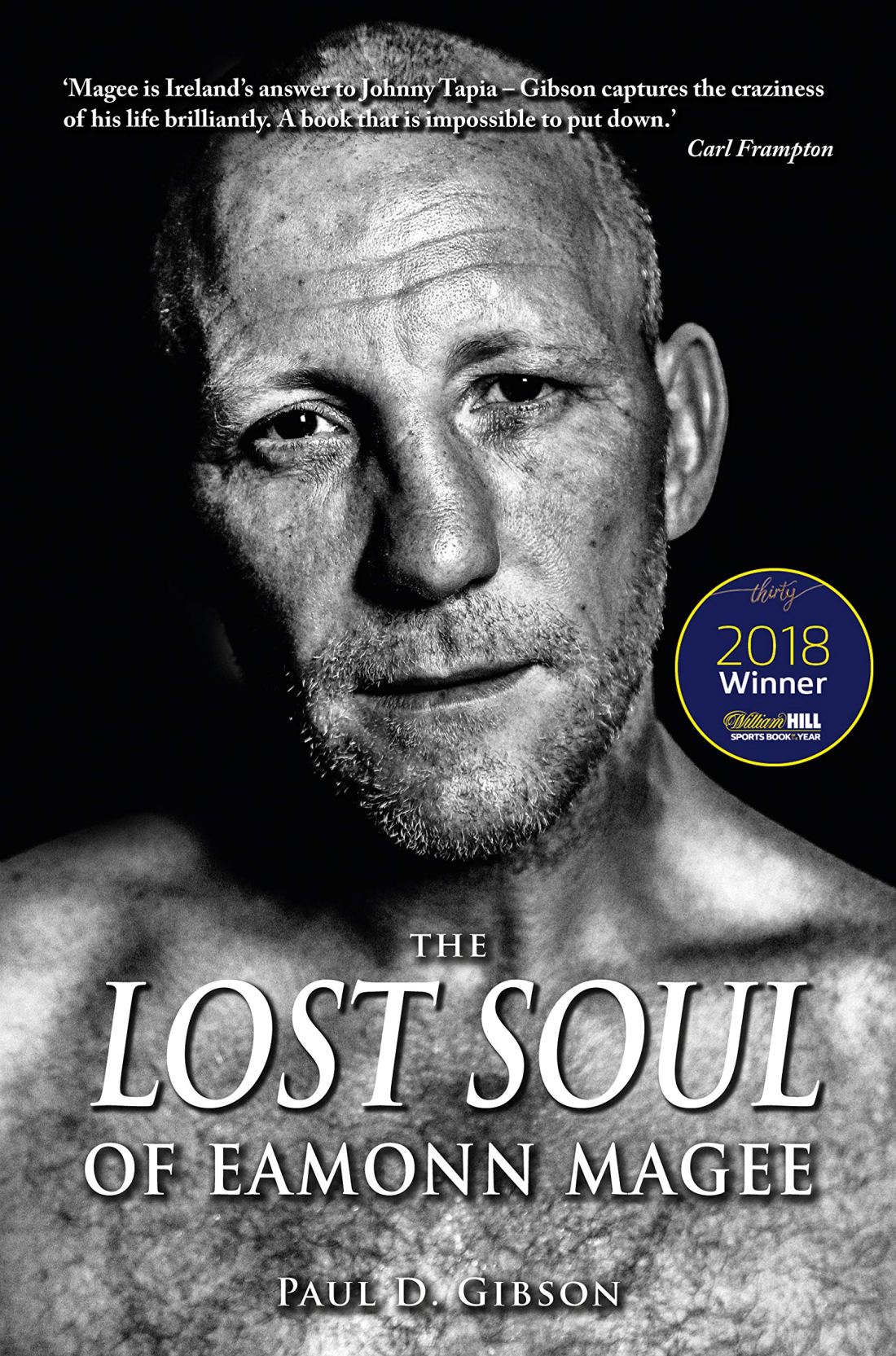
‘The Lost Soul of Eamonn Magee’ by Paul D. Gibson (2018)

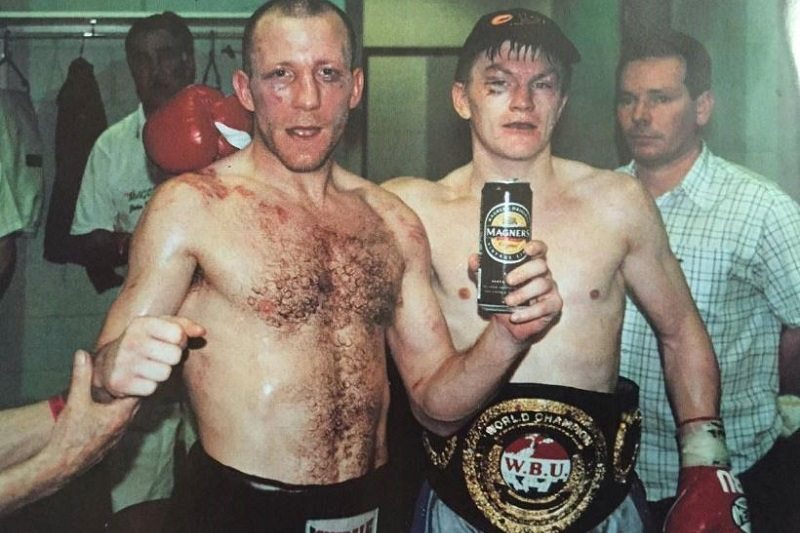
The Lost Soul of Eamonn Magee is a remarkable, gripping and brilliant book.  Magee is a well known figure in Irish boxing but has a relatively low profile outside of the boxing world (outside of Northern Ireland at least). My own clearest memories of Magee stem from his fight with Ricky Hatton who was then very much on the rise.  Magee gave Hatton a scare and made him work exceptionally hard for this win.  But I had no idea about Magee’s life or why his story might be more interesting that the traditional tale of a boxer who briefly held a minor world title but ultimately never quite fulfilled his vast potential.

Magee’s sporting life alone would make an interesting book.  Preciously talented, he was denied a place in the Olympics due to internal politics and his refusal to participate in an unjust runoff fight.  His professional career was hampered by his extra-curricular activities but he still managed to win a World title.

However it’s Magee’s personal life which make this story special. Magee was a child of the Troubles – the dark period in Northern Ireland’s history when sectarian violence was a regular feature of everyday life.  Magee grew up witnessing his father being interned without trial, constant violence and the British Army patrolling the streets. As the book cover says he’s been shot, stabbed, exiled and jailed but he’s also been a world champion. His personality and circumstances drew him towards danger but boxing offered him an alternative path.

Magee’s life is the kind of story that would be unbelievable as a fictional tale.  It is a compelling story filled with violence, tragedy and addiction but also love, victories and a lot of laughter.    Gibson has done a great job shaping countless anecdotes and stories into a compelling narrative.

Magee is a difficult figure to empathise with.  But you cannot read the book and not feel some sympathy for him.  In many ways, the book is an attempt to explain who Magee is, why he is the person he is, and why he never quite fulfilled his potential.  The book is brutally honest and does not shy away from the dark side of Magee’s character and deeds.

MageeHatton

Reading the book I found myself wondering to what extent sporting talent makes us overlook a person’s flaws?  Or at very least, make us look more closely at their background and try to understand their behaviour?   Is it right to forgive a man’s sins simply because he has talent, charisma and a hard luck tale?  Had he not been a world class boxer, Magee would likely have been dismissed by society as a violent troublemaker, a drunk, a gambler, an addict, and a womaniser unworthy of sympathy.  His talents, however, make us consider him more deeply  and this consideration leads inevitably to empathy.

Gibson spent a lot of time with Magee and seems to really care for him.  Finishing the book, I can’t quite figure out how I feel. I cannot judge his self-destructive behaviour as we all face our different demons in our own way. However, the charges of domestic violence (and there have been even more since the book was published) go beyond self-destruction and can’t be accepted or forgiven by virtue of having a difficult past. I do feel tremendous admiration for what he achieved in boxing though. He is a man born with extraordinary talent, who achieved remarkable success despite his demons and his difficulties. A man who is a product of his time and place while remaining very much a unique character.

The book has received widespread praise and jointly won the William Hill Sports book of the year for 2018.  Such praise and accolades are well deserved.  It’s not an easy read, but it is gripping, engaging and emotional.

eamonn

‘Friday Night Lights: a Town, a Team, and a Dream’ by H.G Bissinger (1990)

Permian football had become too much a part of the town and too much a part of their own lives, as intrinsic and sacred a value as religion, as politics, as making money, as raising children.  That was the nature of sports in a town like this.  Football stood at the very core of what the town was about, not on the outskirts, not on the periphery.  It had nothing to do with entertainment and everything to do with how people felt about themselves”. 

Friday Night Lights likely needs no introduction for anyone who would read a blog about sports books.  H.G. Bissinger chronicles the 1988 season of the Permian Panthers, a high school football team in Odessa, Texas.  The book spawned both a movie and a very successful TV show and the phrase ‘Friday Night Lights’ has become synonymous with the idea of high school football in the USA.

Often proclaimed the greatest sports book of all time, Friday Night Lights is that rare book that fully lives up its praise.  It is also a book that is just as rewarding when read for the second or third time – the tension about how the team will perform is reduced, and the broader story Bissinger sets out to tell comes even more into focus.

Bissinger zooms in on the lives of 6 team members – some black, some white, some poorer than others.  Around these narratives he tells the story of the town – its schools, its history, its people, its politics and its prejudices.

Aside from the gripping football narrative – will the team make it to State – there a number of underlying stories that Bissinger focuses on.  At its core, Bissinger wants to talk about the idea of worshiping high school sports and athletes and the damage that can be caused.  But he cannot resist the allure, the passion and the drama that results from a town putting kids playing football at the very centre of civic life.  Bissinger openly admits that the games he attended remain his happiest sporting memories.

Reading this book in 2018, it’s impossible not to have today’s political environment in mind.  Many books have tried to chronicle the factors that led to Trump’s election, to capture the ‘Real America’, but reading this account from 30 years ago gives you more insight than any of the recent books.   Replace Reagan’s name with Trump and the social commentary could easily have been written today – it’s eye-opening how consistent the issues, concerns and arguably prejudices of everyday working class American’s have been over the 30 year period.

Fundamentally we see a society where life hasn’t lived up the hopes and dreams of many. Bissinger talks about how the town “absolutely worshiped Ronald Reagan, not because of the type of America that Reagan actually created for them but because of the type of America he so vividly imagined” – it’s easy to see Trump as the darker side of that same impulse, rather than helping people forget their problems by imagining a better future, Trump gives his supporters a licence to blame those problems on ‘the other’ – liberals, elites, Mexicans, globalists etc. etc. etc.

Above all, this book is superbly written. The descriptions of the matches are intense, the imagery is vivid and the heartbreak and joy feels very very real.  It’s a gripping, entertaining and simply wonderful book.

FNL

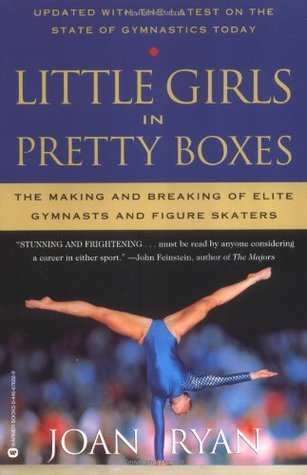
‘Little Girls In Pretty Boxes: The Making And Breaking Of Elite Gymnasts And Figure Skaters’ by Joan Ryan (1996)

My first kid is due to be born in 10 weeks time.  Amid the busyness of getting the house ready, buying all the supplies and taking anti-natal classes, I’ve thinking a lot about sharing my love of sport, and of sports books of course, with my kid.

Sport was such a big part of my childhood and so many of friendships and memories are tied up with playing football in particular.   I want to expose them to any many sports and opportunities as I can and hope they find something that excites them as much as schoolboy soccer did for me.

We (and by we, I mean my wife) decided that we wouldn’t find out the sex of our kid in advance.  However, as I daydream about the future, I find myself naturally thinking about playing sport with my son, cheering or coaching his teams.  My brain keeps making the connection of sport with a boy – despite the obvious fact that I shouldn’t be treating a daughter any differently when it comes to exposing them sport.

Recognising my own instinctive bias, I’ve wanted to read more about women’s and girl’s sport.  I’ve tried to take more interest in women’s sport – and it’s been a bumper year for Irish women and historic sporting achievements – and to imagine bringing my daughter to play football and watch football – both men’s and women’s.

It was in this frame of mind that I approached Little Girls In Pretty Boxes, a book that often appears on list of greatest ever sports books.  The book is a detailed behind the scenes look at the world of elite female gymnastics and ice skating.   It is the story of the power of dreams and ambition – and how these forces can lead parents to overlook abusive or damaging behaviour by coaches, themselves and the girls they should be protecting.

The book tells the stories of many well known and less known gymnasts and skaters, including Nancy Kerrigan, Shannon Miller, Kim Zmeskal, and Betty Okino.  For every success story, the book points to many more tragic stories.  It also focuses heavily on the brutal coaching regime of Bela Karolyi.

Ryan paints a shocking picture of young girls dedicating their whole lives and risking their physical and mental health for the slim chance of glory at the Olympics.  Ryan interviewed dozens of athletes, family, and coaches.  Much of the comments from parents whose kids have since retired are full of regret, shame and remorse while some only regret the outcome (failure) and not the process they imposed on their child.

At its heart, the book calls for reflection on the merits of a win at all costs mentally.  It asks readers to reflect on the physical and mental price paid by countless girls and young women.   Personally, I was shocked at the toll the sport had on the elite competitors – delaying growth, permanent injuries and serious eating disorders seemed to have been normal, almost expected, side-effects of their training.

The book is full of villains – coaches, parents and federations who failed totally in thier duty of care.  One thing that emerges clearly however  is the sheer bravery of those girls who make it anywhere near elite level.  The commitment, dedication and effort needed is truly remarkable.

Written over 20 years ago, the book seems sadly still relevant today.  A quick online search reveals countless stories suggesting little has changed.  The heart-breaking testimonies that led to conviction of Larry Nassar for horrific offences against young gymnasts paint a picture even more gruesome than the one portrayed by Ryan in the book.

As a soon to be parent, the book stands out to me as a warning not to live vicariously through your child and to always remember that life is for living, not for ‘winning’. I want my kid to love sport but, in the unlikely event they show much more talent than I have, I’ll be sure to never push them to achieve my dreams rather than let them figure out their own.

After reading this, I found myself instinctively picking up Friday Night Lights for a reread (blog post coming).  Little Girls In Pretty Boxes is every bit as powerful, compelling and moving as that Texas football classic.

gym


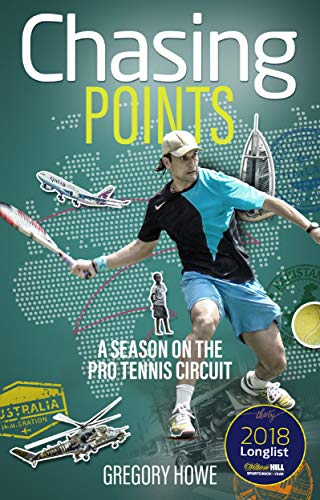
‘Chasing Points: A Season on the Pro Tennis Circuit’ by Gregory Howe (2018)

I think we all have fantasies about our dream careers.  Something we showed a little bit of aptitude and passion for, but were never realistically going to get paid to do.   The rise of reality talent shows suggests this question – could I have made it? – sits inside an awful lot of us.

For me, I did some stand-up comedy in college alongside a few people who have gone on to make a living in the comedy/entertainment world.   I was good but I knew I’d never have enough strings to my bow to achieve much more than getting laughs from a crowd of peers who shared all of my cultural references.  But getting the opportunity to tell jokes while giving speeches at weddings over the last few years, and getting brilliant feedback stirred up the old feelings of  – could I have made it? Or at least, should I have tried?

This long-winded introduction is all to make the point that when reading Chasing Point, the story of a 34 year old man’s attempts to play professional tennis, I cannot emphasis enough how much I wanted Howe to succeed.   I wanted to stop reading after each loss – and unsurprisingly there are a hell of a lot of them – and I genuinely smiled at each moment of success.

Howe had been a very good tennis player but, by his own account, not good enough that a career in the game seemed inevitable or even likely.   He continued to play in tournaments into adulthood and used tennis as a way to see the world – combining holidays with entering some local tournament.

At 34 however, Howe decided to give the game one last shot.  The book covers a year spent mostly on the Futures tour, the third rung of professional tennis, where players fight it out for a tiny number of ATP Tour points with a view to moving on to Challenger Tour and ATP Tour tournaments.   Howe set himself the challenge of winning a solitary ATP Tour point that would give him a World Ranking and access to the ATP Tour.  To achieve this, he would need to win at least three consecutive games against typically much younger players who were trying to launch a career in the game.

Chasing Points exposes the incredibly unglamorous life of the majority of players who try to play tennis professionally.  Trailing across Continent’s, sleeping in crappy hotels, paying to enter tournaments and having to win three consecutive games to see any return (either financially or in Tour points), Howe paints a picture of young men unable to let go of a dream until they had no other choice.  It’s the dual nature of the story that makes Chasing Points so interesting – it’s not just Howe’s journey but also an insight into the struggles of thousands of others on the way up or the way down as they try and try to make it as professional tennis players.

The book has been published 10 years after the season it chronicles.  It’s therefore really interesting to be able to know what eventually happened the various characters Howe meets along the way.   The majority end up drifting into obscurity with some never playing another professional game after Howe beats them.

Howe’s ambitions were relatively modest and highly personal in nature – there’s almost no reward for being ranked the 1,200th best player in the world.  But it’s this personal satisfaction that makes the challenge worthwhile – Howe set his sights on something and commits to trying whatever he can to achieve it.  It’s not a tale of extreme sacrifice – Howe spends a bit of money on the quest but he isn’t poor. It’s not a tale of extreme obsession – Howe doesn’t destroy relationships or his health (in a major way) to achieve his goal.  It’s not a tale of life changing moments or triumph against all the odds.  Instead it’s the story of what success means to each of us and the satisfaction of the journey.  It speaks to that desire to never give up on our dreams and never stop doing what you love.

Chasing Points is a really enjoyable read.  Howe tells an interesting story and he tells it well.  There is a real risk of repetition as each tournament blends into another but Howe gets the balance right – sometimes telling a game in lots of details, sometimes simply mentioning that he lost 6-2 6-2.  Overall I’d highly recommend it for any sports fan or anybody who asks themselves am ‘I too old to try and live my dream?’.

As a 34 year old man who is writing this review in Brussels Airport on the way home from a work trip, in the breaks between taking work related phone calls, I can’t help but reflect on those long-ago dreams of stand-up comedy.  If I end up attempting an open-mic night anytime in the next few months, Greg Howe is getting the blame.

Chasing Points