‘Moment of Glory: The Year Tiger Lost This Swing and Underdogs Ruled the Majors’ by John Feinstein (2010)

Moment of Glory recounts the story of golf’s major championships in 2003 – a year with four first-time major champions. From the vantage point of 2010, Feinstein looks back at the 2003 season and chronicles the careers of the those 4 champions – Ben Curtis, Mike Weir, Jim Furyk and Shaun Micheel.

In 2003, Tiger Woods began work on a complete remodelling of his swing resulting in a dip in performance to the extent that he didn’t seriously compete in any of that year’s majors.  This left a vacuum which was filled by 4 first time winners whose lives would all change.

The most fascinating part of the book was the focus on what major victories meant for the 4 and the comparison with how the runners up fared after the tournaments.  Feinstein also pays close attention to the nearly-men who came so close to winning those 4 majors – none of whom had won a major and all who would be heavily impacted by the experience of coming so close but missing out.  The insight into how a single putt could change two different golfers’ lives really helped to put the stakes at play into perspective.
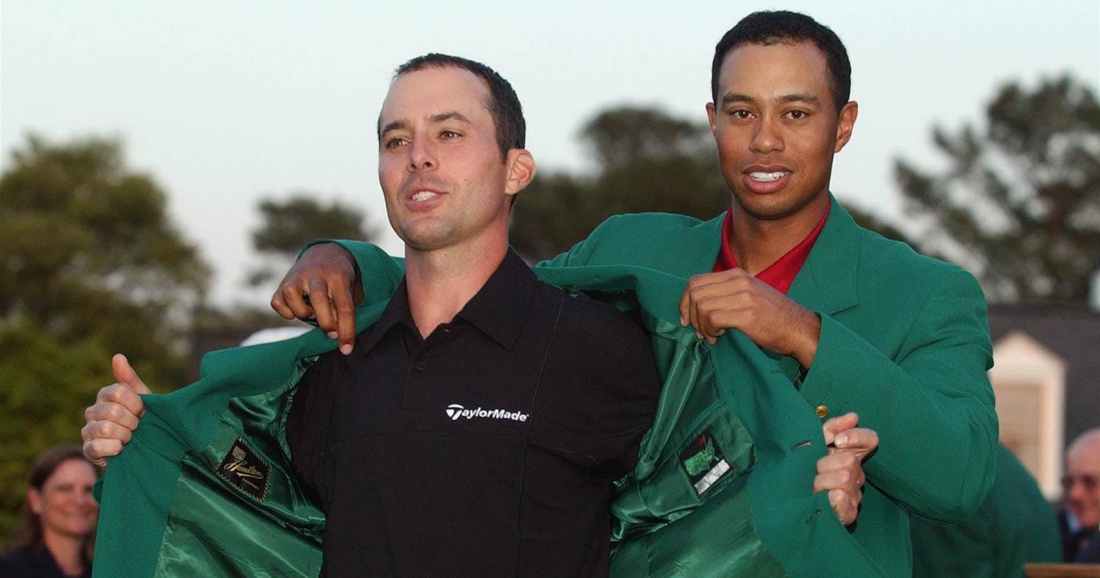
TIger-Woods-Mike-Weir-golfaustralia

For me the book suffers from the fact I have already read, and really enjoyed, two of Feinstein’s other golf books – A Good Walk Spoiled and Q School.  In a lot of ways this felt overly similar in chronicling the challenges of professional golfers outside the very very top rung.  The book is well written and a very enjoyable easy read that benefits from Feinstein’s accessible writing and clear ability to put to interviewees at ease.  I just feel like I’d already read the book before in some ways.

Overall, I’d recommend it.  I think it actually works even better reading it now in 2018 when we have more info at our fingertips on how the players careers have progressed since 2010 as well.  Amazingly, after this book was published, both 2011 and 2016 also saw 4 different first time major winners crowned.

While it isn’t Feinstein’s best book, it’s well worth picking up as the long wait for next season’s Masters begins post Ryder Cup.
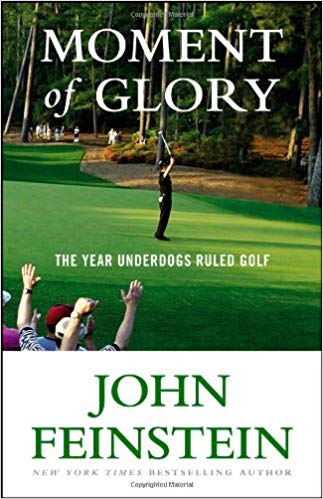
Moment of Glory

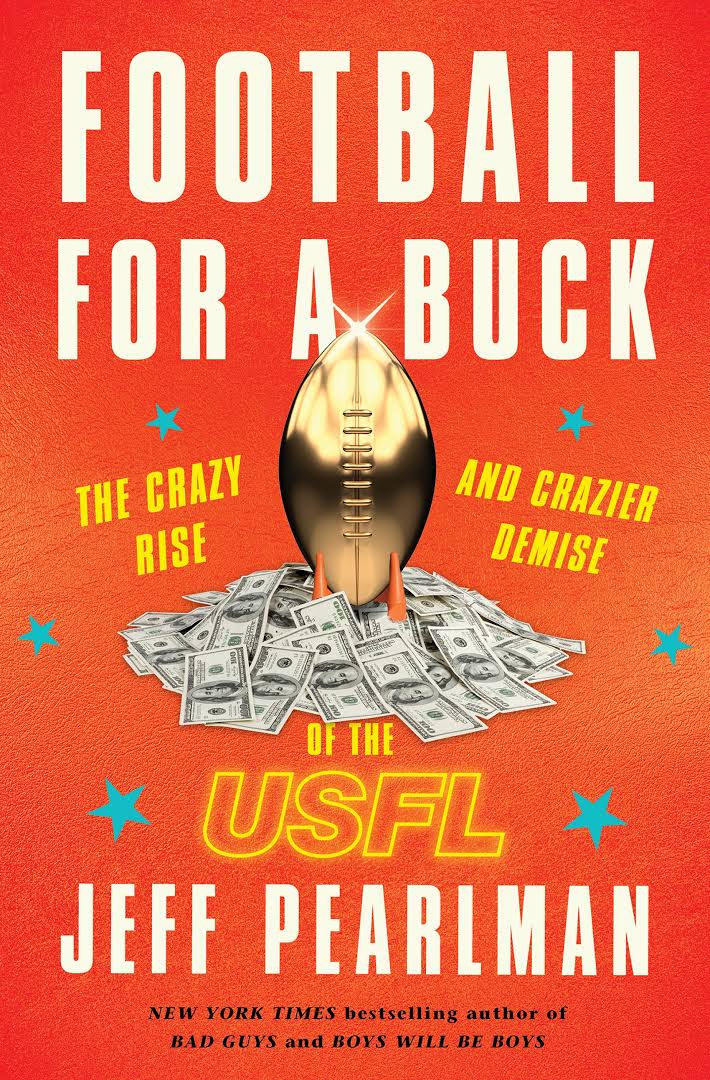
‘Football for a Buck: The Crazy Rise and Crazier Demise of the USFL’ by Jeff Pearlman (2018)

I’m a huge fan of Jeff Pearlman’s books so was delighted to get an advance review copy of Football for a Buck which is due to be published this September. It tells the story of the short-lived United States Football League, an upstart rival American Football league set up to try and capture fans attention during the NFL off-season.

An ambitious and slightly crazy plan, the USFL looked to have a real chance of success before a disastrous decision was made to try compete directly with the NFL in autumn time. The league was made up of journeyman pros, college standouts who couldn’t make the NFL, and most excitingly, up and coming superstars who were lured by outrageous paydays – including future NFL Hall of Famers Steve Young and Jim Kelly.

The USFL was before my time, but I really enjoyed the ESPN 30 for 30 documentary ‘Small Potatoes’ on its rise and fall. Pearlman’s book covers the story in much greater detail and has interviews with a very wide range of characters. Pearlman captures what the league meant to a lot of people – fans, players, coaches and owners. He also captures the real influence the USFL had on the NFL, with a number of USFL initiatives, such as the 2 point conversation and replay challenges, being introduced into NFL not long after.

Pearlman has carved a bit of a niche in chronicling the bad guys in sport – with previous books Boys will be Boys and the Bad Guys Won covering the questionably behaved Cowboys and Mets. His books are at times gossipy and entertaining but also meticulously well researched and always brilliant. Similarly in Showtime, Pearlman did a great job of bringing the the 80’s era Lakers to life – through many interesting and sensational anecdotes. Who wants to read about a well behaved team after all? It’s not surprising then that some of the highlights of Football for a Buck are those stories of parties, outrageous behaviour and the wild sense of fun that accompanied many of the teams.

However, the book is at it’s best when it chronicles the behind the scenes story of how teams were formed, how decisions regarding the league were made and the court case that ultimately lead to its demise. A clear villain emerges in the form of Donald J. Trump – a man who needs no introduction. Pearlman is pretty active on twitter including very often strongly condemning Trump’s Presidency. No matter your politics, it would be hard for even the strongest MAGA enthusiast to read Football for a Buck and think anything favourable of how Trump behaved and influenced the USFL. The book does capture Trump’s remarkable ability to influence and get people on board with him – even, or especially, when his motives are anything but pure – an ability that ultimately took him way further than anyone would have imagined. It also shines a fascinating light on Trump’s feud with the NFL.

Overall, this is an entertaining and brilliant read. Pearlman’s nostalgia for the USFL, his meticulous research and his genuine warmth towards many of its remarkable cast of characters shines throughout this excellent book. Pearlman clearly had a great time doing the research and I had a great time reading the book.

Pearlman’s writing podcast ‘Two Writer’s Slinging Yang’ is well worth checking out for fascinating interviews with very interesting writers who discuss their craft in detail. The fact that Pearlman advertises a classic sports jersey website on the podcast purely in exchange for free sports gear for him and his kids is simply wonderful and speaks to Pearlman’s passion for the USFL and great sports stories.

USFL

‘The European Game: An Adventure to Explore Football on the Continent and its Methods for Success’ by Dan Fieldsend (2017)

The European Game is a journey behind the scenes of  how European football operates.  Fieldsend, formerly a staff member at Liverpool, spent three months travelling to the best and most famous football teams across Europe learning along the way about the club’s history, key figures, tactical developments, and place in their society.

It’s a book that celebrates the uniqueness and specialness of every football club which shifts between understanding why how clubs impact their environment and how environment’s shape their clubs.  It’s part exploration of what makes a club successful and part exploration of what makes a club magical.

The book can be dipped into chapter by chapter which each adventure heavily shaped by the people Fieldsend was able to meet and interview.  Overall, the cast of characters is suitably diverse and interesting to ensure that the book avoids repetition.   Some chapters have a heavy travelogue feel as Fieldsend connects with the people and the place as much as the football club.  At times the book suffers from a slight identity crisis as it shifts between very different types of stories.

It merits some comparison’s to the peerless Inverting the Pyramid or the excellent Football Against Enemy – a very different book from those but one that contains a similar desire to understand football at a deeper level.

It is clear the book is a real labour of love.  While some of the chapters contain fairly familiar material, overall it me feeling I understood more about some of the major European clubs and kept me entertained and engaged throughout.  Some tighter editing of slightly flowery prose wouldn’t have gone a miss – but I can’t begrudge the author attempting to show a bit of literary flair at times.

Overall, highly recommended for those who haven’t devoured countless books on European football while still worth a read for those among us who like to reread Inverting the Pyramid every summer!

‘Red: My Autobiography’ by Gary Neville (2011)

Red is the story of Gary Neville’s long and distinguished career for Manchester United and his less distinguished England career.  It’s a reasonably enjoyable quick read that will be particularly enjoyed by United fans.

red

Neville appears to be a man defined by his passion for Manchester United. I’m sure he likes his family, but you would barely know his wife and kids exist. While you appreciate he wants his privacy, you’d expect getting married and having kids to impact your view of the game and your career enough to merit more of a mention.

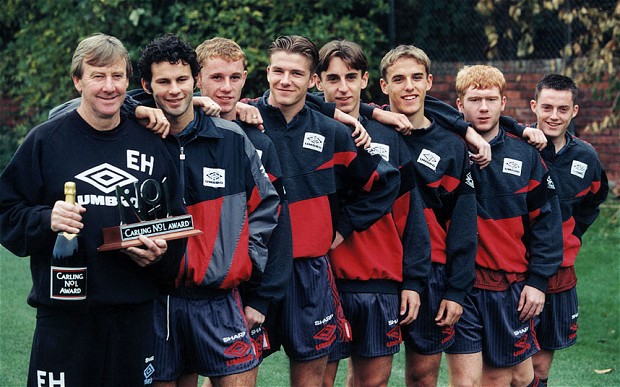
The famous Class of ’92 is covered in a fair bit of detail.  It was a remarkable generation of players to come through the ranks at Man Utd at the same time but something about the fact they have developed their own brand annoys me no end.  This part of the book works well as a lesson in the importance of commitment and level of dedication needed to make it to the top.

His time at Man Utd is the main topic of the book, but at times it feels like a repetition of what happened combined with repeated references to how great Sir Alex Ferguson is.  There are some good insights into some of the most interesting Man Utd personalities, but nearly not enough of these.

He covers his England career with a chapter about the reign on each of the mangers he played for.  It’s clear he really rated Venables, felt Keegan and Hoddle were out of their depth and had a lot of time for Sven before it started to fall apart. The England material is definitely the best part of the book.  Neville opens up about his dislike of playing for England and gives an honest assessment that it meant a lot less to him than Utd.

Overall the book feels honest without ever being particularly controversial.  It’s an interesting read for anyone who followed English football during Neville’s career and especially for Man Utd fans.

red 2

‘Fire on the Track: Betty Robinson and the Triumph of the Early Olympic Women’ by Roseanne Montillo (2017)

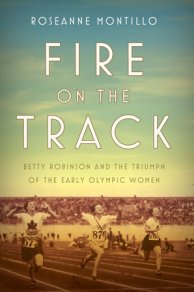
Fire on the Track tells the story of Betty Robinson, the first ever women’s gold medalist athletics at the Olympic games, and some of her fellow pioneering female Olympians.  Robinson won gold in the 100m sprint in Amsterdam in 1928 at the age of just 16, in only her 3rd ever race at the distance, and 4th race at any distance.

fire track

The first women participated in the Olympic games in Paris in 1900, and even then they were only allowed to participate in “safe” events like lawn tennis and golf. The 1928 games was the first Olympics that women were allowed to compete in the track and field events. Many feared that women participating in track and field events would either deem them unattractive to men or actually turn them into men so its inclusion was still heavily disputed among officials.  Coverage of the events, especially the 800m, focussed heavily on the toil the race took on the athletes rather than the race itself.

As well as Betty Robinson there are several other prevalent female track athletes covered. These names included: Polish-American Stella Walsh, Texan Babe Didrikson, the first African-American female to compete in the Olympics, Tidye Pickett, and young Helen Stephens.

Overall I found the story quite interesting but the writing style wasn’t my cup of tea.  It was written with an overly novelistic flair and at times I felt the author presumed too much as to what the inner thoughts of the various protagonists were.  It felt like a cross between biography and novel which always feels problematic to me as it blurs the line between fact and possible fiction.  If you approach the book as a fictionalized retelling it might be more palatable.  While the story was gripping, I ultimately struggled to finish it due to the style.

As I read this book, it really struck me how few of the sports books I’ve read relate to women’s sport.  I’m struggling to think of any others that I have actually read – and I’ve read a lot!  I’ve read great sports books written by women – none more so than Seabiscuit by Laura Hillenbrand – and books about how sportsmen mistreat women – like the very interesting Night Games by Anna Krien – but very little about women athletes or players.   It’s been an interesting realisation for me and I’d appreciate any recommendations for good sports books about women athletes that I have overlooked.

betty

‘The Billionaires Club: The Unstoppable Rise of Football’s Super-rich Owners’ by James Montague (2017)

“The question is, at what point do we accept some culpability for humanising those who have played a role in dismantling the freedoms we hold dear, or even dismantling whole countries”

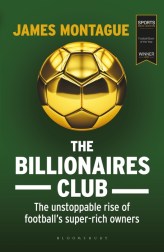
The Billionaires’ Club is an investigation into the new class of super rich owners who have snapped up many of the world’s biggest football clubs.  Rather than being about the football business, the book is about the business interests of those billionaires who have been using their vast resources to reshape global football.

Billionaire's

Montague digs deep into the business histories of a string of recognisable names questioning their motives for buying into football and at times our own culpability as football fans for ignoring their character and misdeeds.

Starting with Roman Abramovich at Chelsea, Montague examines the Russian and Ukrainian oligarchs who have used investments in football to increase their visibility and profile, largely as an insurance policy against the consequences if they lose favour of their political allies back home.  Possibly more troubling is the rising influence of Gazprom, the Russian natural gas giant, whose investments in football seem inextricably linked to the politics of the energy industry.

The book also covers the influx of owners in European football from the US, the Middle East and Asia.

The American owners are portrayed as arch capitalists who seek to make money and couldn’t care less about the fans or anyone else for that matter.  It says a lot that they appear less troubling than many of the other owners.  It was also interesting to see how much more liked Liverpool’s current owners were than Hicks and Gillett at a time when they are starting to make more and more noises for a European or

The Middle Eastern owners appear more troubling.  The phrase “reputation laundering” seems very apt to describe the intentions of much of the investment in European football.  Football clubs like Man City have become vehicles of foreign policy for members of Middle Eastern ruling families with questionable human rights records. Montague covers the abuses of migrant workers in some detail.  He highlights the personal stories of poor Bangladeshi’s and the horrific ordeals they face trying to earn enough money to send home to their families.

The Asian owners covered appear more like the Russians – buying major clubs to appease their own political masters and to increase their political visibility abroad.  The coverage of China’s changing relationship with football in the books really interesting – I had no idea the Chinese Premier’s passion for the game was directly responsible for the huge investment in the Chinese Super League.

I’ve been a huge fan of James Montague’s since I read his 2014 book Thirty-One Nil: The Amazing Story of World Cup Qualification.  It’s clear he is a very good writer with an intense curiosity about the world which informs is work.  The global nature of his writing makes him the ideal person to chronicle the global power shifts in football politics.  The Billionaires’ Club is a sobering examination of modern football and those who shape it, but its a riveting, insightful and brilliant read.

Putin infantino.jpg

‘Into Thin Air: A Personal Account of the Mount Everest Disaster’ by Jon Krakauer (1997)

I’m a huge fan of Jon Krakauer’s writing and all of his books – particularly Under the Banner of Heaven, his examination of Mormon Fundamentalism through the lens of an appalling double murder.

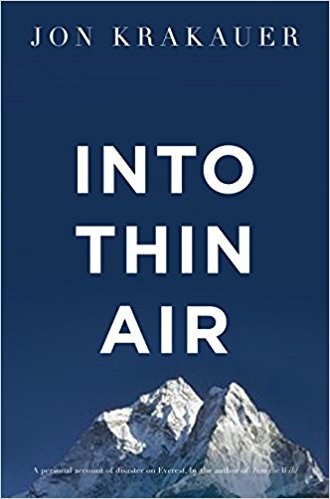
Into Thin Air is Krakauer’s deeply personal account of the May 1996 disaster on Mount Everest through his own first hand experience of being on the summit of the mountain at the time and losing members of the expedition he was travelling with.

Krakauer was on the mountain to write a story for Outside magazine on the commercialisation of Everest and also to satisfy his own desire to conquer Everest.  He joined a guided expedition led by experienced guide Rob Hall.  When I first read this book over 10 years ago, it was the first mountaineering book I had read.  I was shocked to discover that those climbing Everest weren’t all the world’s most amazing athletes but that fit and wealthy people could pay large sums to be guided up the mountain.  Krakauer was an experienced climber who struggled at times with feeling like a fraud for being on a guided expedition relying on guides and the labour of Sherpas.

The book is a fascinating examination of the challenges of mountaineering at high altitude and the mindset of those who risk life and limb to climb the world’s highest peaks.  It was fascinating to read the details of how the mountain is actually climbed and the difficulties and dangers of high altitude.  But this book is also about much more than that. It’s a story about guilt, about the fallibility of memory, about decision-making under pressure, and about small actions that can have huge consequences.

Some characters are painted in very unsympathetic light – Ian Woodall, the bolshy, arrogant leader of the South African expedition in particular is presented as a very unlikable guy whose own ego came ahead of anything else.

Anatoli Boukreev, a guide working for another expedition led by Scott Fischer, is at times painted as being selfish and failing to be a responsible guide, however by the end he is a redeemed figure who rescued fairly climbers at great personal risk.

There have been claims that Krakaeur’s version is not sufficiently substantiated and potentially inaccurate.  Many of the other climbers who survived have similarly written books covering the events including Bourkreev, Beck Weathers, Graham Ratcliffe and Lene Gammelgaard. However, to me the book feels honest and I believe it is the truth as Krakaeur can best establish it from his own memories and extensive interviews.

Krakaeur doesn’t shy away from discussing the decision points and actions where he deeply regrets his own words or actions and the contribution they played to the tragedy.  His inaccurate recollection of meeting guide Andy Harris on his way down may have contributed to the failure of any rescue attempt to locate Harris.

Overall it’s an intensely moving and thought-provoking book that stays with you well after you read it.  Krakaeur is an amazing storyteller who blends history and memory (his own and others) into a gripping, harrowing, horrifying, fascinating story.  It can at times have a ‘disaster porn’ feel to it – like how passing drivers stare at a car crash – the tragedy adds a voyeuristic appeal that keeps you gripped while making you feeling uncomfortable at the same time. However, as long as people continue to climb Everest, there will continue to be accidents and continue to books written about them.  It will be difficult for any of those books to top this one.

into thin air

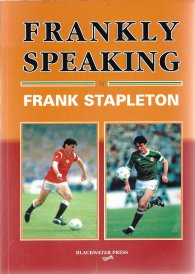
Frankly Speaking by Frank Stapleton (1991)

Published in 1991, Frankly Speaking is a (kind of) autobiography of former Arsenal, Man Utd and Ireland striker Frank Stapleton.

fankly-speaking

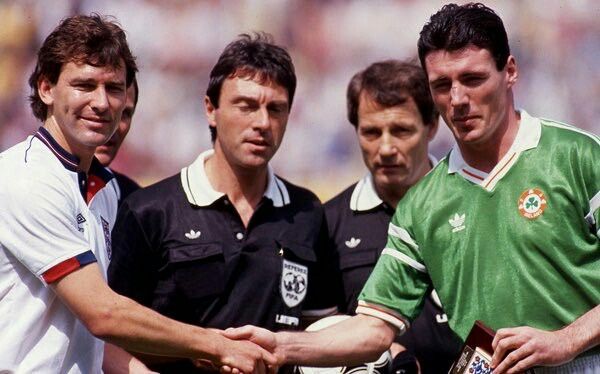
Stapleton seemed to be coming to end of his career when the book came out and his international career was over having been on the fringes of the squad during Italia ’90 having previously captained the team during Euro ’88.  He ended up playing four more years in the English lower leagues.

The book feels like half of an autobiography – it covers his football career with each season covered in a chapter and his club and international careers covered in separate halves of the book.  It’s focus is on entirely on Stapleton’s football career with almost no discussion of his life outside of football. The version of the book I found in the library has no summary on the front or back cover, no forward, no acknowledgements or any scene setter at all.  It just goes straight into his first few years at Arsenal.

One of the striking things is the amount of focus on the FA Cup over the team’s performance in the league.  This seems to be partly because the FA Cup still maintained its elevated status in the game and partly because Stapleton played in five Cup finals but never in a team that competed for the league title right to the end of the season.  The amount of replays in the cup is also striking.  You can see why penalties were eventually preferred to so many extra games.

frank 3

Stapleton rarely expresses his opinion on the various people he played or worked with outside of commenting on what they added to the team.  Ron Atkinson, his manager at United is the clear exception with Stapleton being pretty critical of Big Ron’s ego, love of the media, and lack of tactical nous.  His biggest praise is for coach Don Howe – a figure who seems to pop up in any biography of footballers who played in England in the 80’s and 90’s.

The material on Ireland was definitely the most interesting for me.  Stapleton gives a bit more background colour on the Euro ’88 and Italia ’90 campaigns and a decent sense of Jack Charlton’s management style.  I’d actually read all the most interesting bits before in the excellent ‘The Team That Jack Built’ by Paul Rowan (1994)

It’s a quick and easy read that has some interesting bits for any Arsenal, United or Ireland fan.  It feels like a book from a bygone era and was designed to be read at the time, when any reader would have known the main people mentioned. It’s also the first book I’ve reviewed that I couldn’t find on Goodreads (until I added it), giving some sense of how obscure it is at this stage!

Panini-Italia-90-Frank-Stapleton-Ireland

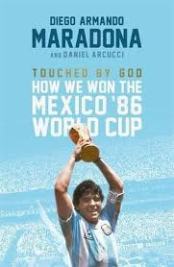
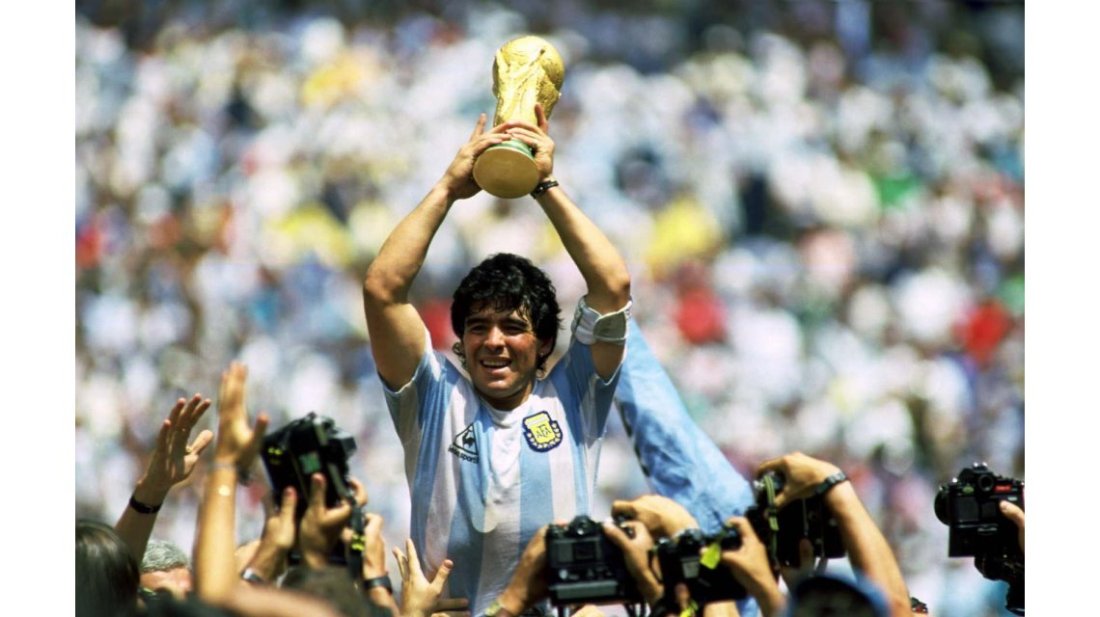
‘Touched By God: How We Won the Mexico 86 World Cup’ by Diego Maradona (2017)

You always assume books by footballers have ghostwriters.  While Daniel Arcucci is named on the book, I hope he was only a translator and that no one who calls themselves a writer put their name to this book.  Touched by God reads like a 3 or 4 hour long stream of Maradona’s consciousness as if someone asked him an open-ended question about the 1986 World Cup.

Maradona

Maradona’s telling of this story is designed to big up his friends in the team and downplay the role of manager Carlos Bilardo who he fell out with when Bilardo criticised Maradona as Argentina manager in 2010.  Considering almost all football fans acknowledge Maradona won the cup largely single-handed, its amazing he sees the need to be so critical and dismissive of Bilardo.  Mardaona claims that the players, and himself, deserve almost all the credit for the team being well prepared and for their fitness levels by actively railing against Bilardo’s original plans.

Maradona’s personality certainly shines through – ego, craziness and an amazing ability to hold a grudge.  At times it feels like half the book is score settling with Bilardo and former captain Daniel Passeralla – with a little bit of spite left over for ‘that heartless turkey’ Platini. He has some kind words for certain teammates in particularly Brown and Ruggeri.

Probably the biggest flaw in the book is that it makes so many assumptions that you know who and what Maradona is talking about.  If you don’t already know a huge amount about Maradona, Argentina, the players of that era and the ’86 World Cup you will be totally and utterly lost for the first chunk of the book.

maradona 2

The book rambles around a lot at times covering random bits of Maradona’s life and a decent bit of detail about his time in Napoli where he was playing during the ’86 World Cup. He drops in complaints about Fifa, his love of Pope Francis and the bits of advice he gave Messi when he was Argentina manager.

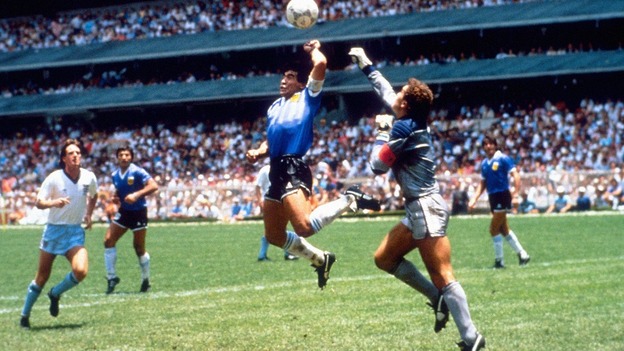
There are interesting bits, some entertaining anecdotes and bits of genuine insight into the mindset of a great player as he faces the most important games of his life and plays at a level beyond compare.  However, the decent bits are totally drowned out by the terrible writing and rambling style.  You could read the section on the World Cup final and still have no idea what happened in the match bar Argentina winning, such is the rambling style.

Overall, I recommend giving this book a miss.  It’s almost as poor as his first memoir El Diego, poorly written, rambling and hard to read.  For a genuinely great book on Maradona, I’d recommend seeking out Hand of God by Jimmy Burns.

maradona3

‘Garrincha: the triumph and tragedy of Brazilian’s forgotten footballing hero’ by Ruy Castro & translated by Andrew Downie (2004)

“The most amateur footballer professionial football ever produced”

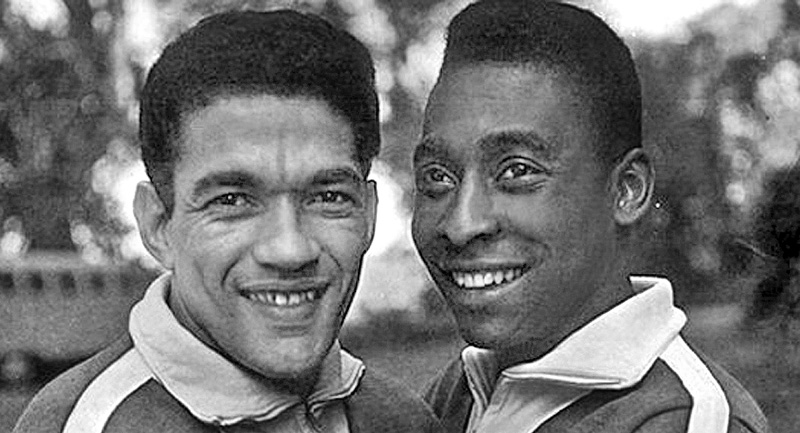
Garrincha was the epitome of the flawed sporting hero – the genius player whose personal demons led to an early death. Garrincha, the book, details his life from his childhood in Pau Grande through the length of his career and his eventual death from alcholism.  It captures his amazing talent, his playful charisma, his colourful personal life and his unique place in the hearts of Brazilian football fans.

Garrincha

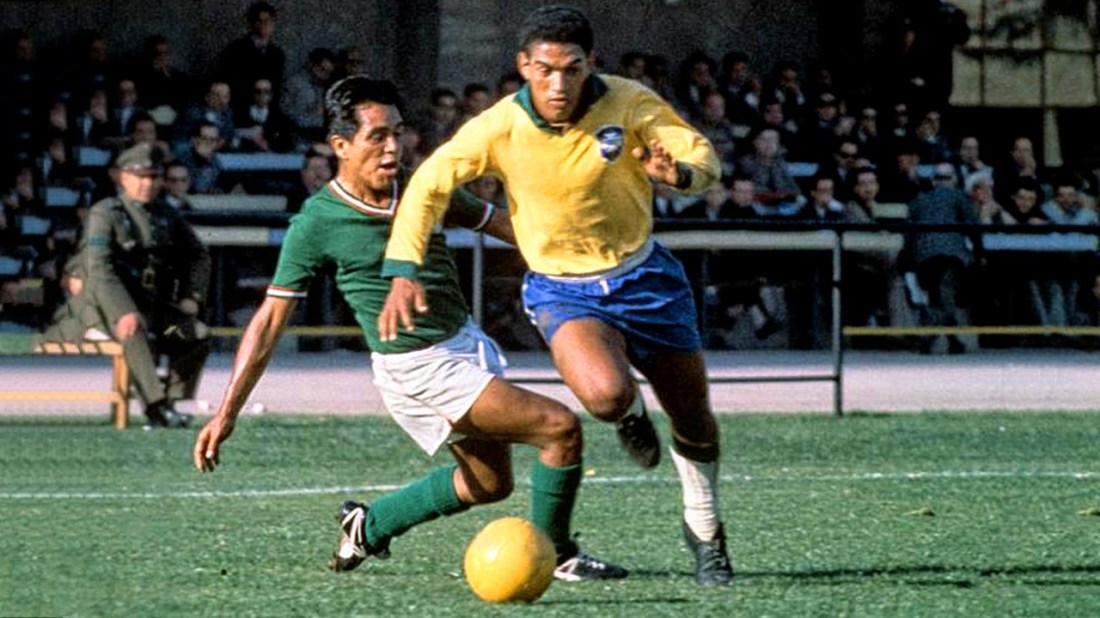
Born with crooked legs, he defied all expectations and became one of the most successful players in international football history, winning two World Cups and only once losing in a Brazilian shirt in 60 appearances.  Winning two world cups he became a cult legend in Brazil.

His life was incredible.  He lost his virginity to a goat, slept with hundreds of women and sired at least 14 children – his affair and subsequent marriage to the singer Elza Soares that caught the imagination of a nation and led to them both being vilified.  He was profligate with money, uninterested in football that he wasn’t playing in and totally incapable of being faithful.

By the age of forty-nine, Garrincha was dead, destroyed by the excesses that made him such a fascinating figure.  His downfall makes for depressing, but gripping reading.

z_p17-Garrincha

There is something that draws us to those genius sports stars who can’t conquer their demons and don’t get the change to live the post-retirement life they deserve.  Their flaws make them more relatable and more human. As an Irishman, you read the book feeling like its an alternate world story of George Best’s life or even how the great Paul McGrath’s life may have gone had he been born in Brazil.

Ruy Castro has written a thoroughly enjoyable and fascinating biography which is excellently translated by Andrew Downie.  It is a brilliant and detailed insight into a fascinating life of a genius player.  It is a comprehensive and worthy tribute to a footballer who had he played a few years later in the television era would be remembered as one of the all time greats.  The only downside for me was the lack of more detail on the social and cultural environment in which Garrincha lived – I feel I learned an incredible amount about Garrincha, but less than I expected about the Brazil of the 50’s and 60’s.

I first the read the book when the English translation came out in 2004 and I thoroughly enjoyed this reread.  I highly recommend it for any football fan and is a great companion book for watching Russia 2018.

garrincha 3