
I tweeted last week about my lack of enthusiasm for the 2022 World Cup compared to previous iterations of the tournament and the responses I got made it pretty clear lots of you guys will be feeling a bit ‘blah’ about it too. Between the horrific treatment of workers, the corruption, and the winter timing it just feels off. So… I figure it’s a good time to seek out some World Cup related books and rekindle that joy! What follows is a fairly unstructured list of World Cups worth seeking out.
I hope to put out my list of sports books coming next year within the next week or two. It’s always my most popular post each year so keep an eye out for that. Happy reading!
Tournament specific books
We all have a favourite World Cup. Usually you were 10 years old or your country did really well (or both). Either way, why not relive it with a great book on the tournament (or a specific team at the tournament) and a YouTube deep dive. Here are some books on individual World Cups that are worth checking out.
1950 – The Game of Their Lives: The Untold Story of the World Cups Biggest Upset by Geoffrey Douglas. The story of the ragtag group of players on the US team that shocked the world by beating England at the 1950 World Cup. Interesting read.
1954 – While not specifically on that tournament, the best material on the remarkable German victory is in Uli Hesse’s superlative Tor! The Story of German Football. An updated version of this wonderful book was published this year by Polaris Press.
1958 – Spirit of ‘58: The incredible untold story of Northern Ireland’s greatest football team by Evan Marshall (pub. 2016). Really enjoyable team about the team led by Danny Blanchflower and includes interviews with interviews with all the surviving players.
1962 – While not specifically about the tournament, it’s a handy way for me to recommend Garrincha: the triumph and tragedy of Brazilian’s forgotten footballing hero by Ruy Castro & translated by Andrew Downie (pub. 2004). One of the best football biographies ever and gives good insight on the 58 and 62 World Cup winning Brazilian teams.
1966 – Surprisingly, there isn’t a definitive book on the 1966 World Cup or maybe as an Irishman I just couldn’t bring myself to read too much about England winning it! A lot of the players have written autobiographies that cover this of course, and Bobby Charlton wrote a book specifically about the tournament.
1970 – The Greatest Show on Earth: The Inside Story of the Legendary 1970 World Cup by Andrew Downie (pub. 2021). This is a fantastic history of arguably the greatest team ever to play in a World Cup. Downie, author of the excellent Dr. Socrates book, uses new interviews and deep research to tell the story of the tournament in compelling detail. Really enjoyable book.
1974 – Beautiful Bridesmaids Dressed in Oranje: The Unfulfilled Glory of Dutch Football by Gary Thacker (pub 2021). A really enjoyable look at the great Dutch teams who lost the finals in both 1974 and 1978.
1978 – Blood on the Crossbar: The Dictatorship’s World Cup by Rhys Richards. The story of Argentina’s hosting of the 1978 World Cup while ruled by a military dictatorship and the protests that accompanied. Pretty relevant this year given this year’s host. On my reading list for the next few books but have heard great things.
1982 – 1982 Brazil: The Glorious Failure by Stuart Horsfield. The story the of the (arguably) best side not to win the World Cup. The book traces the development of the team from the 1970 winning team through Pele’s retirement and the preparations for the tournament. As much as it is about the 1982 Brazil team though, it’s also very much about the author’s personal experience of watching them as a young lad. Horsfield captures the magic, the awe, the sheer giddiness of the World Cup seen through a young fan’s eyes.
1982 – We Made Them Angry: Scotland at the World Cup Spain 1982 by Tom Brogan. Scotland’s third time in a row qualifying for a World Cup – but it still didn’t go very well!
1982 – Out of the Shadows: The Story of the 1982 England World Cup Team by Gary Jordan. An in-depth look at England’s return to the tournament after shockingly missing out on the 1974 and 1978 tournaments.
1986 – In the Heat of the Midday Sun: The Indelible Story of the 1986 World Cup by Steven Scragg. This is on my reading list for the next few weeks. Scragg’s other books on European Club competitions are great so I’ve no hesitation recommending this one without having yet read it.
1986 – Touched By God: How We Won the Mexico 86 World Cup by Diego Maradona (pub 2017). Reads like a 3 or 4 hour long stream of Maradona’s consciousness as if someone asked him an open-ended question about the 1986 World Cup. Half the book is score settling with former Argentina coach Bilardo and former captain Daniel Passeralla – with a little bit of spite left over for ‘that heartless turkey’ Platini.
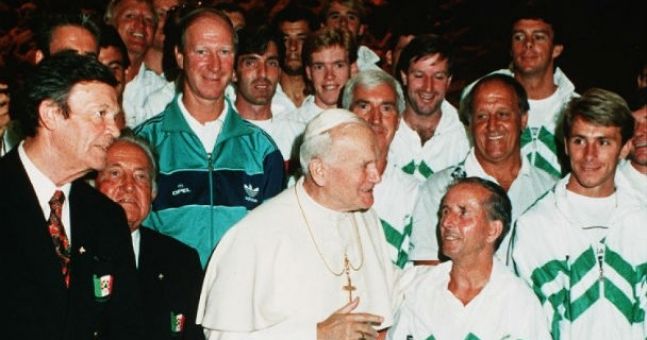
1990 – Days of Heaven: Italia 90 and the Charlton Years by Declan Lynch (pub 2010). Captures so much of what it means to be an Ireland fan – the dread, the worry, the hope and the brief unbelievable moments of joy. Lynch also captures the Ole Ole nature of away trips where its as much about the journey and the story as it is the football – although he is probably more critical of such jollies than I am.
1990 – All Played Out: The Full Story of Italia ’90 by Pete Davies. Davies spent 9 months with the England team and gives a first hand-account of the tournament. A sensational book.
1990 – World in Motion: The Inside Story of Italia ‘90 The Tournament that Changed Football by Simon Hart. It zooms in on interesting aspects and stories form the tournament to explore the full global impact of the 1990 World Cup.
1990 – New Kids in the World Cup: The Totally Late ‘80s and Early 90s Tale of the the Team that changed American Soccer Forever by Adam Elder. Recently published book looking a the USA’s team in 1990. Really detailed and enjoyable read.
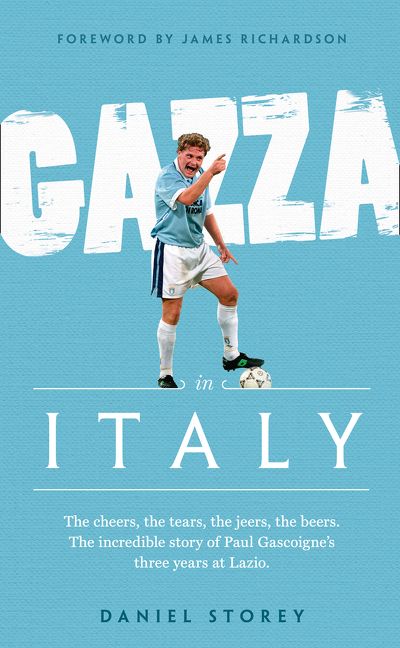
1994 – USA 94: The World Cup that Changed the Game by Matthew Evans (pub. 2022). I found this book to be a very enjoyable nostalgia trip. It was a tournament of great number 10’s – Baggio, Hagi, Stoichkov, Brolin – of great defenders – McGrath, Baresi, Maldini – and of great goals. Its key moments are burned into my memory from countless replays of All the Goals of USA 94 on VHS. To relive them in this enjoyable, informative and well written book was a real pleasure.
1994 – Andy’s Game: The Inside Story of the World Cup by Andy Townsend with Paul Kimmage (pub. 1994). A contemporaneous account of Ireland’s tournament.
1998 – Soccer Empire: The World Cup and the Future of France by Laurent Dubois (pub 2010). A look at France’s success in 1998 and the significance of it’s team being made up of the descendants of immigrants to France. Zooms in on Zidane and Thuram in particular.
2006 and 2010 – I’m not aware of any particular books looking at these tournaments in detail. Let me know if I’m missing out on any!
2002 – When Asia Welcomed the World: The 2002 World Cup Revisited by Danny Lewis. A look back at the World Cup in Japan and South Korea (I’ll always maintain Ireland could have won it!). On my reading list for the next few weeks.
2014 – Das Reboot: How German Soccer Reinvented Itself and Conquered the World. A really enjoyable read with great insight into the rise and rise of German football. It looks behind to scenes to identify how German football changed from a defensively minded game to the remarkable attacking football that led Germany to the 2014 World Cup. The book gives fantastic insight in the philosophical debate for the soul of German football that was sparked by terrible tournaments in 1998 and 2000 and led to a revolution in youth coaching.
2018 – Sacre Bleu: From Zidane to Mbappe– A Football Journey by Matthew Spiro. A really great book tracing the period between France’s two World Cup wins, 1998 and 2018.
2018 – How Football (Nearly) Came Home: Adventures in Putin’s World Cup by Barney Ronay. Ronay’s account of covering the World Cup in Russia and England’s surprise trip to the semi-finals.✓
Books on FIFA corruption:
Some very good books have helped expose the rot at the heart of the game’s global governing body.
- Foul!: the Secret World of FIFA: Bribes, Vote Rigging and Ticket Scandals by Andrew Jennings. Jennings has been the most consistent voice attacking FIFA for years – Foul came out in 2006!
- Fall of the House of FIFA: The Multimillion-Dollar Corruption at the Heart of Global Soccer,” by David Conn.
- Red Card: FIFA and the Fall of the Most Powerful Men in Sports by Ken Bensinger
- The Ugly Game: The Corruption of FIFA and the Qatari Plot to Buy the World Cup by Jonathan Calvert and Heidi Blake
Other World Cup reads
- The Story of the World Cup by Brian Glanville. The definitive book on World Cup history for me. The great Glanville covered so many tournaments live and a great starting point for a World Cup reading journey.
- The Nearly Men: The Eternal Allure of the Greatest Teams that Failed to Win the World Cup by Aidan Williams. A look at those teams that lived in the memory if not the record books.
- How to Win the World Cup: Secrets and Insights from International Football’s Top Managers by Chris Evans (pub 2022). A broad look at some of the highs, lows and adventures of managing in the international game. The book is a study in how to manage an international team, a history of some of the World Cups more interesting moments but also a reflection on why international football is so special.
- Men in Blazers Present Gods of Soccer: The Pantheon of the 100 Greatest Soccer Players (According to Us). A fun list of the all time greats from the popular US soccer podcast and TV hosts.
- Dark Goals: How History’s Worst Tyrants Have Used and Abused the Game of Soccer by Luciano Wernicke (pub 2022). Deeply researched, packed with interesting insight, and full of sources not typically seen in English language football books.
- Incredible World Cup Stories: Wildest Tales and Most Dramatic Moments from Uruguay 1930 to Qatar 2022 by Luciano Wernicke. A really enjoyable collection of world cup stories and anecdotes. On it’s 3rd edition now.
- World Cup Nuggets: Everything You Need To Know About The World Cup by Richard Foster.
- Against All the Odds: The Greatest World Cup Upsets – a compilation of articles with contributions from some fantastic writers.
- No Longer Naïve by Ibrahim Mustapha. A really enjoyable read on how African team’s have performed in World Cup finals.
- The Voyageurs: The Canadian Men’s Soccer Team’s Quest to Reach the World Cup by Joshua Kloke. One to read for this tournament as it looks at the current Canadian team and their successful qualifying campaign.
- Shocking Brazil: Six Games That Shook the World Cup by Fernando DuarteVery enjoyable history of Brazilian football. Examining the most successful team in history by focusing on their lowest moments, Durate paints a convincing narrative of the impact each of these games had on shaping the team.
This should be enough books to keep you busy for the month! Let me know of any I missed or your own favourites. Happy reading!


 All Sports Book Reviews