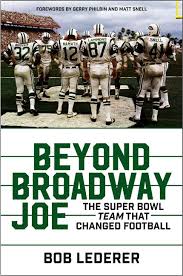
‘Beyond Broadway Joe: The Super Bowl Team That Changed Football’ by Bob Lederer (2018)

Every sports fan has a favourite specific season.  The lineup of their favourite team from that year holds a special place in their heart.  For me, it will always be the Ireland team that went to USA ’94 with the Ajax team of that generation running them close.

For Bob Lederer, the 1968-69 New York Jets have held that special place in his heart for nearly 50 years.  On January 12, 1969, the New York Jets upset the Baltimore Colts to win Super Bowl III.  As for many great NFL teams, the quarterback, in this case the legendary Joe Namath, is celebrated as the central character in the victory.  His talent, his charisma and his charm gave him the nickname ‘Broadway Joe’ and guaranteed A list celebrity status.  For Lederer  however, the rest of the Jets were a team, not a supporting cast, and he clearly has a burning desire to ensure that all of the players get their due recognition.

Beyond Broadway Joe is a must for any diehard Jets fan.  It is also a comprehensive look at one of the most famous games in football history.   Lederer had exclusive access to coach Weeb Ewbank’s playbooks and game plan for Superbowl III.  Together with interviews with a huge range of people all seemingly delighted to reminisce, the book is a fascinating study of a 50 year old game that helped establish the credibility of the American Football League.

The book is a real labour of love and the joy Lederer felt in researching and writing it shines through every page.  It is an unusual layout with the main story beats recounted in the first 50 pages before each team member is given a chapter to tell their own story.

It’s also an interesting read for anyone interested in the origins and evolution of the NFL, the Superbowl and the professional game more generally.  There seems to been a spate of books on American Football’s origin in recent years and this is a interesting, if narrowly focused, addition that growing body of work.

jets


‘Astroball: The New Way to Win It All’ by Ben Reiter (2018)

A 2014 Sports Illustrated cover which declared that the worst team in baseball, the Houston Astros, would win the World Series in 2017 has gone down in legend.  It would almost have been more believable to pick Leicester City to win the Premier League the year earlier.   Improbably, Ben Reiter’s prediction came through as the ambitious blueprint for rebuilding a baseball club set out in his SI article came to fruition on schedule.

Reiter therefore is the ideal writer to chronicle just how the Astro’s rose to success.  Astroball is the story of how a farsighted owners and executives learned from Moneyball and went on to find a new path to success.

The stars of the book are Astros general manager Jeff Luhnow and his top analyst, Sig Mejdal. Both came to the Astro’s in 2011 having had some success in Arizona.  Both were determined to figure out how to combine stats with instinct and get the best results.

Reiter highlights three main improvements – better draft picks through understanding stats in a new way, coaching improvements for individual players by focusing on their form and tendencies and a recognition of the intangible role that veteran players have in bringing the team together at crucial moments.  There were some bumps along the road – such as failure to sign an injury prone first draft pick – but the faith in ‘the Process’ proved justified.

Reiter clearly had exceptional access and the trust of those he spoke with.  It’s a very well written book which captures the balance of appealing to baseball fanatics and non-fanatics alike.   It’s a fascinating account of team building in the post-Moneyball era.   A really enjoyable read.

astroball.jpg

‘Jacobs Beach: The Mob, the Garden and the Golden Age of Boxing’ by Kevin Mitchell (2010, republished in 2019)

This is a review of the new US edition of Jacobs Beach published by Hamilcar.  The original book was published in 2010.  Some online reviews of earlier versions refer to factual errors but it appears to me that any of these have been resolved in this new US edition.    

For me, King of the World by David Remnick first illuminated the shady world of gangsters and crime that lay under the surface of professional boxing.  Since reading Remnick’s masterpiece and Nick Tosches Night Train, I’ve always been fascinated by the underbelly of professional boxing’s past and felt that a true history of the fight game can only be one which considers this underbelly in depth.

Jacob’s Beach sets out to tell the story of the behind-the-scenes powers in boxing in the USA (and effectively the world) from the 1930’s onwards.  It covers boxing’s golden era when top fighters were global figures and title fights commanded universal public attention.

The book centres around Madison Square Garden and the powers that controlled that fabled arena. Jacob’s Beach refers to a famous strip of pavement across the road from Madison Square Garden, the home of a legendary ticket tout named Mike Jacobs.  However, the real villain of the piece is Frankie Carbo, a mobster who dominated professional boxing for years.  The level of corruption is still shocking to see in black-and-white, from fixed fights to blacklisted managers and the right connections being far more important than right hooks.

If Carbo is the main villain, the book’s hero is the unlikely figure of US Senator and failed Presidential candidate Estes Kefauver.  The Senator’s attempts to shine a light on corruption through public hearings was the first serious dent on the mobs ability to operate in the shadows.  Ultimately, mob influence would fade as the spotlight on their activities grew brighter.

Mitchell holds no punches throughout the book with scathing comments on a whole range of characters. He is particularly scornful of the boxing writers who were on the take and wrote stories to suit their mob paymasters.   Mitchell also seek to skewer a few myths, in particular the Hollywood narrative of James ‘Cinderella Man’ Braddock.

Mitchell, perhaps unconsciously, appears to mimic the stylised writing of the legendary golden era boxing writers (of whom the book is sometimes scathing).  At times it reads like sections of the book were written in a previous era, with a punchy and colorful style, but they are written well and always an interesting read. The book zooms in and out on various characters and I found I naturally consumed it in bitesize chunks.

Jacobs


‘The Miracle of St. Anthony: A Season with Coach Bob Hurley and Basketball’s Most Improbable Dynasty’ by Adrian Wojnarowski (2005)

The Miracle of St. Anthony is my one of top three all time favourite sports books.  I’ve re-read it a few times and imagine I’ll do so every few years.  Not only is the writing fantastic but the story is incredible.

Wojnarowski follows legendary Coach Bob Hurley and his St. Anthony High School basketball team through he 2003-2004 season.   Hurley is an old school, tough as nails, coach who motivates through discipline.  Ultimately he is a source of stability and loyalty to his players and his commitment to improve their lives is remarkable.

Bob Hurley gained national fame when his son Bobby became a legend at Duke University.   He has turned that fame into a way to raise funds for the school by coaching clinics for wealthier schools.  Hurley has turned down multiple job offers at collegiate level recognising that St. Anthony’s survival was heavily dependent on his presence.

The season plays out like a novel keeping the reader gripped as the life stories of the coach, the nuns who manage the school and the players unfold.  2003–04 was a unique year for St. Anthony’s.  Unlike most years when the team would expect to send 3 or 4 players to major college teams, most of the players weren’t reaching academic standards.  Off the court, it seemed like the players lives were struggling and their presence on the team never assured.   These challenges meant Hurley’s coaching ability was tested to the very limit.  Wojnarowski couldn’t have picked a better year to follow the team.

Unsurprisingly, the book reminds me of Feinstein’s A Season on the Brink, one of the original and classic ‘behind the scenes for a season’ sports books.  However, while there are superficial similarities between coaches Bobby Knight and Bob Hurley (hugely successful, very tough on players), Hurley is a much more impressive and admirable figure.  Hurley’s toughness is not just aimed at basketball success but at steering the players to a better path in life.  Hurley sees his job as his calling – and has turned down opportunities to earn much more money in collegiate coaching.   Knight by contrast seems driven only to win for winnings sake.  As one character in this book notes, you wouldn’t want your loved one’s coached by Knight whereas Hurley was the best thing to happen to many of the kids who crossed his path.

A simply wonderful book.

st an

‘Seabiscuit: An American Legend’ by Laura Hillenbrand (1999)

What a book! What a story!

For a time, Seabiscuit was the most famous individual in America.  In 1938, the horse received more coverage in American newspapers than FDR, Hitler, or Mussolini.

Seabiscuit: An American Legend tells Seabiscuit’s story of adversity, success and fame through the lives of the three men (arguably four) who turned him into such a success.  Owner Charles Howard made millions introducing cars to California, often accepting horses as trade ins.  Tom Smith, the trainer, who saw Seabiscuit’s potential when even the most famous trainers in the US had missed it.  And Red Pollard, the half-blind,well-read jockey who couldn’t catch a break until he joined up with Seabiscuit.  The fourth, partly overlooked man, was jockey George Woolf who rode Seabiscuit in some of his most famous races when Pollard was injured.

The most fascinating aspect of the book is just how famous Seabiscuit was.  He became a sensation almost overnight (despite finishing second in a race) as people became captivated by his emergence from nowhere to take on the very fastest horses.  Despite the ever-present risk of him being scratched from a race before it began, tens of thousands flocked to see him every time.

Seab

Seabiscuit’s one-on-one race with War Admiral was the Pacquio v Mayweather of its day.  The challenge that fans were dying to see but looked like would never happen. But Seabiscuit’s fans got much luckier than modern boxing fans and got to actually (eventually) see these two great champions compete at their very peak.

Hillenbrand has sketched a vivid tale of adversity, triumph and pre-WWII America. The book is exceptionally well written and flows like a great piece of fiction.  The characters come to life, the stakes feel real and the joy and despair of horse and humans alike shines through.

There is a lot of material in the book about horse racing and horse training generally.  While its not a sport I’m particularly knowledgeable about, I found the details fascinating and it helped me get much more into a story that could easily have become and over-sold underdog tale.  Hillenbrand paints such a clear picture of what a jockey must have experienced that it puts the reader right on the horse’s back and made me nervous about the outcome of often low-stakes races that happened 80 years ago!

Seabiscuit: An American Legend is regularly placed on lists of the greatest sports books.  It fully deserves it’s place at the very pinnacle.

Seabiscuit


‘Hijacking LaLiga: How Atlético Madrid Broke Barcelona and Real Madrid’s Duopoloy on Spanish Football’ by Euan McTear (2018)

When David Beckham signed for Real Madrid, the average English-speaking football fan  became exposed to a lot more coverage and commentary on Spanish football.   The addition of Beckham to the Galactico project made La Liga the hottest property in global football.   By the time Beckham left Leo Messi was on the rise, Spain would soon win Euro 2008, and Cristiano Ronaldo would arrive the following year.  The Messi and Ronaldo era, combined with Spanish dominance in international football, saw a continued rise in the interest of the English speaking world in Spanish football.

Once consequence of this greater interest has been the proliferation of English language books on Spanish football.   A number of great English language books on Spanish football do predate the Beckham era – most notably for me, Barca by Jimmy Burns and Morbo by Phil Ball.  But the majority of such books in recent years focus especially on Barcelona and Real Madrid.

Euan McTear has wisely decided to look elsewhere in the fascinating landscape of Spanish football.  His first book, Eibar the Brave, was about tiny Eibar and this book, Hijacking LaLiga focuses on the rise of Atlético Madrid in recent years.

Hijacking LaLiga is a comprehensive look at the origins and modern history of Atlético who have achieved remarkable success under manager Diego Simeone.  McTear traces the history of the club, highlighting the key moments the enabled to club to survive and thrive through the 20th Century.  It’s a fascinating history but less politically charged that those of Barca and Real.   There is also really interesting details on the chaotic reign of Jesús Gil, the President who somehow seized ownership of the club away from the fans.

The main focus of the book is on the period since Atheli’s relegation in 2000 and how the club rebuilt to break the seeming impenetrable duopoly of Barca and Real.  McTear credits a number of factors – the first Europa League triumph shattered the myth that Athleico were cursed, better TV deals improved their financial ability to compete, the combination of youth team products like Koke, tough battling players like Diego Godin and superstars like Costa and Greizmann provided ideal, and above all the coaching of Diego Simeone and his staff was the perfect match for the players and the club.

The book provides a very interesting and detailed insight into the most interesting story in modern Spanish football.  It’s well written and an enjoyable read.  My only compliant is that it jumps around in time and topic quite dramatically at times and a cursory knowledge of the timeline of events is a big help as you read – I kept forgetting which year they won which tournament and was left slightly confused as the narrative jumped between different seasons.

Overall highly recommended and great to see English language books focus on the wider story of Spanish football.

athleti


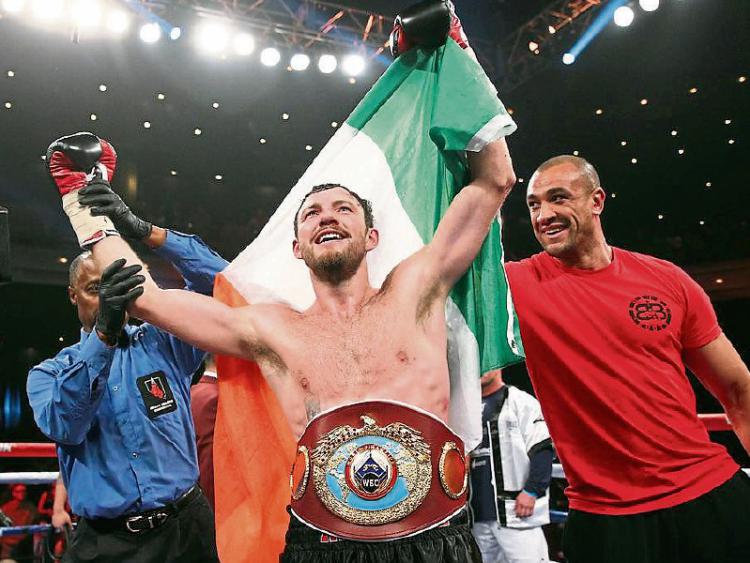
‘Fighter’ by Andy Lee with Niall Kelly (2018)

There are some books I know that I will love before even opening the first page.   It’s a combination of the subject, the writer (or ghost-writer), the look of the book, and sometimes the marketing.  Fighter was one of those books and it more than lived up to my lofty expectations.

Former World Champion boxer Andy Lee is the same age as me and spent his teenage years living in my home town, Limerick.  I’ve followed his career pretty closely since the Athens Olympics and stayed up late to stream many of his fights in the US.  At times, Lee’s career went under the radar for the average Irish sports fan as he fought in the US more often than not.  However, in recent years, his incredible knock out against Julian Jackson went viral and his World title win against Korborov was widely celebrated in Ireland.   Lee has also become an incredibly well-liked pundit and commentator on Irish radio, TV and podcasts.

Lee’s story is fascinating.  A gypsy kid who fought in the Olympics before linking up with one of the greatest boxing trainers of all time.  A white Irish kid who became a key figure at the Kronk gym in Detroit.  A boxer who came back from two heartbreaking defeats to finally claim a world title.

andy lee box

Lee’s relationships with his gypsy heritage, with his boxing ambitions, with Emmanuel Stewart, and with his wife Maud, shape his story.   His relationship with the legendary Stewart in particular is fascinating as I had no idea just how close they were.

As Lee acknowledges himself, in boxing defeats are often much more interesting than victories.  Unsurprisingly, the story of his first two defeats and the shattering impact they have on his career progression are fascinating.  The book brilliantly captures the life of a prize fighter, the ups and downs, and the insecurities where every decision in a fight could lead either to victory and riches or to defeat and disaster. Lee’s story however is ultimately a triumphant one as he is able to retire still young and healthy having achieved his greatest career ambition.

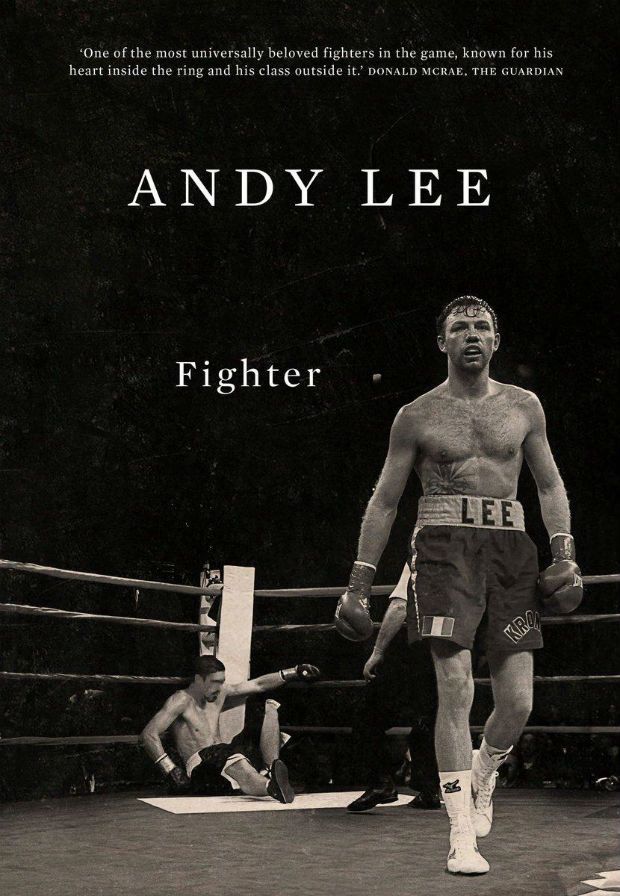
Fighter is a beautiful book.  Firstly to look at – the incredible black-and-white cover picture evokes all of the emotions of a prize fight.  It’s equally beautifully written with chapters drifting seamlessly between Lee’s story and his innermost thoughts on boxing and life.  Niall Kelly has done an incredible job in shaping Lee’s story and capturing his voice.

I absolutely adored this book.  I simply cannot recommend it highly enough.

andylee

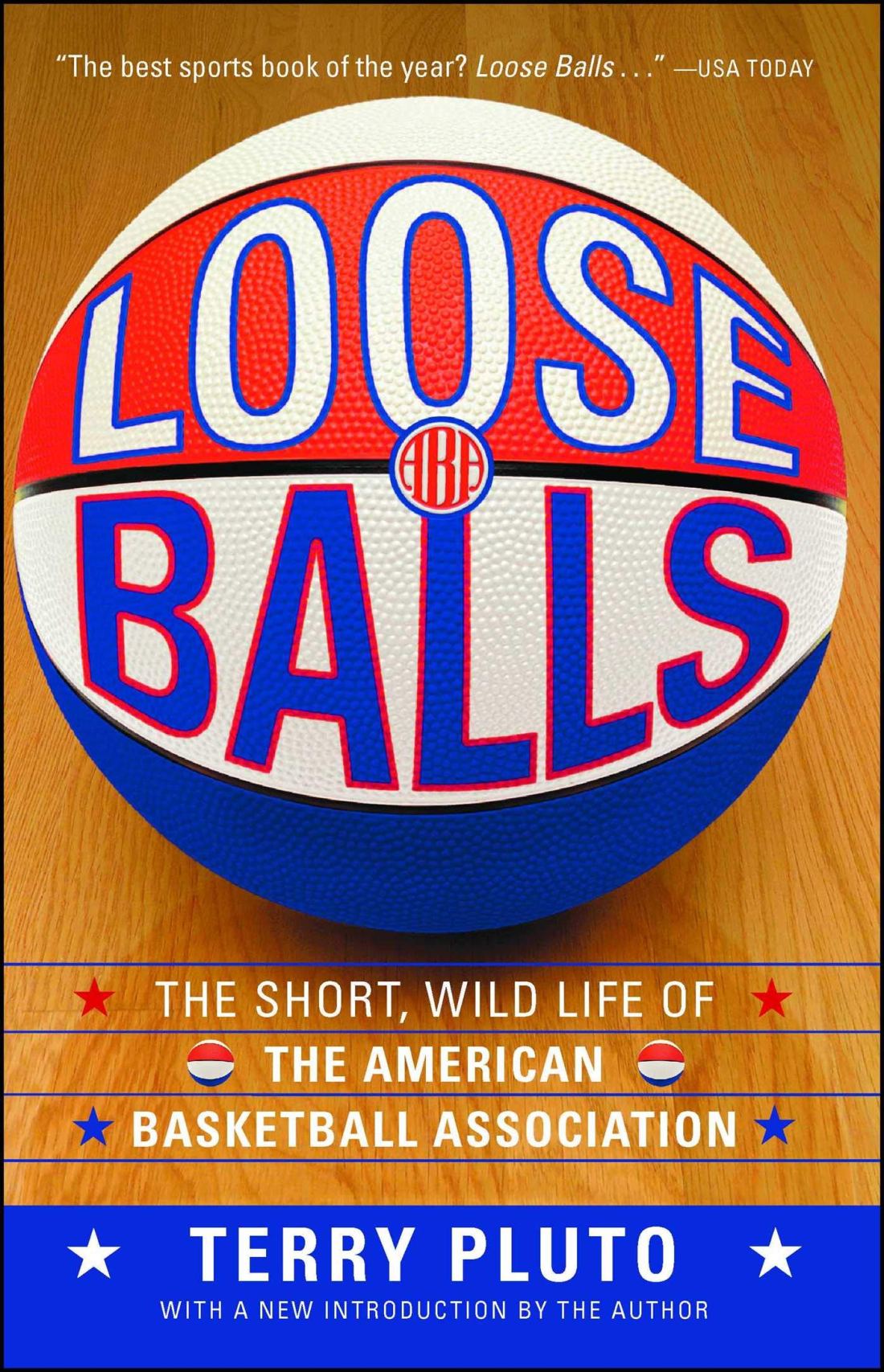
‘Loose Balls: The Short, Wild Life of the American Basketball Association’ by Terry Pluto (1990)

The American Basketball Association was as an upstart professional league which lasted 9 years before eventually merging with the NBA in 1976.  Well, 4 teams were absorbed into the NBA –  the other 2 teams were left to die (a well-compensated death) and 4 other ABA teams had already folded.

Loose Balls is an oral history of the ABA, the crazy stories, and the impact it ultimately had on the NBA.  It’s remarkable that the ABA survived 9 years with almost no television exposure and very scant newspaper coverage.  The lack of a strong written or video record meant that Pluto wisely chose to write an oral history detailing the often contradictory but always entertaining memories of the key characters in the ABA story.

The ABA’s formation seemed to have been quite haphazard.  In many ways it came into existence because of one man, Dennis Murphy’s, determination to set up a sports league.  Key decisions such as the use of a red-white-and-blue ball and the introduction of a 3 point shot were made on whim rather than being part of a grand design.

The book is exceptionally funny because the characters involved and the shenanigans they got up to funny, bizarre and entertaining.  The story is a wild ride of crazy characters, marketing stunts and, importantly, some very good basketball players.  The business side of the story is also fascinating as teams scrambled to survive and to try and pressure the NBA into a merger.

All of those interviewed by Pluto share the view that the ABA fundamentally changed professional basketball.  These changes included the move to a faster paced game, the 3 point shot, the drafting of younger players and the overall focus on entertainment.   It’s also remarkable just how successful many of the ex-ABA players were after crossing over to the NBA.

There is something I find incredibly interesting about attempts to create a new sports league rivaling a well-established league.  It seems like a crazy idea doomed to fail.  Jeff Pearlman’s recent Football for a Buck brilliantly told the crazy story of the failed United States Football League. And Vince McMahon’s determination to bring back the XFL in 2020 shows there will always be dreamers willing to risk big bucks to break the monopoly of major sports leagues.

Loose Balls covers all 9 seasons, all 10 teams and most of the major players involved in the ABA.  It’s the definitive history of the ABA told by those who lived and loved it.  It is a classic sports book that deserves its place on the list of the all time greats.

As a companion piece, I’d highly recommend the ESPN 30 for 30 documentary Free Spirits which interviews many of those who spoke to Pluto, as well as Pluto himself.  It focuses on the Spirit of St. Louis team who lasted only two years, had a crazy cast of characters and whose owners secured the best financial deal in sports history when being denied a place in the NBA.

loose

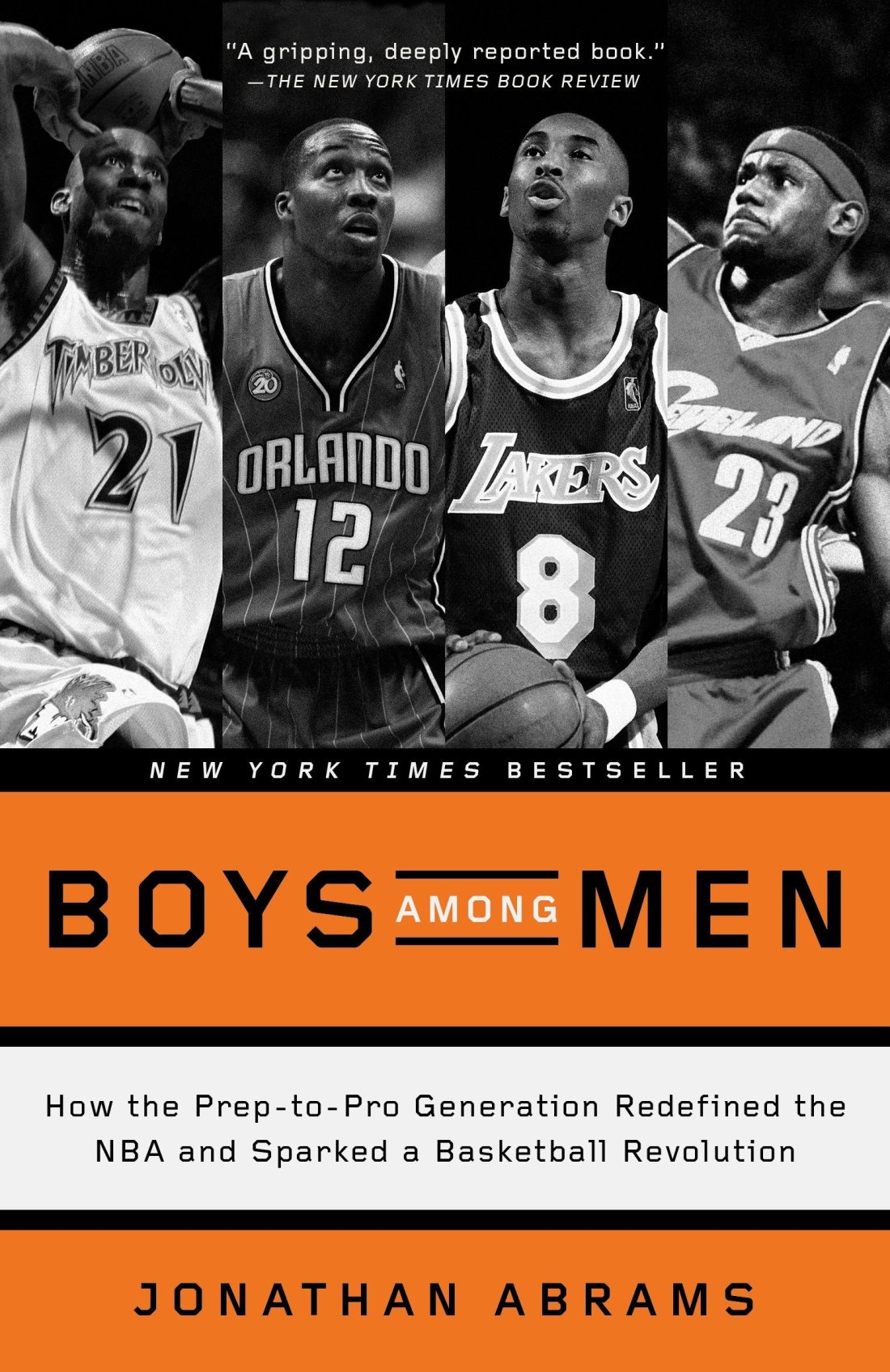
‘Boys Among Men: How the Prep-To-Pro Generation Redefined the NBA and Sparked a Basketball Revolution’ by Jonathan Abrams (2017)

It’s always been an interesting quirk that the uber-capitalist, free-marketing loving, USA have the most socialist sports financial arrangements with salary caps, minimum pay rates and other restrictons.  As part of collective bargaining between team owners and player unions, rules have often been accepted which prevent athletes from playing in a major league until a set period of time has passed since they graduated from high school.  Even then, the player can’t sign for whoever he likes, but rather is assigned a team through a draft!  Great for preserving competitive balance, not so good for the guy who has no choice but move his life to a random city.

Prior to 2005, the NBA didn’t have any post high-school restriction (other than an age minimum of 18) and therefore high-school students were eligible to declare for the NBA draft without attending college.  Despite a few high profile cases in the 1970’s, no players followed this route for 20 years until Kevin Garnett was drafted with the fifth overall pick in the 1995 NBA draft by the Minnesota Timberwolves.

Over the next few years, a number of future legends would follow in Garnett’s footsteps with Kobe Bryant, Tracy McGrady, Amar’e Stoudemire, LeBron James and Dwight Howard among them.   There were also plenty of players however who never made it and whose lives never quite recovered from the failure to live up to the hype.

Boys Among Men takes a detailed look at the careers and lives of many of the high school players who jumped straight into the NBA – both the successes and failures – and those who tried to do so but went undrafted.  Abrams describes how Garnett broke the mould and how his success led other teams to overcome their initial reluctance to draft direct from high school.   In particular, after Kobe Bryant dropped to 13th pick, a number of teams realised they had missed out on a Hall of Fame level talent and were determined not to repeat their mistake.

Abrams makes clear that there was no one factor which could determine whether an 18 year old would be able to make it in the NBA.  It could be that players overestimated their own talents or lacked the work ethic to reach the standard or had been exploited by unscrupulous adults.  Some came from such difficult backgrounds that the money and fame was too much for them to handle.  Others simply didn’t mature physically as they may have expected or hoped.   Those players that did succeed often came from equally difficult backgrounds but had usually gotten, and accepted, much better advice and managed to adapt quicker to the higher level of play.

In telling the story of the ‘prep-to-pro’ generation, Abrams also tells the story of the NBA’s transition from the Jordan era to the LeBron era.   The generation of players that arrived in the NBA during this period would go on to dominate the sport with many having incredibly long careers.  Howard even managed to play in the NBA in his teens, 20s, 30s and 40s!   They were instrumental in helping the NBA recover from its post-Jordon slump (in attendance and viewing figures), and again becoming a major league on a par with the NFL.

The book is exceptionally well researched and its clear that Abrams interviewed a vast number of players, agents, coaches and other insiders like the legendary Nike and Addias executive Sonny Vaccaro (subject of the great 30 for 30 film Sole Man).  As an experienced beat writer, Abrams is brilliant at recounting on-court details but the key focus on the book is the mindset of the players – what factors go into their decisions, how did they approach the step up to the NBA and why do they believe they succeeded or failed.  

As well as telling the story of the players, Abrams also considers how both the pro and college game have responded since the age limit was increased to 19.  He includes a range of viewpoints – both positive and negative – and avoids reaching a firm conclusion.  What’s clear is that the decision had a profound impact on college basketball with one-and-done players becoming ever more common and certain colleges, like Kentucky, responding much better to that trend.

The book is at its best when chronicling the stories of those who never quite made it.  The exploits of Garnett, LeBron and Kobe Bryant are well known.  The stories of  Lenny Cooke, Korleone Young, and Leon Smith were unfamiliar to me but just as interesting.  I suspect had I been given millions of dollars at 18 years of age, I’d have had a pretty hard time doing anything but partying!

Boys to Men is a really interesting and enjoyable book.  Abrams doesn’t take sides, but simply tells the story from a range of viewpoints and perspectives.  It’s a book that would be enjoyed by any basketball fan.
boysamongmen


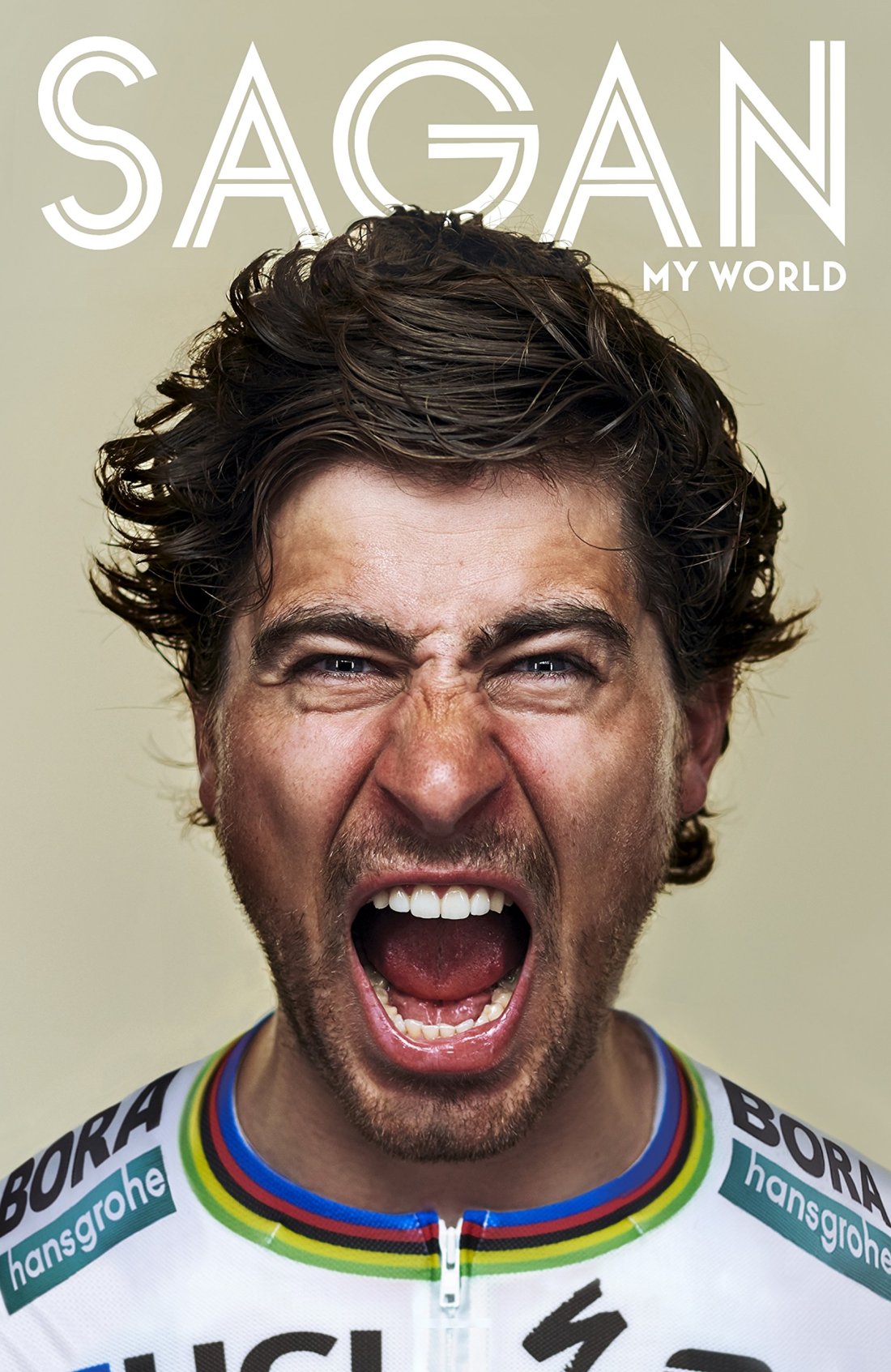
‘My World’ by Peter Sagan (2018)

Peter Sagan is no ordinary cyclist.   Like most casual cycling fans, he first came to my attention at the 2012 Tour de France where he became the youngest ever Stage winner and also captured the Green points classification jersey in his first appearance in the race.   He has now won over 100 races, 6 Tour Green jerseys and 3 consecutive World Championship rainbow jerseys.

He is such an interesting cyclist to watch because he isn’t an out-an-out sprinter, yet can live with the very best sprinters in the world.   Unlike pure sprinters, he can perform in much longer races and doesn’t have a lead out team like Cavendish and others typically do.  I’ve loved watching in the Tour over the years and am always more interested in watching other races if Sagan is in the mix in the later stages.

Sagan can often times be quite controversial whether it is giving cheeky answers in press conferences, doing a non-hands wheelie as he crosses a finish line, or getting disqualified from the 2017 Tour de France, Sagan adds drama and character to an awful lot of his races.  The combination of success and personality guaranteed Sagan a strong following in his native Slovakia and around the world.

My World is a fairly standard autobiography written by a leading sportsman in the mid-to-late part of his career.  It offers good insight how Sagan thinks and operates and shines a light on the members of ‘Team Peter’ that are instrumental to his success.  In many ways the books main function is as a thank-you to those who have helped him along the way.

The book is loosely centered around Sagan’s remarkable achievement of winning cycling’s World Championship road race three years in a row.  I was particularly interested in some of his early struggles where he was on the verge of walking away from cycling and his decision to race mountain bikes at the Rio Olympics rather than the road race (I was at the Rio games and really wanted to try and watch Sagan race but sadly had already bought tickets other events that day).  The book however runs out of steam and starts to get a bit repetitive as it becomes more of a diary of the 2015, 2016, and 2017 seasons.   Ultimately, I was a little disappointed with the book but I can’t quite put my finger on why – I think I wanted to know the secret of his success, but it seems the answer simply is raw talent and surrounding himself with the right people.

The ghost writer (who doesn’t seem to be named) has done a very good job in capturing Sagan’s voice.  At times it doesn’t quite flow when reading it, but it feels very like the Sagan you hear in interviews.

If your a fan of Sagan or professional cycling more generally, there is plenty to enjoy in the book.  If you’ve no idea who Sagan is then I’d definitely give this a miss.

sagan