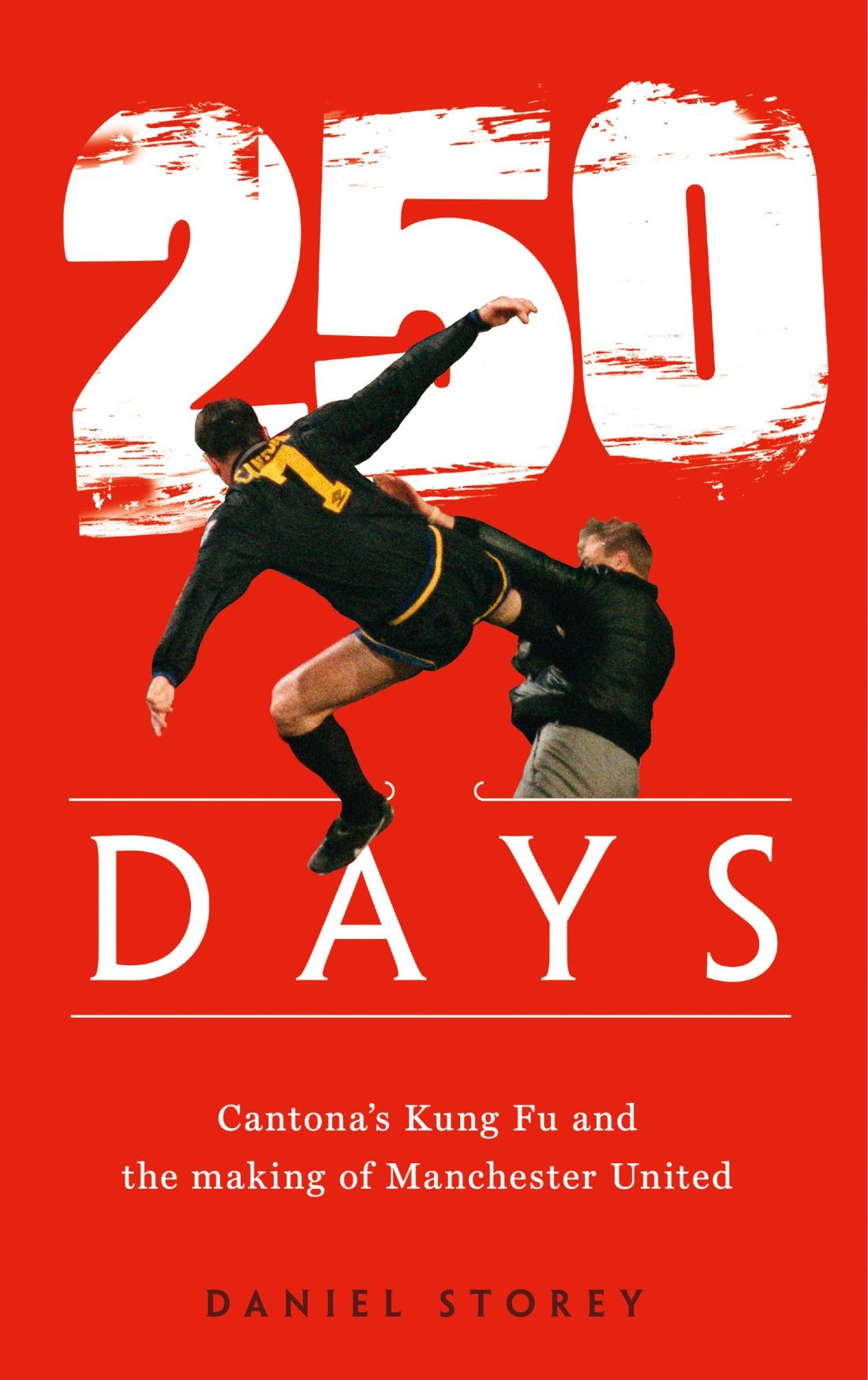
‘250 Days: Cantona’s Kung Fu and the Making of Manchester United’ by Daniel Storey (2019)

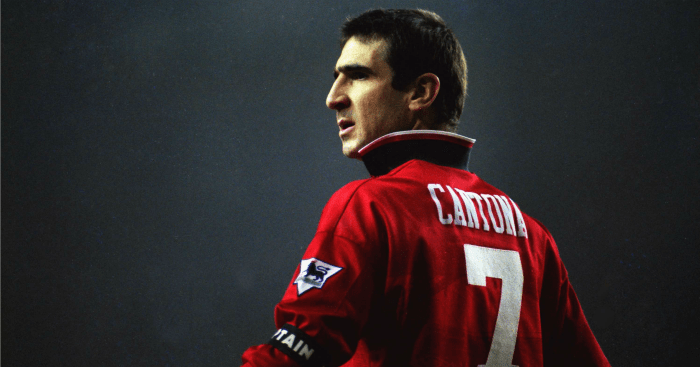
As a kid I was a Man United fan.  The day Eric Cantona retired I realised that wasn’t actually true.  I was a Cantona fan and any residual affection for United slowly waned until a few years later when I stop pretending I cared.   Cantona was that kind of player, one who could make a kid fall in love with a team and a sport simply by turning up his collar and chipping the goalkeeper.

250 Days chronicles the aftermath of the infamous day at Selhurst Park when Cantona kung fu kicked a Cyrstal Palace fan. The mercurial Frenchman had been man-marked closely all game and in frustration kicked his marker early in the second half.  As he made his way to the tunnel, he launched into the crowd, aiming a kung-fu kick at the chest of a taunting Palace fan.

It caused a sensation like no other in my 10 year old life to that point.  Even before the days of 24 hour Sky Sports News, it dominated news coverage for weeks as speculation mounted that the mercurial Frenchman would be fired, banned for life or imprisoned.  Ultimately, he ended up with a 250 day ban stretching into the following season.

The focus of the book is what happened during this period, and how it shaped Man United’s next period of success. United’s legendary manager Alex Ferguson saw an opportunity and Storey chronicles how both men used this time to help develop and inspire the rising generation of United players (the so-called ‘Class of ’92’).
Cantona

250 Days is a well written and entertaining account of this turbulent period in United history.  Storey blends together the accounts from the key figures into a compelling narrative and builds a very convincing case for his central thesis.  Cantona and Ferguson both emerge with significant credit for their ability to turn a potentially career ending attack into a positive experience binding player, manager and club closer together.

The books suffers slightly from the lack of original reporting – Storey has read and absorbed a huge amount of material covering United and Cantona during that time, but for those sad people, like myself, who have read more than half the bibliography, the book feels a little unfresh. If you haven’t read Gary Neville’s autobiography, Alex Ferguson’s autobiographies (please never read his later books – they are awful) and the entertaining Cantona on Cantona this probably won’t be a problem for you though!

Much like Storey’s previous book on Gazza’s time in Italy, the book feels too short for it’s price point.  Obviously this is the publisher’s decision rather than Storey’s but it does cloud the reading experience.  Storey is prolific in churning out incredibly high quality articles across a variety of publications.  I’d be very excited to read a full length book of his that shined fresh light on some similar aspect of 90’s football.  I’ve said a few times there I’d love to see an English language book on Sacchi’s Milan team in case he is looking for suggestions!

All in all, an entertaining read.
250 days


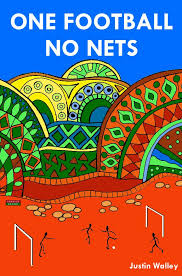
‘One Football, No Nets’ by Justin Walley (2018)

FIFA often boasts about having more member nations than the UN.  But what about those sub-national regions that aren’t recognised by FIFA and don’t get to make the leap that Gibraltar have made and compete against the established nations?   In recent years there has been a growing interest in these football minnows with books like Up Pohnpei leading the charge.  The CONIFA World Cup last Summer gained plenty of attention as the minnows of the world competed against each other in London.

One Football, No Nets is set in this world where football meets questions of regional sovereignty.  The book tells the story of Justin Walley’s attempts to take the Matabeleland side (a region in Western Zimbabwe) to the CONIFA tournament.  Walley, a British man coaching in Latvia, was determined to try his hand at international football management and swapped his relatively comfortable live for the unknown in Africa.   He devoted more than a year attempting to forge the team into shape and manage the logistics (and finances) of getting them to London.

The story is told in an in-depth diary format.  At times the logistical challenges appear insurmountable with limited resources, poaching of players and visa problems.  Walley goes to all possible lengths to drum up support and funding for the team – including enlisting the help of the legendary Bruce Grobbelaar.

The book is at its best when giving insight into the struggles of daily life in Zimbabwe during the final days of Robert Mugabe’s long period in power.  Walley captures the paranoia, fear and cautious optimism present in the country on the cusp of historic regime change.

If the book has one weakness, it is that players’ own stories and personalities don;t feel fully developed.  Ultimately none of them remain memorable in the way that, for example, the lady who Walley lodged with does.

The case for why Matabeleland should have a team separate from the Zimbabwe national team is never made quite clear in the book.  I’ve read that the region is culturally and ethnically distinct in many ways from the rest of the country, but Walley doesn’t dwell on this in the book.  Throughout the story he seemed very cautious about expressing sentiments of regional sovereignty which would have provoked the anger of the Zimbabwean authorities (and understandably so!).

There is an additional final chapter which at first glance appears unnecessary but is just too entertaining to have been left out.  Walley covers his time as a fan at the World Cup in Russia during which he became a mini-celebrity and foreign brand ambassador for the region of Tatarstan.

Overall, the book is a pleasure to read.  Walley writes with openness, honesty and humour about the challenges he faced in trying to fulfill his, and the players’, dream. It is quite a personal book and your reaction to the book may very will mirror your feelings about the author.  For me, Walley comes across as one of life’s dreamers – a man determined to experience the world rather than simply pass time.   As I type this in my office at lunchtime while looking at Walley’s twitter feed showing him enjoying a trip to Brazil, I can’t help but admire and envy his courage, free spirit and sense of adventure.  An interesting man and an interesting book.

onefoot

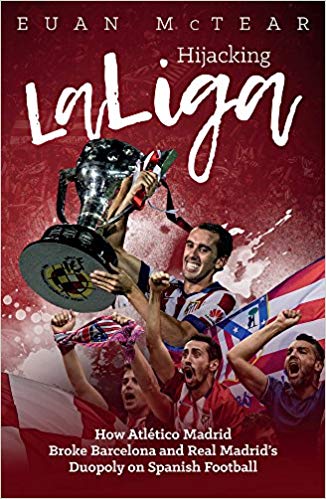
‘Hijacking LaLiga: How Atlético Madrid Broke Barcelona and Real Madrid’s Duopoloy on Spanish Football’ by Euan McTear (2018)

When David Beckham signed for Real Madrid, the average English-speaking football fan  became exposed to a lot more coverage and commentary on Spanish football.   The addition of Beckham to the Galactico project made La Liga the hottest property in global football.   By the time Beckham left Leo Messi was on the rise, Spain would soon win Euro 2008, and Cristiano Ronaldo would arrive the following year.  The Messi and Ronaldo era, combined with Spanish dominance in international football, saw a continued rise in the interest of the English speaking world in Spanish football.

Once consequence of this greater interest has been the proliferation of English language books on Spanish football.   A number of great English language books on Spanish football do predate the Beckham era – most notably for me, Barca by Jimmy Burns and Morbo by Phil Ball.  But the majority of such books in recent years focus especially on Barcelona and Real Madrid.

Euan McTear has wisely decided to look elsewhere in the fascinating landscape of Spanish football.  His first book, Eibar the Brave, was about tiny Eibar and this book, Hijacking LaLiga focuses on the rise of Atlético Madrid in recent years.

Hijacking LaLiga is a comprehensive look at the origins and modern history of Atlético who have achieved remarkable success under manager Diego Simeone.  McTear traces the history of the club, highlighting the key moments the enabled to club to survive and thrive through the 20th Century.  It’s a fascinating history but less politically charged that those of Barca and Real.   There is also really interesting details on the chaotic reign of Jesús Gil, the President who somehow seized ownership of the club away from the fans.

The main focus of the book is on the period since Atheli’s relegation in 2000 and how the club rebuilt to break the seeming impenetrable duopoly of Barca and Real.  McTear credits a number of factors – the first Europa League triumph shattered the myth that Athleico were cursed, better TV deals improved their financial ability to compete, the combination of youth team products like Koke, tough battling players like Diego Godin and superstars like Costa and Greizmann provided ideal, and above all the coaching of Diego Simeone and his staff was the perfect match for the players and the club.

The book provides a very interesting and detailed insight into the most interesting story in modern Spanish football.  It’s well written and an enjoyable read.  My only compliant is that it jumps around in time and topic quite dramatically at times and a cursory knowledge of the timeline of events is a big help as you read – I kept forgetting which year they won which tournament and was left slightly confused as the narrative jumped between different seasons.

Overall highly recommended and great to see English language books focus on the wider story of Spanish football.

athleti


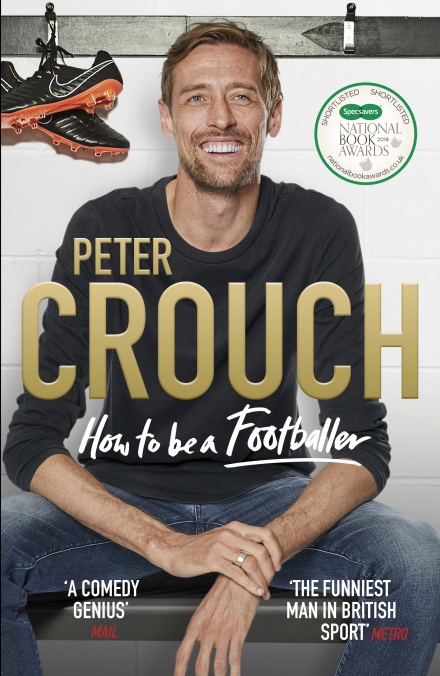
‘How to be a Footballer’ by Peter Crouch (2018)

I don’t think there’s a more likeable footballer in England than Peter Crouch.  Immediately memorable as, at 6’7, he towers over any other Premier League player, Crouch went from early ridicule to broad recognition as a pretty talented player.   He holds the record for most Premier League headed goals, he appeared in Champions League final for Liverpool, scored at the World Cup finals for England and has an impressive 22 goals in 46 England international appearances.  He is also very very funny as his twitter usage and widely quoted one-liners reveal.

Likeable as Crouch is, I’m not sure I’d want to read his autobiography (turns out he published one at age 26 in 2007!).  The USP is that he is really tall and got some stick until he proved he’s actually quite a good player – not the stuff of a bestseller.  Wisely, Crouch has written a very different book to the standard footballers fare.  How to be a Footballer is a wide lens look at the game from a multitude of angles – the dressing room, transfers, agents, etc.  Crouch dips into his vast stock of anecdotes to illuminate life behind the scenes in the Premier League.

It’s an entertaining read that any fan of English football will enjoy.  The jokes work, the anecdotes are never too cruel, and there’s plenty of the self-depreciating humour you’d expect from the man who famously answered the question of what he would be if he wasn’t a footballer with the answer “a virgin”.  It’s light, informative and very funny.  An ideal Christmas present for any football fan.

EDIT:  I’ve also just read the follow up book “I, Robot, How to be a Footballer 2”.  It’s equally as entertaining  as the first book.  Wouldn’t recommend reading them back to back as the anecdotes all merge together in memory.  


crouchie

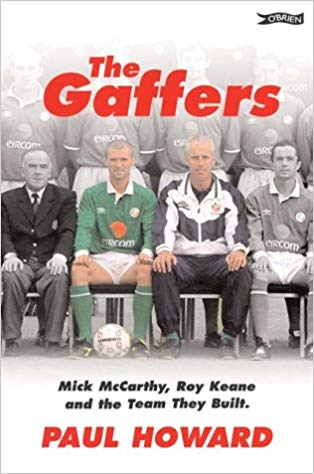
‘The Gaffers: Mick Mc Carthy, Roy Keane And The Team They Built’ by Paul Howard (2002)

When a writer decides to select an ongoing event or situation to cover for a non-fiction book, there’s always the unknown question of what happens if the situation changes radically?  The coach gets fired, the team turns out to be crap, the player gets a drugs ban etc. etc.

Howard decided to write The Gaffers in 2001 looking at how the awkward double act of Mick McCarthy’s management and Roy Keane’s captaincy had driven Ireland to the 2002 World Cup in Japan & Korea.   Little could Howard have known that the dynamic of their relationship would become the biggest story in world sport as Keane ultimately ended up leaving the squad in the incident that will forever be known simply as ‘Saipan’.  Howard ultimately ended up writing about a relationship that was dissected over in immense detail – I’ve no idea whether it was good or bad for sales but it certainly made it a different book than would have been intended.

handshake

The Gaffers has sat in my ever expanding to-read pile for about 10 years.  McCarthy’s re-appointment as Ireland manager (as Keane departs as assistant manager) has led me back to books from that era of Irish football.

Howard paints a picture of both McCarthy and Keane through the eyes of the other members of the Ireland squad.  McCarthy was the former captain who showed great loyalty to players and knew how to handle nervous young stars.  Keane was the champion who refused to settle for second best and resented time away from home if it wasn’t being put to maximum use.

Howard’s thesis is that the combination of a supportive manager and a driven demanding captain inspired a team of mixed talents to outperform their individual abilities.  In hindsight, it seems obvious that the relationship could only continue for so long, but all logic suggested they would make through a few more weeks till the end of the World Cup.

The book takes us through the background to their relationship and the qualification campaign that saw the memorable 1-0 win vs. Holland in Landowne Road. By necessity, the later stages of the book become a retelling of the Saipan story and an overview of Ireland’s World Cup games.  Unfortunately the great ‘what-if’ remains whether the Keane/McCarthy dynamic could have driven Ireland further in what remains the weakest World Cup in years.

The book was an enjoyable nostalgia trip and a good insight into the dynamics behind the Irish team in the later stages of McCarthy’s first spell in charge (it also brought back much more painful memories of Ian Harte’s spell as a starting international centre-back). It’s a short and well written book that any Irish football fan would enjoy.

As McCarthy takes the reins again, it will be fascinating to see whether he can recreate the team spirit and dynamism in a team that no longer has the world class talents of Robbie Keane, Damian Duff, and the one and only Roy Keane.

  The Gaffers


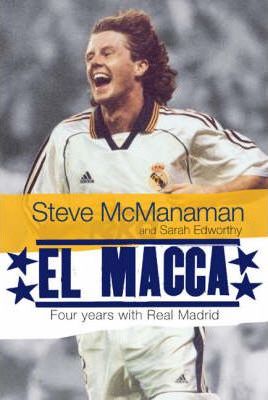
‘El Macca: Four Years with Real Madrid’ by Steve McManaman and Sarah Edworthy (2004)

Steve McManaman was a footballer who was impossible to dislike.  Talented and entertaining to watch, he also came across as a decent guy.  Off the field, he was known for wisely investing his money, his love of horseracing and marrying a lawyer.

After nine years at Liverpool, during which time Liverpool had to come to terms with no longer winning Championships, he moved to Real Madrid in 1999. The transfer was one of the first high profile Bosman free transfers and McManaman one of the few English players to move to the Continent and succeed.   And succeed he did, despite at times relatively little attention being paid to his time at Madrid by the British media.  He became the first English player to win the UEFA Champions League with a non-English club in 2000, and the first English player to win the Champions League twice.

El Macca is a detailed look at the 4 years McManaman (known to all as Macca) spent at Real Madrid.   His first year was incredibly successful as he became a regular starter in a Champions League winning side and scored a spectacular volley in the final against Valencia.

Following the installment of Florentino Perez as Real President, McManaman found himself sidelined as the club looked to get him off the wage bill to pave the way for the Galactico era – the plan of Zidanes & Pavons – that was intended the club combine global superstars with youth team graduates.    McManaman refused to complain, worked hard, and eventually made himself indispensable.  As the Galactico era continued, he became a more regular substitute than starter for his last two seasons.  Despite this, he seems to have remained a key figure for his coach Del Bosque, often having a significant impact when brought off the bench.

The book provides a really interesting insight to an era of change at the biggest football club in the world.  Every player at the club was a household name and the very biggest names in the game found themselves all in the same team at Madrid.   All the players come across quite well with Figo and Hierro standing out as interesting characters who got on very well with McManaman.  After he left the club, it would take another 12 years before they managed to win another Champions League and complete La Decima.

In many ways the book reads like a book written solely by Edworthy as its mostly written in the 3rd person.  However, with McManaman’s seal of approval, its highly unlikely that other players would have spoken so openly and candidly.   The warmth the player feel towards McManaman is clearly evident as is the impact he had at the club at a personal and professional level.   The book also serves as a partial biography of McManaman who speaks openly about his disappointment about missing out on the 2002 World Cup and a look at what the England camp was like under Glenn Hoodle.

Overall, El Macca is an enjoyable read and an interesting look behind the scenes of the most fascinating club in football during its most fascinating era.

El Macca


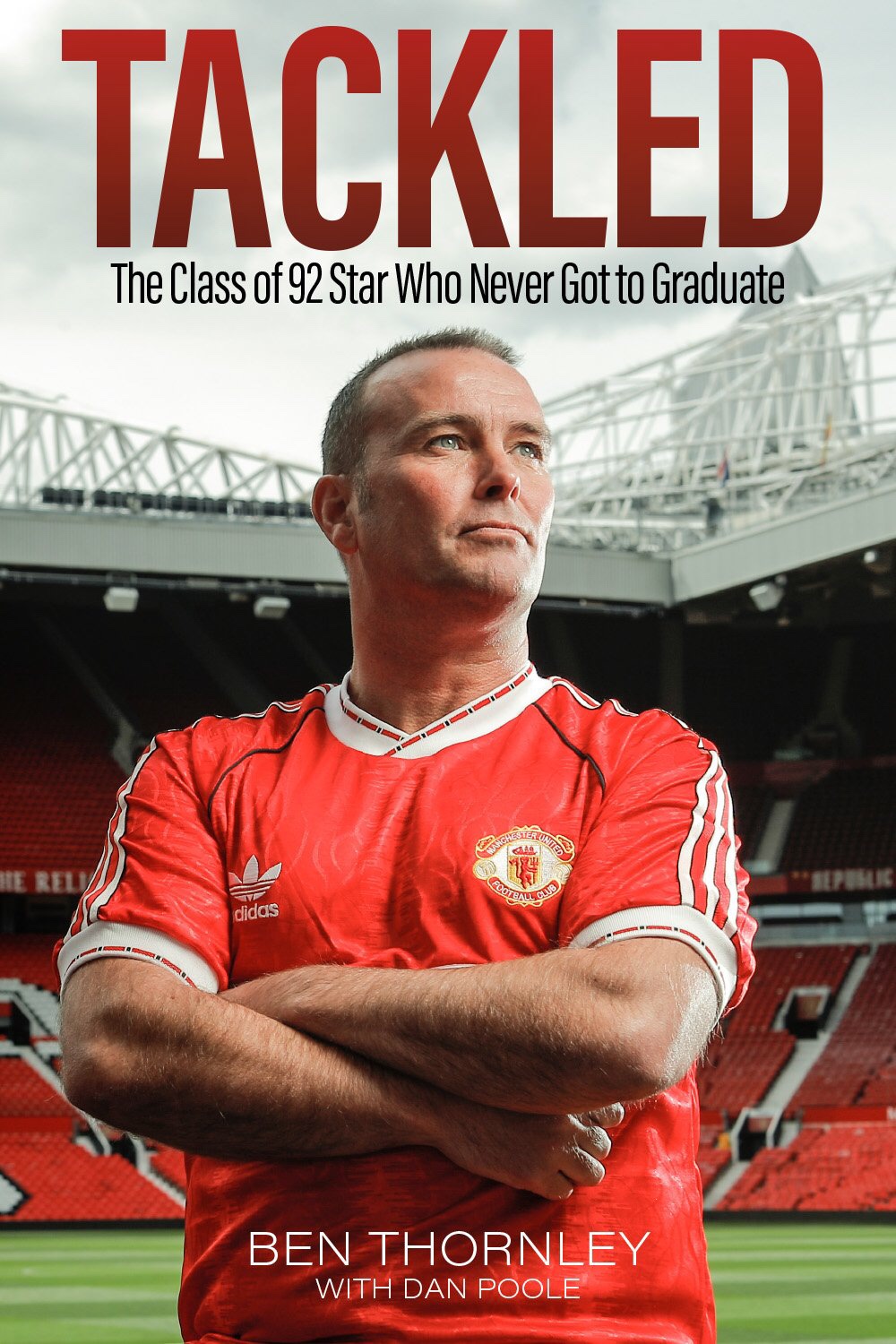
‘Tackled: The Class of ’92 Star Who Never Got to Graduate’ by Ben Thornley & Dan Poole (2018)

Ben Thornley was a professional footballer who played for the same Manchester United youth team as the fabled Class of ’92 – David Beckham, Ryan Giggs, Paul Scholes, Gary Neville etc.

With Beckham-esque looks and Giggs-esque skill, Thornley was tipped for greatness by many. However, a horror tackle in a reserve game, just weeks after his first team debut, severely damaged his knee and ultimately his chances of making it to the very top.  Thornley recovered and played for a number of years but was never able to fulfill his vast potential.

Tackled tells the story of Thornley’s life in football.  The book jumps back and forward between the time before his injury and the time afterwards.  The earlier periods are told through many voices including his family members the likes of Beckham, Giggs, Scholes etc.  The later periods are told in a more orthodox autobiographical style.

The format works very well.  The book feels really genuine and the style captures the interaction among friends and family really well.   There is a lot of humour in the banter among friends and many of the anecdotes may not have been told to a more traditional biographer.

Thornley is pretty open about his own failings in particular his fondness for booze and his constant cheating on his partners.  At times the stories are a bit laddish – and Thornley seems to relish the retelling of some of his less than polite behaviour.  However, the telling of his off-field life while a player is necessary to fully appreciate how difficult it must have been to come to terms with his reduced status in the game.

The attitude to booze is interesting.  Thornley is open about enjoying a drink but there isn’t a close look at whether he might have had addiction issues – overall the treatment of booze leans more to the “pints are great fun” direction (which they are) than the role booze likely played in hampering Ben to do as well as he possibly could post injury. I’m conscious I’ve just hit a year without a drink so my attention naturally more drawn to boozy stories.

Football wise, the book contains some interesting insights into the English game of the late 90’s.  In particular Thornley was fairly scathing of the short-lived Lilleshall model which saw the FA try to mimic the French Bluefontaine academy with very little success.  Most of all, it gives quite a lot of insight into the Man Utd set up at the time, with a particular focus on the youth coach Eric Harrison.

Thornley is not the first or last footballer to have his potential cut down by injury.  Thornley’s association to the famous Class of ’92 – that remarkable generation of players to come through the ranks at Man Utd at the same time – helps add some glamour and celebrity to the story.  There is something about the fact that the players have developed their own group brand annoys me no end, but it’s good to see one the less successful members able to cash in on it.

You might find yourself wondering why bother to read an autobiography by a player whose career highlight is winning an underage tournament.  But any sports book is never solely about the results on the pitch – Thornley shows a different side of the game, the side of potential unfulfilled, of hopes dashed and the challenges of nonetheless building a life.  It is a very honest and candid account of the life of the superstar that never was.

Thornley comes across as a likeable guy (unless you were his ex girlfriend) who has matured and come to appreciate what he achieved rather than what he didn’t. Overall Tackled is an enjoyable read and one that Man Utd fans in particular would enjoy.

‘Friday Night Lights: a Town, a Team, and a Dream’ by H.G Bissinger (1990)

Permian football had become too much a part of the town and too much a part of their own lives, as intrinsic and sacred a value as religion, as politics, as making money, as raising children.  That was the nature of sports in a town like this.  Football stood at the very core of what the town was about, not on the outskirts, not on the periphery.  It had nothing to do with entertainment and everything to do with how people felt about themselves”. 

Friday Night Lights likely needs no introduction for anyone who would read a blog about sports books.  H.G. Bissinger chronicles the 1988 season of the Permian Panthers, a high school football team in Odessa, Texas.  The book spawned both a movie and a very successful TV show and the phrase ‘Friday Night Lights’ has become synonymous with the idea of high school football in the USA.

Often proclaimed the greatest sports book of all time, Friday Night Lights is that rare book that fully lives up its praise.  It is also a book that is just as rewarding when read for the second or third time – the tension about how the team will perform is reduced, and the broader story Bissinger sets out to tell comes even more into focus.

Bissinger zooms in on the lives of 6 team members – some black, some white, some poorer than others.  Around these narratives he tells the story of the town – its schools, its history, its people, its politics and its prejudices.

Aside from the gripping football narrative – will the team make it to State – there a number of underlying stories that Bissinger focuses on.  At its core, Bissinger wants to talk about the idea of worshiping high school sports and athletes and the damage that can be caused.  But he cannot resist the allure, the passion and the drama that results from a town putting kids playing football at the very centre of civic life.  Bissinger openly admits that the games he attended remain his happiest sporting memories.

Reading this book in 2018, it’s impossible not to have today’s political environment in mind.  Many books have tried to chronicle the factors that led to Trump’s election, to capture the ‘Real America’, but reading this account from 30 years ago gives you more insight than any of the recent books.   Replace Reagan’s name with Trump and the social commentary could easily have been written today – it’s eye-opening how consistent the issues, concerns and arguably prejudices of everyday working class American’s have been over the 30 year period.

Fundamentally we see a society where life hasn’t lived up the hopes and dreams of many. Bissinger talks about how the town “absolutely worshiped Ronald Reagan, not because of the type of America that Reagan actually created for them but because of the type of America he so vividly imagined” – it’s easy to see Trump as the darker side of that same impulse, rather than helping people forget their problems by imagining a better future, Trump gives his supporters a licence to blame those problems on ‘the other’ – liberals, elites, Mexicans, globalists etc. etc. etc.

Above all, this book is superbly written. The descriptions of the matches are intense, the imagery is vivid and the heartbreak and joy feels very very real.  It’s a gripping, entertaining and simply wonderful book.

FNL

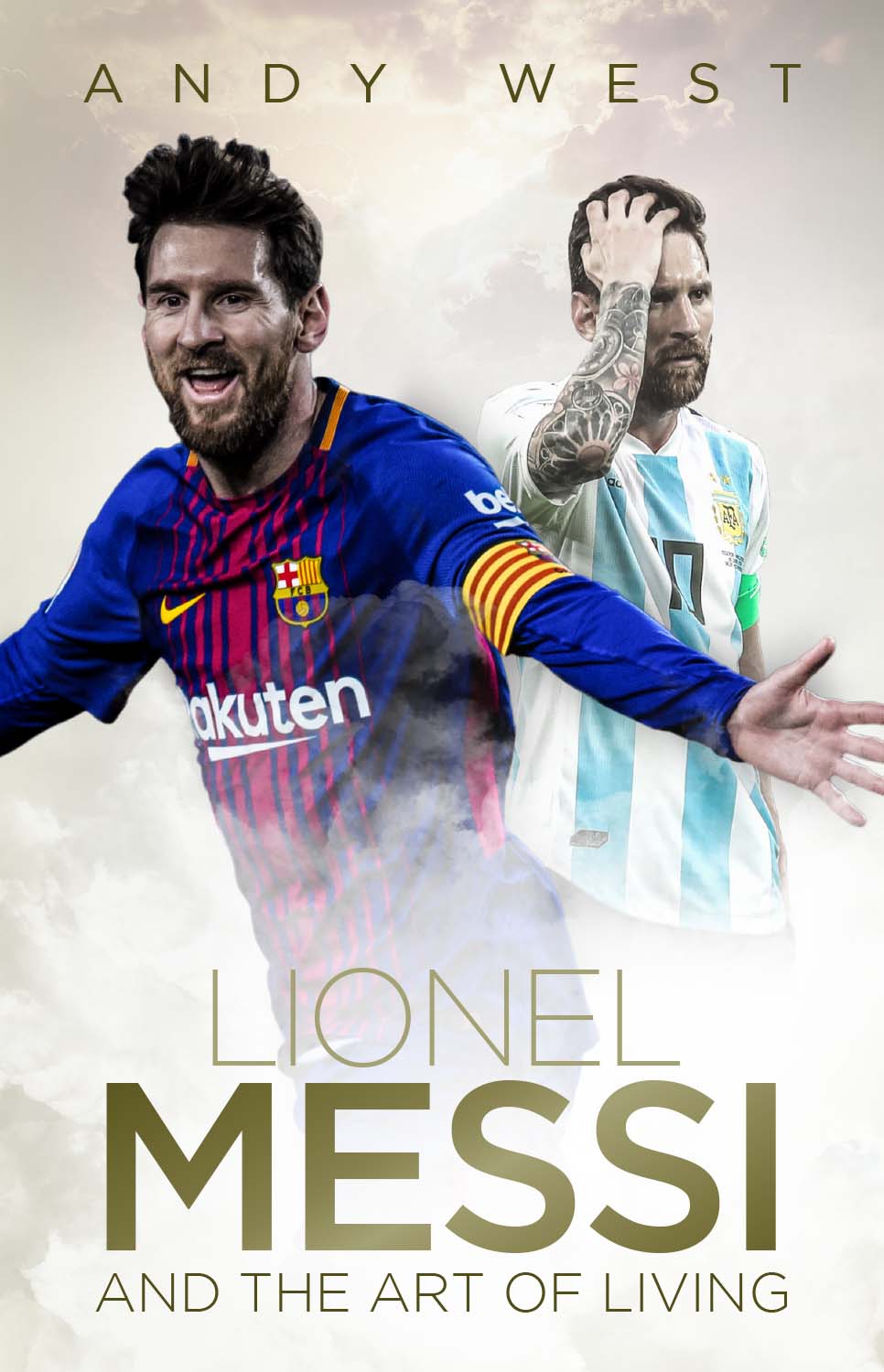
‘Lionel Messi and the Art of Living’ by Andy West (2018)

Every book has a target audience.  For sports books, it’s always a question as to what ‘fandoms’ the book will appeal to, what’s the Venn diagram of people who would like this.  Do you have to follow the sport? Do you have to be a fan of that team? Would a non-sports fan enjoy it?

About half-way through reading Lionel Messi and the Art of Living, I realised that, for this book, the target audience is me.  I love Messi, I’ve read plenty of philosophy, and plenty of pop social-science books.  I read the book during my commutes to and from the office during the toughest week in work I’ve ever had.  I read it while also in a very reflective mood having spent the weekend buying baby clothes for the first time (my wife is heavily pregnant with our first child).  I’ll never be in a more receptive place for some insights into how to live and never more willing to learn than from the greatest footballer of all time.

Did I mention that I love Messi?  I’ve loved him from the first time I saw him play. I sound like one of the 5 million Liverpool fans who claim to have been in Istanbul but I was boring enough to have watched almost all of the U20 World Cup in 2005 when he first emerged.  My brother’s childhood sweetheart had just broken his heart the day we both finished undergrad and, being freshly graduated and jobless, I spent 6 weeks trying to cheer him up with a diet of rented movies and sport on TV.  I probably don’t love Messi as much as my friend who has ‘Messi 10’ tattooed on his arse, but for me, he is the footballer that defines the last 10 plus years of my enjoyment of the game.

Returning to the book, it is very hard to categorise.  It’s part biography, part philosophy, part self-help book, part Zen and the Art of Motorcycle Maintenance. In some ways it could be read as the foundational book for the Church of Messi – a New Testament built around our one true saviour (from the evils of CR7).  But that may just be by me.

A more balanced, less emotional, review it’s that the book is an interesting approach to examining the factors that breed success in life – by whatever metric you judge that.  West seeks to examine Messi’s football career as a potential guide for how to live – he explores the characteristics which Messi displays and are essential to his success and, by analogy, to success in life in general.

West took the approach of interviewing just 7 people – some in football, some who knew Messi and others with interesting things to say.  Each chapter interweaves these interviews with a study of how Messi demonstrated one of the key characteristics needed to be successful.   The format works really well, the writing is very readable and it’s a book you could easily dip in and out of.

If you want a flavour of what the book is about, West has a great twitter thread (@andywest01) that gives a summary of each chapter.  If you like the sound it from that summary, you’ll love the book.  While I think the overall approach of the book might alienate some readers looking for something more traditional, West has gone for something different and he executes his vision brilliantly.

In summary, I loved it.  You might not like it quite as much but you should definitely give it a shot.

Lionel Messi Art of Living FC 1500px

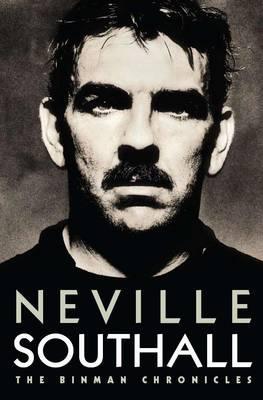
‘The Binman Chronicles’ by Neville Southall (2012)

I’ve always liked Neville Southall – the legendary Everton and Wales goalkeeper who played into his 40’s.   By the time I was a football obsessive 8 year old, he was already in the later years of his Everton career and the team were a long way away from the League and FA Cup winning teams of the mid-80’s.  Southall appeared to be a throwback to an earlier era as football became increasingly commercially driven.

The Binman Chronicles is a fairly standard ex-footballers autobiography.  It follows an old-school format of focusing heavily on his playing career and, after covering his early years and how he got into professional football, chronologically detailing season-by-season.   The book reads in Southall’s voice but the book could have done with tighter editing with a bit too much repetition – every off-season was boring, he doesn’t like holidays, just loves playing football etc.  It feels too much like interviews with Southall were transcribed directly rather than a ghostwriter editing to capture Southall’s voice and story.

While the book can at times be a bit bland, Southall himself is an interesting character – as anyone who follows him on twitter will know.  Arguably the best goalkeeper in the world during the mid-80’s, he never pushed for big money or a glamours move abroad. A tee-totaller but a piss-taker, he seems to have somehow been both a loner and a senior figure in the Everton dressing room.  Never one to follow the crowd, Southall wears his differences as a badge of pride and seemed to have totally resisted any pressure/temptations to be ‘one of the lads’.   There is a limited amount of detail on his own personal life – apart from his love of Wales and his daughter – but he is ultimately open about his failings and his affairs during his first marriage.

From a footballing perspective, any Everton or Wales fan will be fascinated by the insights into those teams at the times Southall played.  He is open in both his praise and criticism for coaches and fellow players – he has warm words for Howard Kendall and Joe Royle despite some pretty negative experiences with both them, bit is damning in his criticism of Mike Walker’s ill-fated time as Everton manager.   For those who are too young to have experienced English football in the 80’s, the book paints an interesting picture of Everton’s rise to rival Liverpool without really detailing what exactly led to the remarkable improvements during Kendall’s first spell in charge – it seems simply have been better players and good man-management.

I would have enjoyed more about his present work which involves teaching troubled young people.  His own early struggles in education seem to help him build relationships with those who are struggling to find a place in society.  It’s clear that Southall has found a passion that rivals football and is committed to helping.

binman