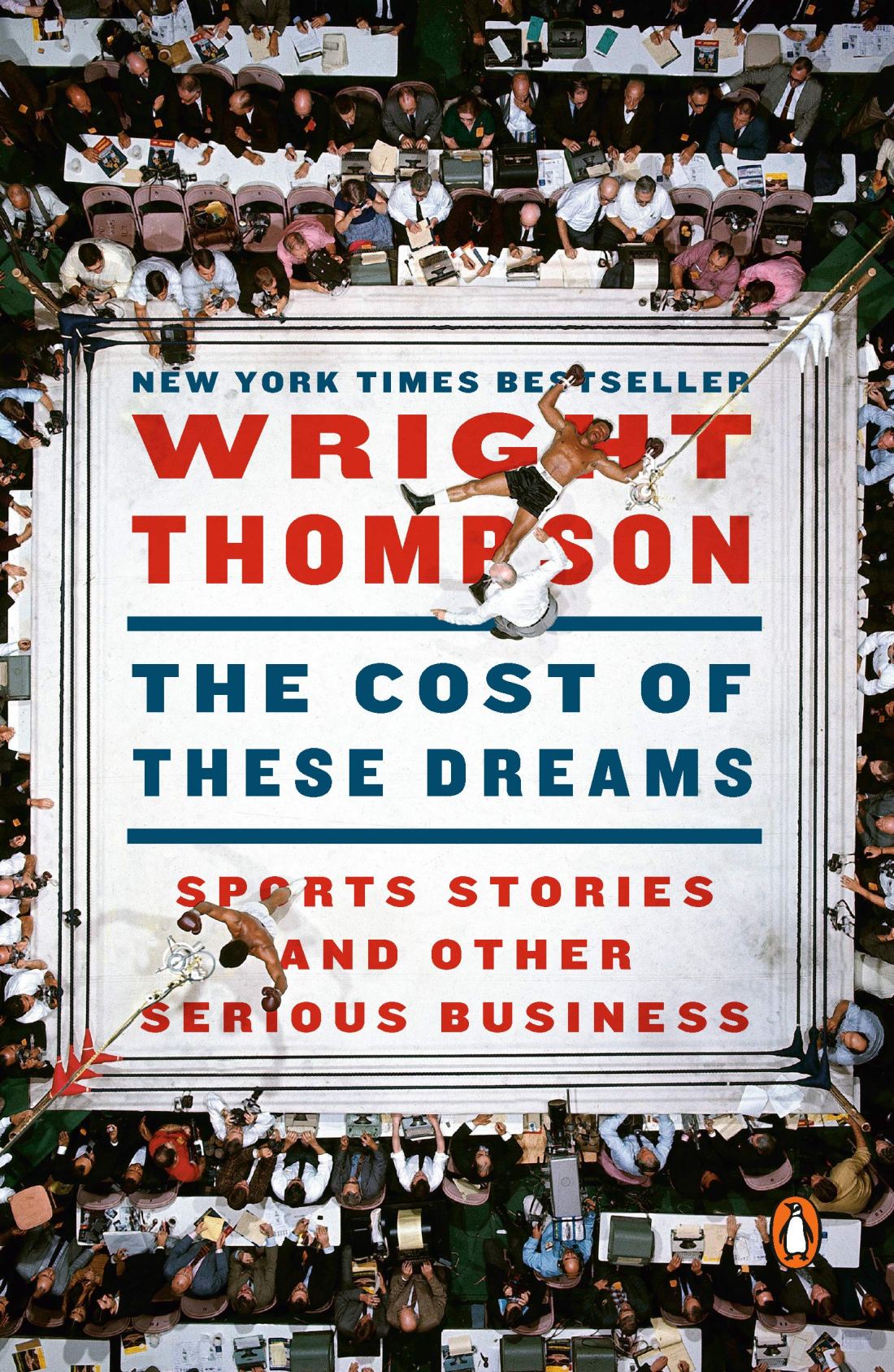
‘The Cost of These Dreams: Sports Stories and Other Serious Business’ by Wright Thompson (2019)

Wright Thompson is a long time senior writer for ESPN covering multiple sports.  His profile is relatively low in Europe given ESPN’s American focus but his excellent 2016 article on Tiger Woods was shared widely in Ireland at least.  It gave the best insight into how Woods’ life and career unravelled until the excellent  ‘Tiger Woods’ by Jeff Benedict and Armen Keteyian was published last year.

The Cost of These Dreams collects many of Thompson’s best articles but with a central theme running through them – the price and struggles that come with seeking and achieving success.  The stories collected here are mostly about the off pitch lives of those involved in sports.  It includes some of the greatest figures in their sports (including Michael Jordan, Pat Riley and Bear Bryant) and some relatively unknown characters most notably Tony Harris, a college basketball star who had a mental breakdown that led him to an untimely demise in the jungles of Brazil.  The highlight for me is a moving piece about the Ole Miss (University of Mississippi) football program during the ugly time of de-segregation in US education.

Unlike many anthologies, the preface for this book goes beyond the usual platitudes about how lucky he has been to write for X or Y over the years.  Instead it is a very reflective and emotional piece about the costs to Thompson’s own personal life of his method of reporting, his constant travel and the resultant time missed with family.

The articles collected here are superbly well written. The book reveals two of Thompson’s great strengths – as a determined researcher/investigator and as a remarkable interviewer. Thompson’s commitment to research is shown most clearly by his dogged pursuit of on of Muhammad Ali’s early opponents who has gone off the grid.  He becomes obsessed with finding him and the resulting article is beautifully written.  As an interviewer, he achieves remarkable insight into the inner worlds of his subjects who often just happen to be among the greatest sports stars in history.   

Many of Thompson’s best articles are also available online and well worth checking out.  I’ve linked below to a few, most of which aren’t included in this excellent book:

cost

‘The Club: How the English Premier League Became the Wildest, Richest, Most Disruptive Force in Sports’ by Joshua Robinson & Jonathan Clegg (2019)

The English Premier League (or EPL) has for 20 plus years been the highest profile football league in the world.  Serie A may have been better in the 90’s, La Liga may have the world’s greatest players in the 2010’s but for sheer visibility, interest and commercial success the EPL has reigned supreme for over 20 years.

The Club tells the business side of the Premier League’s rise and continued success.   It’s a tale of TV broadcast deals, merchandising strategies and corporate takeovers.  It chronicles the various decisive moments that turned the EPL into the marketing, financial, cultural and entertainment behemoth it is today.

This book tells the story chronologically from how Sky won the pivotal TV rights contracts, through the rise of Man Utd and Arsenal, the era of the oligarchs and finally its look forward to the future (spoiler alert, the EPL is likely to still dominate unless we end up with a European Super League).

The book zooms in on a variety of different clubs at different times since 1992.  Many of the stories will be familiar to long-time football fans.  These vignettes are at their most interesting when they detail failures like Randy Lerner’s ill-fated spell in charge of Aston Villa, and Hicks & Gillett’s best forgotten time in charge of Liverpool.

Its main characters are Richard Scudamore, the long serving chairman of the Premier League, and Manchester United, the team who have long led the way commercially.  As the fates of others rise and fall, Scudamore and Utd remain ever present at the top controlling things.  As Scudamore steps aside (and the EPL fail to find a replacement), and Utd continue to fall from grace, it starts to look like this may truly be a new era for the EPL off the pitch!

The book is extremely well-researched.  Robinson and Clegg, both Wall Street Journal reporters, have clearly conducted a significant amount of interviews with anyone and everyone in the world of football. With the benefit of hindsight, it is fascinating to look back at those pivotal moments and decisions when the world’s most popular football league was unalterably changed.

Overall, The Club is extremely readable.  It’s got enough new information for long time  fans of English football while remaining accessible enough for more casual soccer fans.  There are some stories I would have liked it to examine in more detail, but narrowing the business story of the last 25+ years of top-flight English football down to a single book was always going to require some editorial judgement!

th club

‘Cristiano and Leo: The Race to Become the Greatest Football Player of All Time’ by Jimmy Burns (2018)

Unsurprisingly, there have been plenty of biographies and books written about both Cristiano Ronaldo and Leo Messi, the two greatest footballers of the modern era.  I’ve never been tempted to read any of them.  Both players are so familiar, their back stories widely reported, their playing highlights both vividly memorable and re-watchable.

I picked up Cristiano and Leo purely because it was written by Jimmy Burns.  Hand of God by Burns was the first football book I became obsessed about.  Having generally only read player autobiographies till then, I was blown away by the warts-and-all depiction of Maradona’s flawed genius.   The only book that rivalled it for me was Burns other book Barca, which I devoured when it was published in 1999.

A dual-biography, Cristiano and Leo details the background and career of the two best football players in the world.  Their childhood is explored as Burns builds a picture of the key influences on their lives and the experiences and family dynamics that helped shape both men.   There are no surprises and both men come across broadly similarly to their public persona – Cristiano as vain, selfish, but determined to work harder and better than anybody else, Mess as less interested in publicity but unafraid to exercise his own considerable power.

The strength of the book is Burns’ own reporting. Burns interviews a vast number of people getting fascinating insight from big names like Florentino Perez, but also from people who knew both men during their childhood.  Burns own analysis is interesting and adds some colour to what is generally a fairly conventional biography (albeit a dual one).

The book suffers from being a bit too detailed about games, seasons and goals which many readers will be intimately familiar with.  It’s a peril of any biography of a player who is still active and even more so when it’s covering the two most watched players in the world.

Ultimately, I enjoyed the book and Burns’ insights, interviews and analysis.  I suspect the book will age well and is one I’ll enjoy even more many years from now when I want to reflect on how privileged I am to have been able to see both Cristiano Ronaldo and Messi play live in person and 100’s of times on TV.

Crstiano and leo

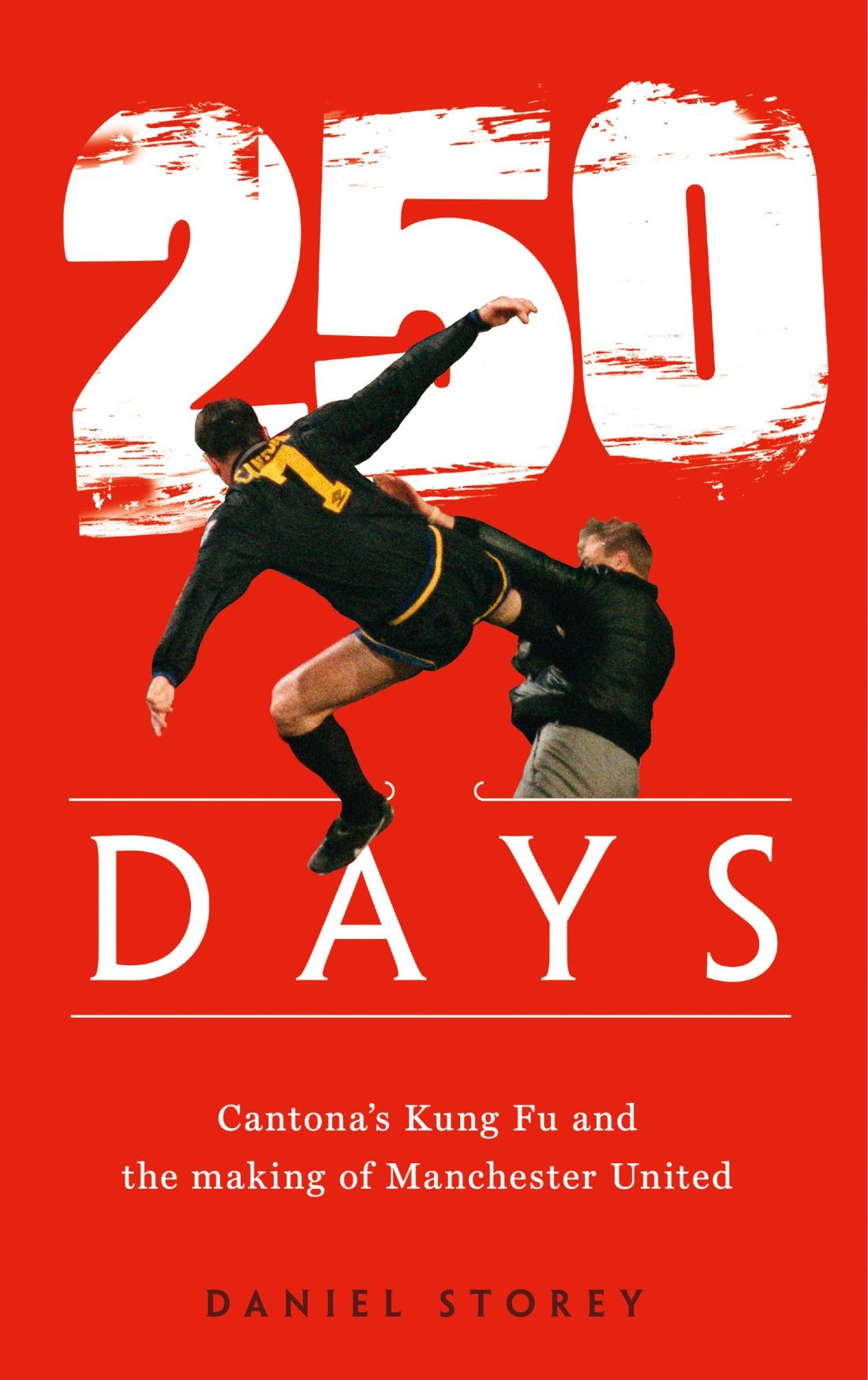
‘250 Days: Cantona’s Kung Fu and the Making of Manchester United’ by Daniel Storey (2019)

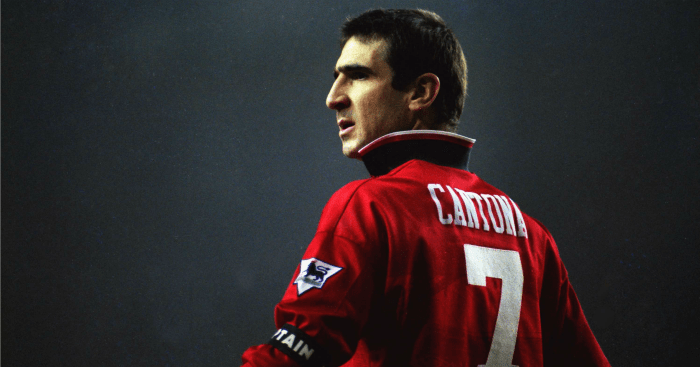
As a kid I was a Man United fan.  The day Eric Cantona retired I realised that wasn’t actually true.  I was a Cantona fan and any residual affection for United slowly waned until a few years later when I stop pretending I cared.   Cantona was that kind of player, one who could make a kid fall in love with a team and a sport simply by turning up his collar and chipping the goalkeeper.

250 Days chronicles the aftermath of the infamous day at Selhurst Park when Cantona kung fu kicked a Cyrstal Palace fan. The mercurial Frenchman had been man-marked closely all game and in frustration kicked his marker early in the second half.  As he made his way to the tunnel, he launched into the crowd, aiming a kung-fu kick at the chest of a taunting Palace fan.

It caused a sensation like no other in my 10 year old life to that point.  Even before the days of 24 hour Sky Sports News, it dominated news coverage for weeks as speculation mounted that the mercurial Frenchman would be fired, banned for life or imprisoned.  Ultimately, he ended up with a 250 day ban stretching into the following season.

The focus of the book is what happened during this period, and how it shaped Man United’s next period of success. United’s legendary manager Alex Ferguson saw an opportunity and Storey chronicles how both men used this time to help develop and inspire the rising generation of United players (the so-called ‘Class of ’92’).

Cantona

250 Days is a well written and entertaining account of this turbulent period in United history.  Storey blends together the accounts from the key figures into a compelling narrative and builds a very convincing case for his central thesis.  Cantona and Ferguson both emerge with significant credit for their ability to turn a potentially career ending attack into a positive experience binding player, manager and club closer together.

The books suffers slightly from the lack of original reporting – Storey has read and absorbed a huge amount of material covering United and Cantona during that time, but for those sad people, like myself, who have read more than half the bibliography, the book feels a little unfresh. If you haven’t read Gary Neville’s autobiography, Alex Ferguson’s autobiographies (please never read his later books – they are awful) and the entertaining Cantona on Cantona this probably won’t be a problem for you though!

Much like Storey’s previous book on Gazza’s time in Italy, the book feels too short for it’s price point.  Obviously this is the publisher’s decision rather than Storey’s but it does cloud the reading experience.  Storey is prolific in churning out incredibly high quality articles across a variety of publications.  I’d be very excited to read a full length book of his that shined fresh light on some similar aspect of 90’s football.  I’ve said a few times there I’d love to see an English language book on Sacchi’s Milan team in case he is looking for suggestions!

All in all, an entertaining read.

250 days


‘Ping-Pong Diplomacy: The Secret History Behind the Game That Changed the World’ by Nicholas Griffin (2014)

Governments have long used sport for political purposes.  Famously, the Berlin Olympics attempted to whitewash the emerging Nazi regime and the Argentinean ’78 World Cup was presented as proof of the virtues of military dictatorship.   Even now,  Qatar and others see football as a way to “sportswash” their own troubling reputations.  But, surprisingly, no sport was arguably ever as pivotal to global politics as table tennis – or Ping Pong as many know it.

Ping-Pong Diplomacy is structured in three parts – firstly it tells the life story of  Ivor Montagu and his development of Ping Pong as a global game.  Montagu was a British aristocrat and an active Soviet spy who grew table tennis internationally while also grasping its potential as a tool of spreading Communism globally.    A fascinating man that seems like a character from an old adventure novel, Montagu was remarkably successful in spreading table tennis to the East.

Secondly, it tells the story of just how quickly the game spread and established in both post War Japan and newly Communist China.  Within China, Communist leaders quickly adopted the game and when they came to power it became the national sport.  For the Chinese, Ping-Pong ultimately became a political tool to be used as part of Mao Zedong’s foreign policy.

Finally, the book details the use of table tennis by the Chinese regime to open up relations with the USA.   It details how, in 1971, a US table tennis team was invited behind the Bamboo Curtain and surreal nature of the experience for both sets of players.  This invitation played a significant role in the eventual opening up of China to the West and the establishment of bilateral relations with the US.

At its best, the book provides a fascinating look at Mao’s long reign through the prism of a special class of Chinese citizens – Ping Pong players.  They were the most famous sportspeople in China at the time and were treated exceptionally well.   Mao used international tournaments to distract from the mass famine associated with the Great Leap Forward.  However, even famous players found they easily fell foul of the cultural revolution and the ping pong team was attacked as a symbol of the Communist Party old guard and the players suffered greatly.

The book is exceptionally readable and Griffin’s skills as a writer shine through.  Key characters are vividly painted, none more so than Montagu himself.  Thoroughly researched, at times funny, at times deeply sad, Ping Pong Diplomacy is a great read.  It shines a fascinating light on a time when sport truly helped change the world.

ping

‘Running to the Edge: An American Running Guru, a Mysterious Breakthrough, and the Relentless Quest for Speed’ by Matthew Futterman (2019)

Running to the Edge tells the story of distance running coach Bob Larsen through two distinct phases of his career.  Futterman uses Larsen’s career to examine both why we run and how we should train to run further and faster.

Larsen was a high school and collegiate athletics coach who was obsessed with finding ways to run long distances faster.  He developed his ideas of ‘running on the edge’ – now generally known as tempo running – in the 1970’s.

It is very much a book of two halves.  Firstly, Futterman examines Larsen’s early coaching career in California high school and junior college jobs.  Larsen became obsessed with exploring the concept of running on the edge and became convinced he could turn a bunch of young runners from San Diego into an elite team that could claim national titles.  Futterman tells this narrative entertainingly and paints a vivid picture of the underdog ‘Jamal Toads’ running team and the key runners who brought Larsen success.  He captures the joy and heartbreak of competitive sport as he traces the ups and downs of this fascinating cast of characters.

The second part of the book skips ahead to the 2000s.  Larsen had spent many happy years at UCLA with much less focus on distance running.  However, Larsen was determined to improve American distance running (which appeared in terminal decline) and set out to develop a training system and camp for elite athletes.  Futterman traces the success of Larsen’s unorthodox methods through the careers of two American distance running Olympians.  It’s a story I was totally unaware of and a fascinating journey of triumph, despair and every emotion in between.

In addition to the main narratives, Futterman interweaves a short history of the science behind distance running (which will be familiar to fans of Born to Run or The Sports Gene) and his personal running journey.   I’m not sure how much the personal material added but, as someone trying to get back running afters years of inactivity, I found them interesting.

Overall, Running to the Edge is a really enjoyable book. The narrative flows and the characters are vividly brought to life – I found myself nervous about the results of races from nearly 50 years ago as Futterman brilliantly told the long forgotten careers of many unknown runners.

running to

‘Wide-Eyed and Legless: Inside the Tour de France’ by Jeff Connor (1988)

Wide-Eyed and Legless was originally published in 1988.  During the 1987 Tour de France, the British cycling team, ANC-Halfords, agreed to let journalist Jeff Connor travel and stay with the team full-time.

1987 is a legendary tour for a number of reasons – not least for Irish people given Stephen Roche’s victory.  This was ANC-Halfords first (and last) participation in the Tour  and they really weren’t ready for the race.  They didn’t have good enough riders and they didn’t have good enough financial (and therefore technical) support. They were exceptionally disorganised by comparison to the modern sport of cycling.

The team even ended up letting Connor drive some of their vehicles because they ran out of people to do so.  The level of access Connor was given results in his perspective at times being more like that of a technical support person than a journalist.

The book suffers from not being clear in what it is trying to achieve.  It is half narrative from an insider’s perspective of the troubled ANC-Halfords team and half a broader race report of the 1987 Tour.  Ultimately the book feels like two ideas mashed together and works as neither.  The kernels of a fascinating emotional insight into the struggles of the ANC-Halfords riders and team members are there but aren’t fleshed out as the book becomes more of a routine retelling of the Tour’s progress and conclusion.

The cover of the book quotes cycle sport as declaring it ‘The No.1 cycling book of all time’.  Perhaps in 1988 it may have been but it isn’t in the same league as books like Rough Ride or Put Me Back on My Bike.  I expected more, largely based on this cover quote, which led to the book leaving me somewhat underwhelmed.

A decent read but doesn’t live up to the hype.

wide

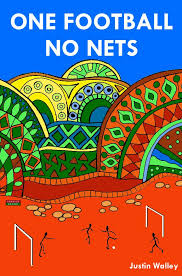
‘One Football, No Nets’ by Justin Walley (2018)

FIFA often boasts about having more member nations than the UN.  But what about those sub-national regions that aren’t recognised by FIFA and don’t get to make the leap that Gibraltar have made and compete against the established nations?   In recent years there has been a growing interest in these football minnows with books like Up Pohnpei leading the charge.  The CONIFA World Cup last Summer gained plenty of attention as the minnows of the world competed against each other in London.

One Football, No Nets is set in this world where football meets questions of regional sovereignty.  The book tells the story of Justin Walley’s attempts to take the Matabeleland side (a region in Western Zimbabwe) to the CONIFA tournament.  Walley, a British man coaching in Latvia, was determined to try his hand at international football management and swapped his relatively comfortable live for the unknown in Africa.   He devoted more than a year attempting to forge the team into shape and manage the logistics (and finances) of getting them to London.

The story is told in an in-depth diary format.  At times the logistical challenges appear insurmountable with limited resources, poaching of players and visa problems.  Walley goes to all possible lengths to drum up support and funding for the team – including enlisting the help of the legendary Bruce Grobbelaar.

The book is at its best when giving insight into the struggles of daily life in Zimbabwe during the final days of Robert Mugabe’s long period in power.  Walley captures the paranoia, fear and cautious optimism present in the country on the cusp of historic regime change.

If the book has one weakness, it is that players’ own stories and personalities don;t feel fully developed.  Ultimately none of them remain memorable in the way that, for example, the lady who Walley lodged with does.

The case for why Matabeleland should have a team separate from the Zimbabwe national team is never made quite clear in the book.  I’ve read that the region is culturally and ethnically distinct in many ways from the rest of the country, but Walley doesn’t dwell on this in the book.  Throughout the story he seemed very cautious about expressing sentiments of regional sovereignty which would have provoked the anger of the Zimbabwean authorities (and understandably so!).

There is an additional final chapter which at first glance appears unnecessary but is just too entertaining to have been left out.  Walley covers his time as a fan at the World Cup in Russia during which he became a mini-celebrity and foreign brand ambassador for the region of Tatarstan.

Overall, the book is a pleasure to read.  Walley writes with openness, honesty and humour about the challenges he faced in trying to fulfill his, and the players’, dream. It is quite a personal book and your reaction to the book may very will mirror your feelings about the author.  For me, Walley comes across as one of life’s dreamers – a man determined to experience the world rather than simply pass time.   As I type this in my office at lunchtime while looking at Walley’s twitter feed showing him enjoying a trip to Brazil, I can’t help but admire and envy his courage, free spirit and sense of adventure.  An interesting man and an interesting book.

onefoot

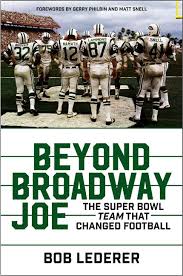
‘Beyond Broadway Joe: The Super Bowl Team That Changed Football’ by Bob Lederer (2018)

Every sports fan has a favourite specific season.  The lineup of their favourite team from that year holds a special place in their heart.  For me, it will always be the Ireland team that went to USA ’94 with the Ajax team of that generation running them close.

For Bob Lederer, the 1968-69 New York Jets have held that special place in his heart for nearly 50 years.  On January 12, 1969, the New York Jets upset the Baltimore Colts to win Super Bowl III.  As for many great NFL teams, the quarterback, in this case the legendary Joe Namath, is celebrated as the central character in the victory.  His talent, his charisma and his charm gave him the nickname ‘Broadway Joe’ and guaranteed A list celebrity status.  For Lederer  however, the rest of the Jets were a team, not a supporting cast, and he clearly has a burning desire to ensure that all of the players get their due recognition.

Beyond Broadway Joe is a must for any diehard Jets fan.  It is also a comprehensive look at one of the most famous games in football history.   Lederer had exclusive access to coach Weeb Ewbank’s playbooks and game plan for Superbowl III.  Together with interviews with a huge range of people all seemingly delighted to reminisce, the book is a fascinating study of a 50 year old game that helped establish the credibility of the American Football League.

The book is a real labour of love and the joy Lederer felt in researching and writing it shines through every page.  It is an unusual layout with the main story beats recounted in the first 50 pages before each team member is given a chapter to tell their own story.

It’s also an interesting read for anyone interested in the origins and evolution of the NFL, the Superbowl and the professional game more generally.  There seems to been a spate of books on American Football’s origin in recent years and this is a interesting, if narrowly focused, addition that growing body of work.

jets


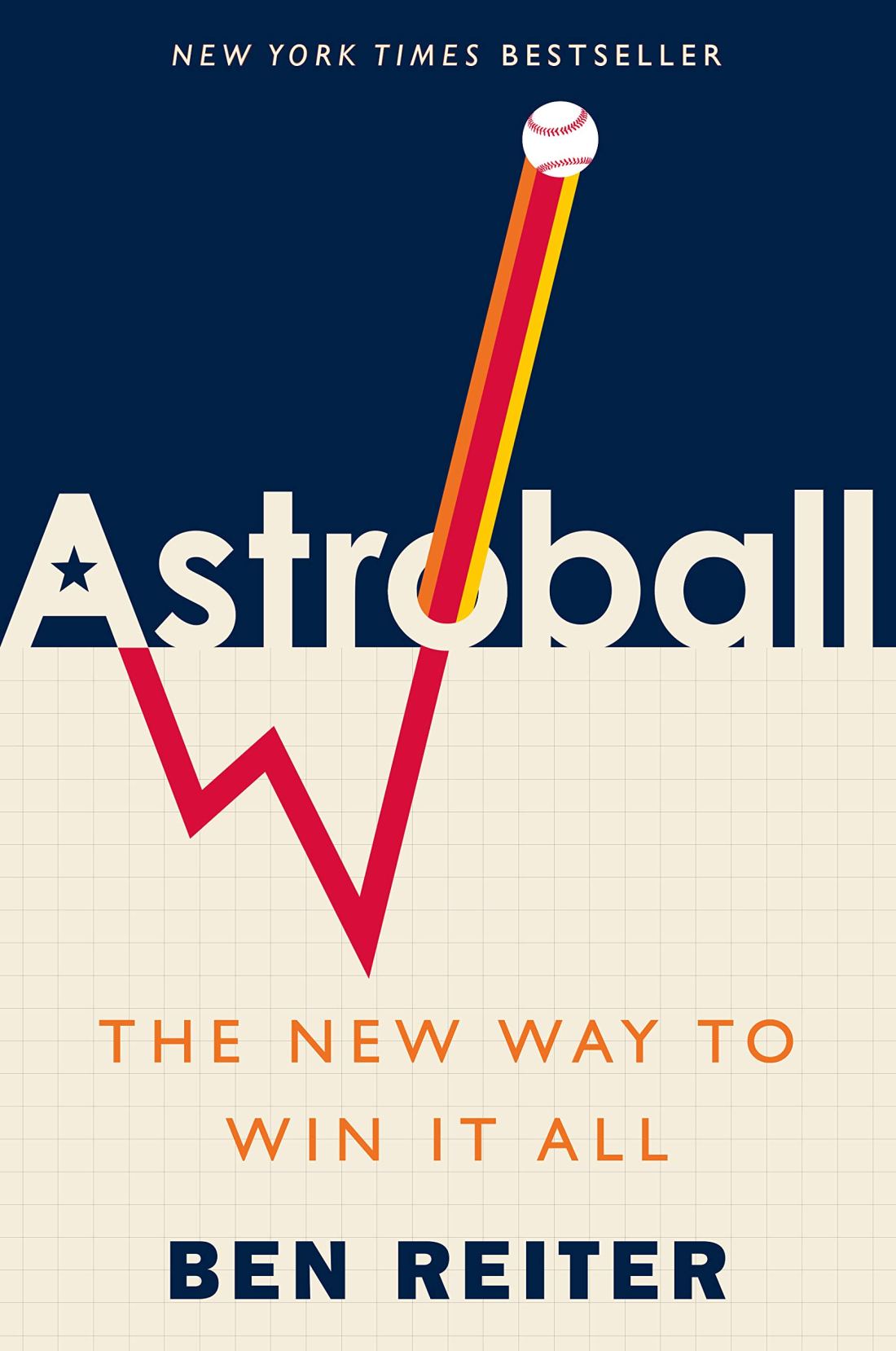
‘Astroball: The New Way to Win It All’ by Ben Reiter (2018)

A 2014 Sports Illustrated cover which declared that the worst team in baseball, the Houston Astros, would win the World Series in 2017 has gone down in legend.  It would almost have been more believable to pick Leicester City to win the Premier League the year earlier.   Improbably, Ben Reiter’s prediction came through as the ambitious blueprint for rebuilding a baseball club set out in his SI article came to fruition on schedule.

Reiter therefore is the ideal writer to chronicle just how the Astro’s rose to success.  Astroball is the story of how a farsighted owners and executives learned from Moneyball and went on to find a new path to success.

The stars of the book are Astros general manager Jeff Luhnow and his top analyst, Sig Mejdal. Both came to the Astro’s in 2011 having had some success in Arizona.  Both were determined to figure out how to combine stats with instinct and get the best results.

Reiter highlights three main improvements – better draft picks through understanding stats in a new way, coaching improvements for individual players by focusing on their form and tendencies and a recognition of the intangible role that veteran players have in bringing the team together at crucial moments.  There were some bumps along the road – such as failure to sign an injury prone first draft pick – but the faith in ‘the Process’ proved justified.

Reiter clearly had exceptional access and the trust of those he spoke with.  It’s a very well written book which captures the balance of appealing to baseball fanatics and non-fanatics alike.   It’s a fascinating account of team building in the post-Moneyball era.   A really enjoyable read.

astroball.jpg