‘The Billionaires Club: The Unstoppable Rise of Football’s Super-rich Owners’ by James Montague (2017)

“The question is, at what point do we accept some culpability for humanising those who have played a role in dismantling the freedoms we hold dear, or even dismantling whole countries”

The Billionaires’ Club is an investigation into the new class of super rich owners who have snapped up many of the world’s biggest football clubs.  Rather than being about the football business, the book is about the business interests of those billionaires who have been using their vast resources to reshape global football.
Billionaire's

Montague digs deep into the business histories of a string of recognisable names questioning their motives for buying into football and at times our own culpability as football fans for ignoring their character and misdeeds.

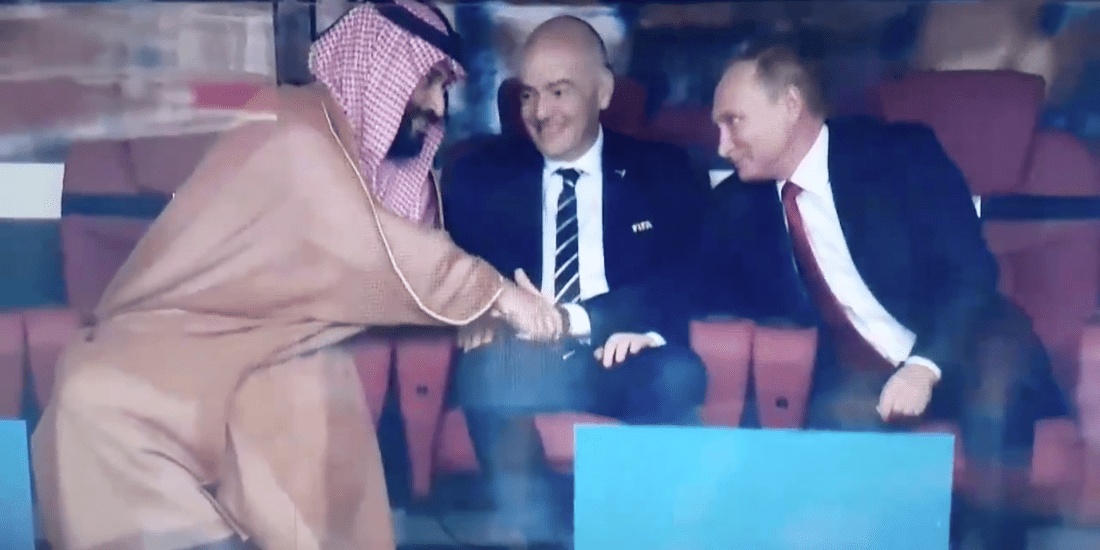
Starting with Roman Abramovich at Chelsea, Montague examines the Russian and Ukrainian oligarchs who have used investments in football to increase their visibility and profile, largely as an insurance policy against the consequences if they lose favour of their political allies back home.  Possibly more troubling is the rising influence of Gazprom, the Russian natural gas giant, whose investments in football seem inextricably linked to the politics of the energy industry.

The book also covers the influx of owners in European football from the US, the Middle East and Asia.

The American owners are portrayed as arch capitalists who seek to make money and couldn’t care less about the fans or anyone else for that matter.  It says a lot that they appear less troubling than many of the other owners.  It was also interesting to see how much more liked Liverpool’s current owners were than Hicks and Gillett at a time when they are starting to make more and more noises for a European or

The Middle Eastern owners appear more troubling.  The phrase “reputation laundering” seems very apt to describe the intentions of much of the investment in European football.  Football clubs like Man City have become vehicles of foreign policy for members of Middle Eastern ruling families with questionable human rights records. Montague covers the abuses of migrant workers in some detail.  He highlights the personal stories of poor Bangladeshi’s and the horrific ordeals they face trying to earn enough money to send home to their families.

The Asian owners covered appear more like the Russians – buying major clubs to appease their own political masters and to increase their political visibility abroad.  The coverage of China’s changing relationship with football in the books really interesting – I had no idea the Chinese Premier’s passion for the game was directly responsible for the huge investment in the Chinese Super League.

I’ve been a huge fan of James Montague’s since I read his 2014 book Thirty-One Nil: The Amazing Story of World Cup Qualification.  It’s clear he is a very good writer with an intense curiosity about the world which informs is work.  The global nature of his writing makes him the ideal person to chronicle the global power shifts in football politics.  The Billionaires’ Club is a sobering examination of modern football and those who shape it, but its a riveting, insightful and brilliant read.
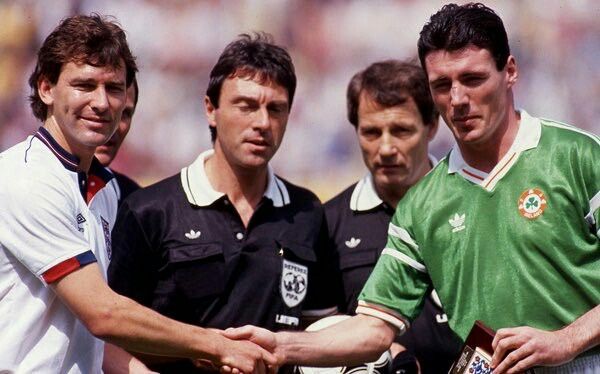
Putin infantino.jpg

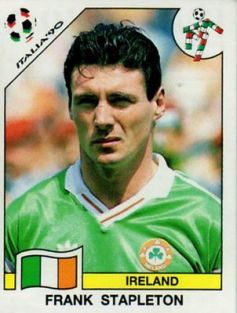
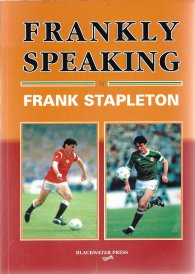
Frankly Speaking by Frank Stapleton (1991)

Published in 1991, Frankly Speaking is a (kind of) autobiography of former Arsenal, Man Utd and Ireland striker Frank Stapleton.

fankly-speaking

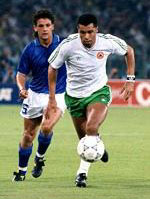
Stapleton seemed to be coming to end of his career when the book came out and his international career was over having been on the fringes of the squad during Italia ’90 having previously captained the team during Euro ’88.  He ended up playing four more years in the English lower leagues.

The book feels like half of an autobiography – it covers his football career with each season covered in a chapter and his club and international careers covered in separate halves of the book.  It’s focus is on entirely on Stapleton’s football career with almost no discussion of his life outside of football. The version of the book I found in the library has no summary on the front or back cover, no forward, no acknowledgements or any scene setter at all.  It just goes straight into his first few years at Arsenal.

One of the striking things is the amount of focus on the FA Cup over the team’s performance in the league.  This seems to be partly because the FA Cup still maintained its elevated status in the game and partly because Stapleton played in five Cup finals but never in a team that competed for the league title right to the end of the season.  The amount of replays in the cup is also striking.  You can see why penalties were eventually preferred to so many extra games.

frank 3

Stapleton rarely expresses his opinion on the various people he played or worked with outside of commenting on what they added to the team.  Ron Atkinson, his manager at United is the clear exception with Stapleton being pretty critical of Big Ron’s ego, love of the media, and lack of tactical nous.  His biggest praise is for coach Don Howe – a figure who seems to pop up in any biography of footballers who played in England in the 80’s and 90’s.

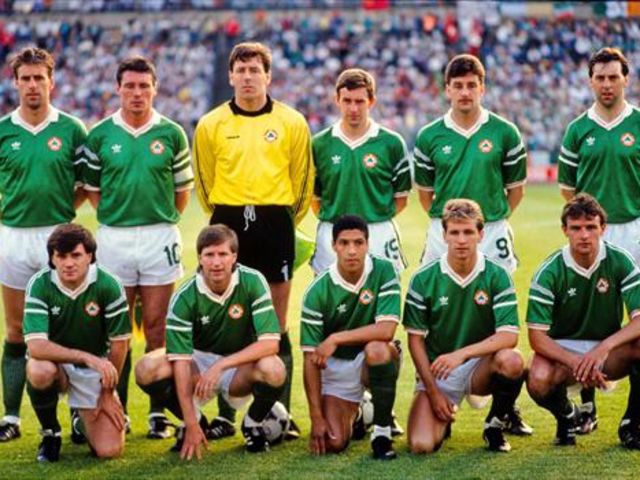
The material on Ireland was definitely the most interesting for me.  Stapleton gives a bit more background colour on the Euro ’88 and Italia ’90 campaigns and a decent sense of Jack Charlton’s management style.  I’d actually read all the most interesting bits before in the excellent ‘The Team That Jack Built’ by Paul Rowan (1994)

It’s a quick and easy read that has some interesting bits for any Arsenal, United or Ireland fan.  It feels like a book from a bygone era and was designed to be read at the time, when any reader would have known the main people mentioned. It’s also the first book I’ve reviewed that I couldn’t find on Goodreads (until I added it), giving some sense of how obscure it is at this stage!

Panini-Italia-90-Frank-Stapleton-Ireland

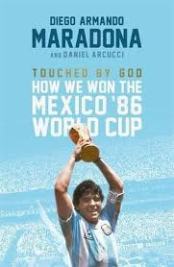
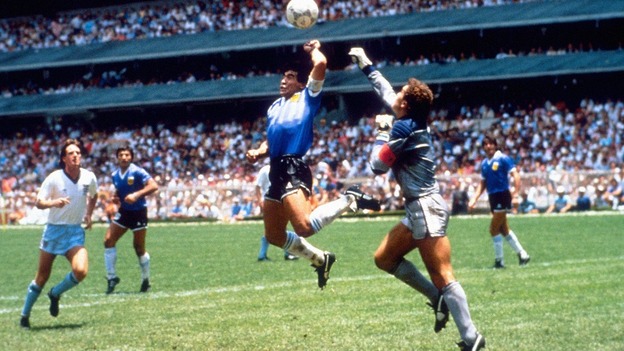
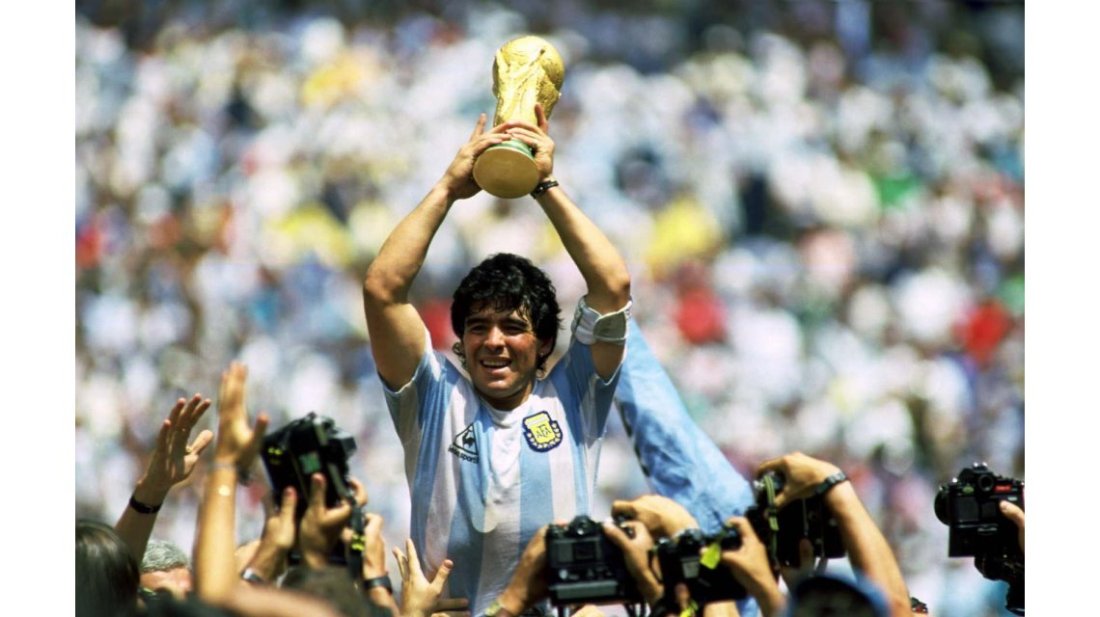
‘Touched By God: How We Won the Mexico 86 World Cup’ by Diego Maradona (2017)

You always assume books by footballers have ghostwriters.  While Daniel Arcucci is named on the book, I hope he was only a translator and that no one who calls themselves a writer put their name to this book.  Touched by God reads like a 3 or 4 hour long stream of Maradona’s consciousness as if someone asked him an open-ended question about the 1986 World Cup.

Maradona

Maradona’s telling of this story is designed to big up his friends in the team and downplay the role of manager Carlos Bilardo who he fell out with when Bilardo criticised Maradona as Argentina manager in 2010.  Considering almost all football fans acknowledge Maradona won the cup largely single-handed, its amazing he sees the need to be so critical and dismissive of Bilardo.  Mardaona claims that the players, and himself, deserve almost all the credit for the team being well prepared and for their fitness levels by actively railing against Bilardo’s original plans.

Maradona’s personality certainly shines through – ego, craziness and an amazing ability to hold a grudge.  At times it feels like half the book is score settling with Bilardo and former captain Daniel Passeralla – with a little bit of spite left over for ‘that heartless turkey’ Platini. He has some kind words for certain teammates in particularly Brown and Ruggeri.

Probably the biggest flaw in the book is that it makes so many assumptions that you know who and what Maradona is talking about.  If you don’t already know a huge amount about Maradona, Argentina, the players of that era and the ’86 World Cup you will be totally and utterly lost for the first chunk of the book.

maradona 2

The book rambles around a lot at times covering random bits of Maradona’s life and a decent bit of detail about his time in Napoli where he was playing during the ’86 World Cup. He drops in complaints about Fifa, his love of Pope Francis and the bits of advice he gave Messi when he was Argentina manager.

There are interesting bits, some entertaining anecdotes and bits of genuine insight into the mindset of a great player as he faces the most important games of his life and plays at a level beyond compare.  However, the decent bits are totally drowned out by the terrible writing and rambling style.  You could read the section on the World Cup final and still have no idea what happened in the match bar Argentina winning, such is the rambling style.

Overall, I recommend giving this book a miss.  It’s almost as poor as his first memoir El Diego, poorly written, rambling and hard to read.  For a genuinely great book on Maradona, I’d recommend seeking out Hand of God by Jimmy Burns.

maradona3

‘Garrincha: the triumph and tragedy of Brazilian’s forgotten footballing hero’ by Ruy Castro & translated by Andrew Downie (2004)

“The most amateur footballer professionial football ever produced”

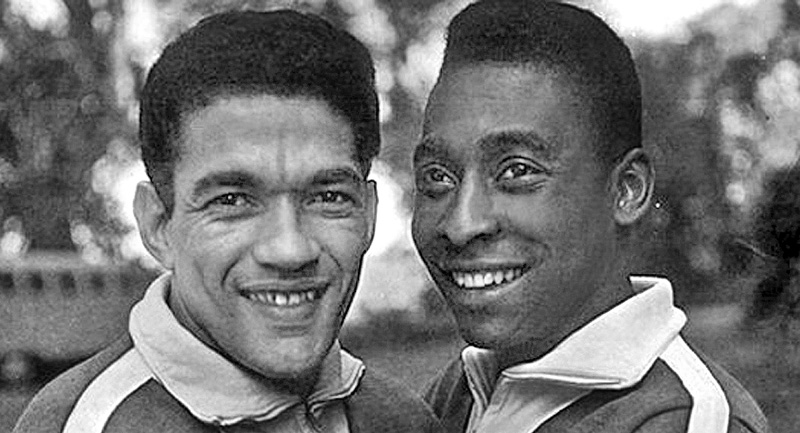
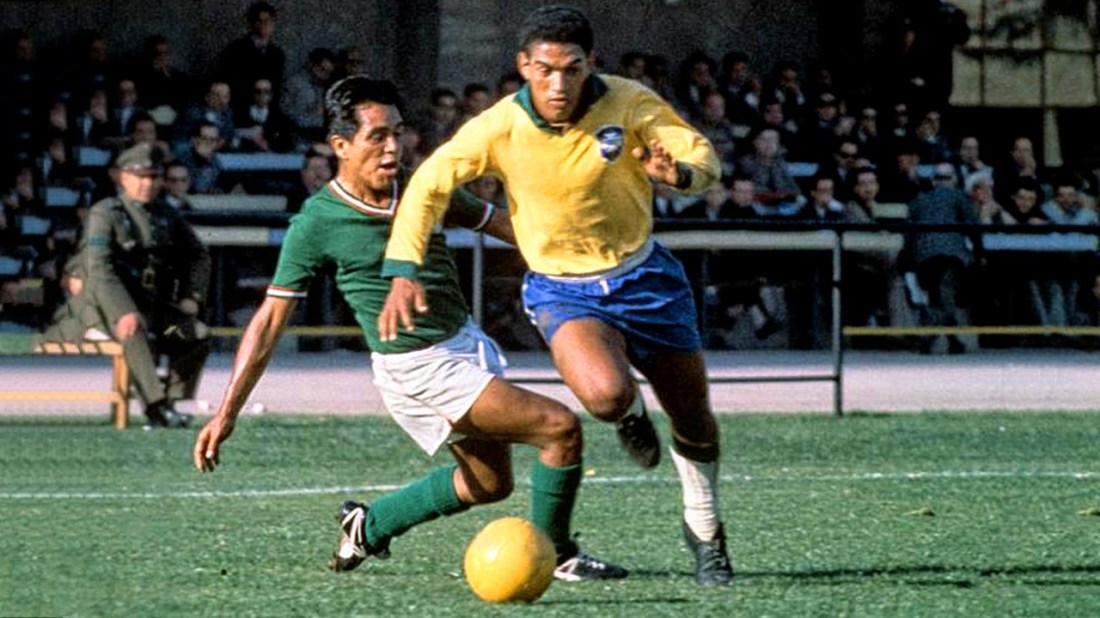
Garrincha was the epitome of the flawed sporting hero – the genius player whose personal demons led to an early death. Garrincha, the book, details his life from his childhood in Pau Grande through the length of his career and his eventual death from alcholism.  It captures his amazing talent, his playful charisma, his colourful personal life and his unique place in the hearts of Brazilian football fans.

Garrincha

Born with crooked legs, he defied all expectations and became one of the most successful players in international football history, winning two World Cups and only once losing in a Brazilian shirt in 60 appearances.  Winning two world cups he became a cult legend in Brazil.

His life was incredible.  He lost his virginity to a goat, slept with hundreds of women and sired at least 14 children – his affair and subsequent marriage to the singer Elza Soares that caught the imagination of a nation and led to them both being vilified.  He was profligate with money, uninterested in football that he wasn’t playing in and totally incapable of being faithful.

By the age of forty-nine, Garrincha was dead, destroyed by the excesses that made him such a fascinating figure.  His downfall makes for depressing, but gripping reading.

z_p17-Garrincha

There is something that draws us to those genius sports stars who can’t conquer their demons and don’t get the change to live the post-retirement life they deserve.  Their flaws make them more relatable and more human. As an Irishman, you read the book feeling like its an alternate world story of George Best’s life or even how the great Paul McGrath’s life may have gone had he been born in Brazil.

Ruy Castro has written a thoroughly enjoyable and fascinating biography which is excellently translated by Andrew Downie.  It is a brilliant and detailed insight into a fascinating life of a genius player.  It is a comprehensive and worthy tribute to a footballer who had he played a few years later in the television era would be remembered as one of the all time greats.  The only downside for me was the lack of more detail on the social and cultural environment in which Garrincha lived – I feel I learned an incredible amount about Garrincha, but less than I expected about the Brazil of the 50’s and 60’s.

I first the read the book when the English translation came out in 2004 and I thoroughly enjoyed this reread.  I highly recommend it for any football fan and is a great companion book for watching Russia 2018.

garrincha 3

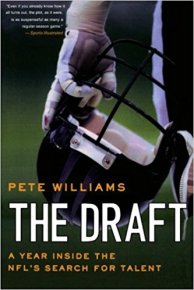
‘The Draft: A Year Inside the NFL’s Search for Talent’ by Pete Williams (2006)

The concept of a professional sports draft has always been intensely fascinating to me.  In theory it offers an ideal method to ensure that competitive balance remains in a league, particularly when combined with a salary cap.  Seeing Juventus win their 7th Serie A title in a row recently makes you think what soccer in Europe would be like if youth development was handled by schools and not professional teams and the best players divided up by draft.  It’s clearly not possible, but it would sure be interesting!

the draft

The Draft is a long and detailed account of the 2005 NFL draft told through the experiences of key people at every level – top 10 draft picks, lesser players, Atlanta Falcon’s General Manager, coaches and a whole host of sports agents. It’s a very thorough account that covers every aspect of draft day preparation by all those whose futures are heavily tied up with this two day extravaganza.

It is an interesting read and certainly achieves its goal of shining a light on the draft process.  Reading it at more than 10 years remove is fascinating with some players being instantly familiar from their subsequent achievements in the NFL – particularly someone like 49er’s great Frank Gore who didn’t get picked up until the 3rd round.

Frank Gore

The book’s length however becomes a weakness.  There is a lot of repetition gets tiresome if you read the book over a fairly short period.

The other big weakness of the book is the excessive focus on agents.  While the coverage of the role of agents and their interaction with players is interesting, there is far too much focus on which agents were successful in building their own rosters of players.  It’s very hard to care about which salesman managed to get himself a big payday and the book would have benefited from a lot of this material being cut.

All in all, however, it is an interesting and enjoyable read. It may inadvertently work best as a book to dip into – like a series of newspaper columns – otherwise the excessive detail and repetition could get annoying.

2005nfldraft

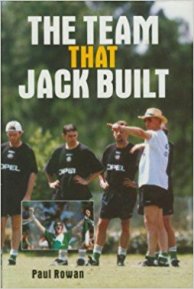
‘The Team That Jack Built’ by Paul Rowan (1994)

The Team That Jack Built was first published in 1994 shortly following Ireland’s second appearance in the World Cup finals – a level Ireland have only once returned to.

This isn’t a book about Ireland’s performances in the three major tournaments that the team played during Jack Charlton’s reign.  Indeed, the actual games at Euro 88 are covered in less than a page. Instead is about the how – how did Ireland go from nearly-rans to qualifying for back to back World Cups.  The book is all the better for the focus on the off-field aspects.  The team that jack

Rowan recounts the series of managers who had led the Irish team prior to Charlton’s appointment and this third of the book was really interesting for me as someone who was too young to remember any of the pre-Charlton era. Rowan also entertainingly details the backroom shenanigans in the FAI.  The constant jolies to Poland, the bizarre voting process and the battles with the players over money and endorsement rights.   Rowan paints a picture of the FAI that is not flattering and will be depressingly familiar to Irish fans of any era.

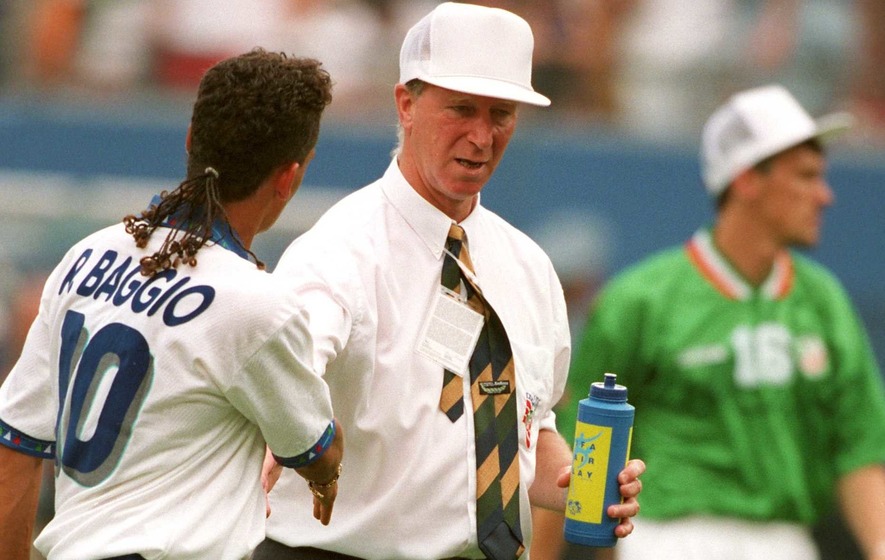
The highlight of the book is when Rowan lets Charlton describe his tactical approach in his own words – its a great, simple overview of the style which brought great success while boring the rest of the world.

eire

The main issue addressed in the book is FIFAs laws of eligibility -allowing non-Irish-born players to qualify for the Irish team because Ireland was the birthplace of a parent or grandparent.  Rowan addresses the conflicting views that Ireland had (and largely still has) about our relationship with the Brits and the Irish diaspora that identifies as both British and Irish.  He doesn’t come down on either side – but it is interesting to see how open many of the players were about England being their first choice.  It remains a highly relevant issue when we see players like Jack Grealish switch back to England, and fans fretting over whether Declan Rice would follow suit.

Overall, The Team That Jack Built is a hugely interesting, entertaining and well written account of the Irish football team in the 30 years leading up to 1994.  Its the off-field story of how a team built around the Irish diaspora came together under a charismatic manager to really shake ’em up.

jack3

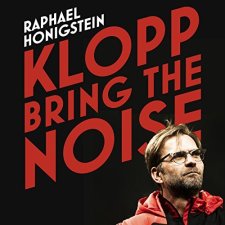
‘Klopp: Bring the Noise’ by Raphael Honigstein (2017)

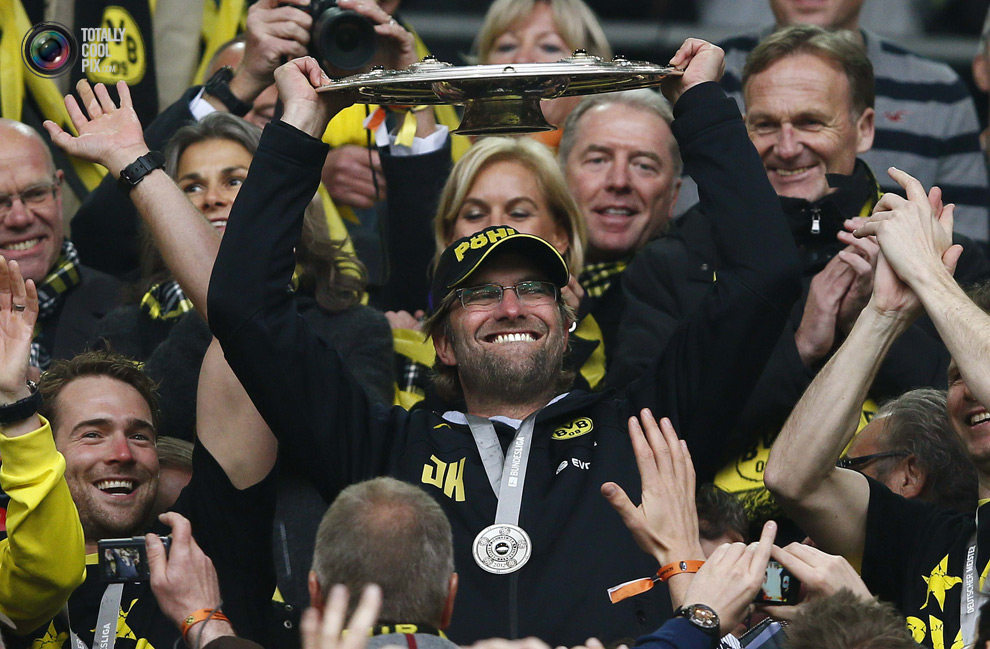
It’s always fascinated me how a manager’s character can shape the neutral fan’s perception of a football team.  Under previous Liverpool managers (especially Houlier) I found Liverpool quite dis-likable and certainly not a team I would root for.  Yet under Klopp its hard not to  have a soft spot for the free-flowing Liverpool team that plays in a manner

Klopp

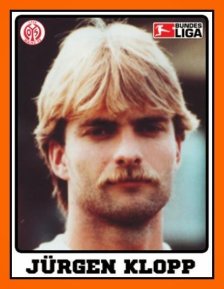
Klopp: Bring the Noise is a fun and detailed biography of the most charismatic manager in football – Jurgen “Kloppo” Klopp.  Honigstein details the key influences on Klopp’s career including his own limitations as a player and his one-time coach Wolfgang Frank.

Klopp comes across in the book in the same way he does on TV.  He clearly has a huge work ethic and builds a very  strong connection with his players.  The access that Honigstein had to so many people close to Klopp at different times of his life and career gives a great insight into his tactics and his management.

A clear pattern emerges – builds a fantastic team with meagre resources, performs well above expectations only to see a decline – either due to star players being headhunted or the rest of the league adopting his tactics.  It remains to be seen if his Liverpool team can compete in the Premier League and become more than a very good cup team.

I’m a big fan of Raphael Honigstein’s writing – in particular his book Das Reboot.  Like his other work, this book is well written, well researched and a very enjoyable read.

Klopp 2

There are a few areas in the book where more detail would have been interesting.  The section on the type of player Klopp looked to sign was very interesting but I would have like more detail on why certain players were signed – what was it about Lewandawski that made Dortmund pull the trigger for example when he was overlooked by other clubs?

I found the ordering of chapters a bit frustrating.  I understand what Honigstein was trying to achieve – linking his first days at each club together to enable the reader to make comparisons between his time at Mainz, Dortmund and Liverpool.  But for a reader not all that familiar with Klopp’s time at Mainz, the jumps back and forth were a bit disorientating.

Overall, I highly recommend this book for anyone interested in Klopp – and I can’t imagine why any football fan wouldn’t be interested in him!

klopp 3

‘Soccernomics – 2018 World Cup edition’ by Simon Kuper and Stefan Szymanski (2018)

I read the first version of this book, then called Why England Lose, when it was first published and really enjoyed it.  The latest edition is even better. The authors avoided simply re-publishing the same old book, instead re-examining their conclusions and ensuring this edition is fresh and up to date.

soccernomics

The book is essentially Freakonomics applied to football, with some Moneyball thrown in.  The authors use statistics to disprove the prevailing wisdom on how football functions and how to be successful in the game. It covers a wide gambit of football related issues – ranging from how to play the transfer market well, what national teams overperform and how loyal fans really are.

The authors attempt to look globally in scope but the book focuses on European football largely because that is where the best data sources are found.  It is a long read and covers a huge amount of detail.  It is best enjoyed in chapter sized chunks to leave time to think about it rather than flying through and finding yourself overwhelmed in the detail.   Some chapters are better than others – discussions on which national team over performs got tiring, and felt like a repeat of the discussion on why England lose.  By contrast, the chapter on penalty shootouts and game theory was brilliant and insightful.

In particular, the book left me wanting to find a good book on the rise of Olympique Lyonnais and how they used clever transfers to dominate French football before the oil baron PSG took over.   The “wisdom of crowds” theory put forward in the book doesn’t really seem convincing to me as transfer committees at other clubs have been anything but successful. Any recommendations would be greatly welcome.

I enjoyed the book but in some ways I would hesitate to recommend it for everyone.  I’m not sure how much a non-nerdy fan would enjoy it.  It’s probably safe to say that if you think a “statistical look at football” sounds like fun, you’ll enjoy this book a lot.  Given its huge sales numbers there must be more of us football nerds out their than I thought!

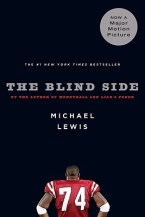
‘The Blind Side: The Evolution of the Game’ by Michael Lewis (2006)

You have probably already read this book or seen the movie.  If you haven’t then stop reading and go get the book.blind side

The Blind Side interweaves two stories. The first story is the evolution of American football towards a passing game where quarterbacks rose in value, became targets and finally needed greater protection.  The second is the story of a lost boy taken in by a white Southern family and given an opportunity to pursue his gifts that he seemed destined to be denied.  Those gifts just happened to make him ideally suited to provide the now much more valued quarter back protection.

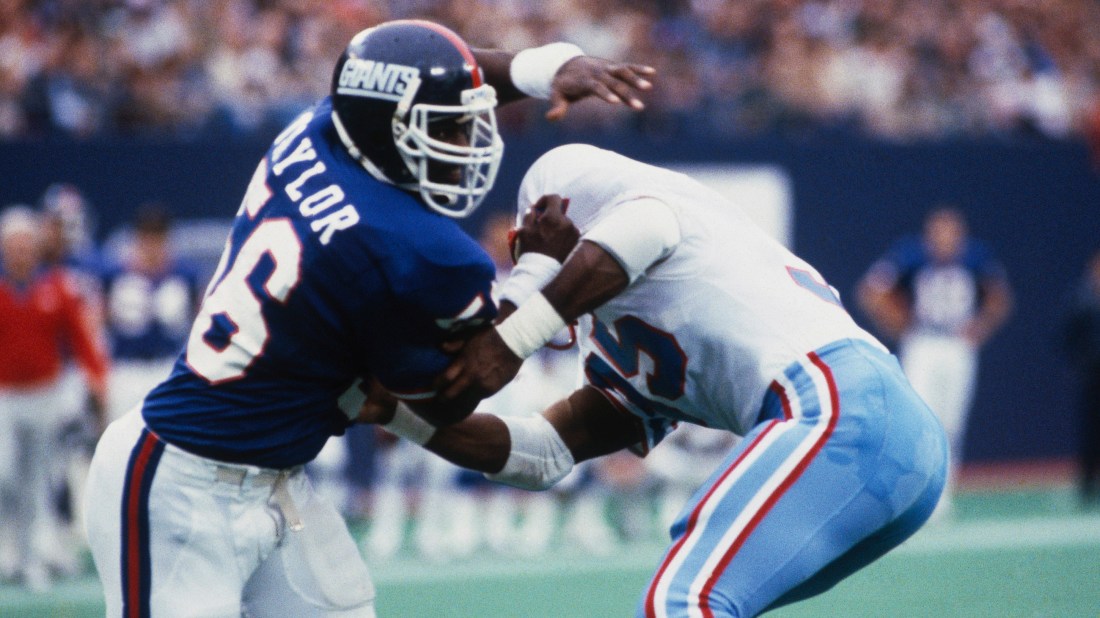
Lewis is a wonderful writer whose books are informed, accessible and entertaining.   The Blind Side works brilliantly as football history – Lewis traces the journey from Bill Walsh’s 49ers, through Lawrence Taylor and the rise of great linebackers to the realisation on the launch of free agency that teams would pay a lot more money for a left tackle than they were paying so far.  It’s the type of narrative that, as a casual NFL fan, I was unaware of and one I had not seen captured in the wonderful NFL / America’s Game TV series. Lewis is able to tell a compelling story and educate the less knowledgeable football fan without coming off as condescending,

Oilers v Giants

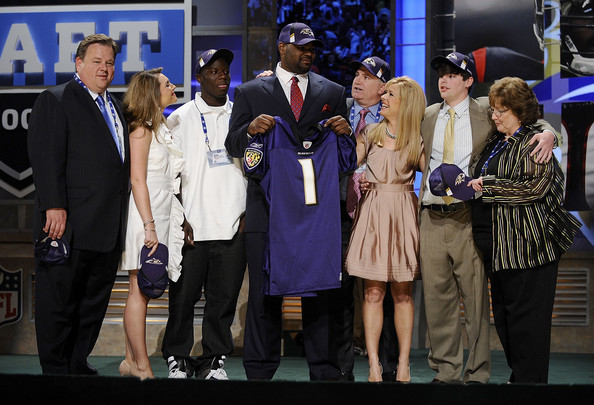
The heart of the book however is the story of Michael Oher – a kid who seemed destined to be a lost cause, born in a place and a system that was destined to fail him.  The Tuohy’s, who adopted Oher into their lives, emerge as a kind and loving family who belie the worst stereotypes of southern wealthy evangelicals.  While the book could be read as an uplifting tale of the difference that kindness can make in the life of someone less fortunate. For me however, the fact that it took such an unusual interest from a white family to give Oher any chance in life paints the United States economic system as the villain of the piece  –  a shocking state of affairs for the richest country in the world where inter-generational poverty is both expected and accepted.

The cynic in me can’t help but wonder about the motives of Sean Tuohy in taking Oher in.  Lewis is friends with Tuohy which makes him a less than objective judge.  However, on balance I choose to accept Lewis interpretation of the Tuohy’s motivations in taking Oher in.  It certainly seems evident that Leigh-Ann Tuohy went above and beyond in how she cared for Oher while he was in her care.

Overall, The Blind Side is simply a thoroughly enjoyable book and well deserves its regular placing on lists of the greatest sports books of all time.  While less influential than Lewis’ other great sports book Moneyball, it’s a more entertaining read for non-die hard fans of the relevant sport.  I can’t help feeling however that Lewis had an opportunity to go deeper into the reasons – socioeconomic, education, and the collegiate and professional sports system operating in the USA – why the outcome for Oher was different from the outcome for so many others.  Lewis touches on the key damning statistic around how many great athlete fail to take their lifeline due to the education system failing them.   Some deeper exploration would have been a welcome addition.

Michael+Oher+2009+NFL+Draft+e7nwHmucBHYl


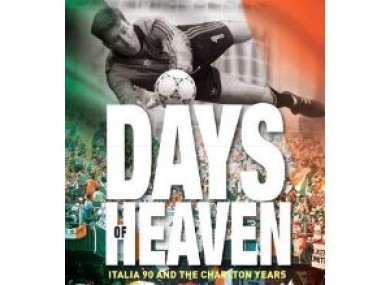
‘Days of Heaven: Italia 90 and the Charlton Years’ by Declan Lynch (2010)

“Look back on those days, on Euro 88 on Italia 90 and the rest of what we call the Charlton era, it certainly wasn’t about football.  It was an overwhelming combination of so many things, a journey the like of which we had never made before, and all we know for sure, is that very few of us made it entirely sober“.

I’m a huge fan of Declan Lynch’s writing.  I first read Days of Heaven not long after it came out in 2010 expecting a more standard telling of the Charlton era – an updated  version of Paul Rowan’s excellent Team That Jack Built. Instead, I found myself devouring an immensely well written look in the Irish psyche, our relationship with success, failure, alcohol and the world.  With some football in it.

doh

I was 6 during Italia 90, too young to fully grasp what has happening.  By the time USA 94 came around I was 10, and nothing had ever been as wonderful as that tournament.  I’m always amazed that anyone my age, or particularly slightly older, could have grown up in Ireland and not have an irrational obsession with the Irish international team.

So while I was too young to really remember the period Lynch writes about, the portrait of Irishness Lynch paints is instant recognisable to anyone who calls Ireland home.   Lynch looks into the soul of Irish people – and hits on home truths we all know, but maybe can’t or don’t want to admit.

Lynch evaluates the Celtic Tiger creation myth that Italia ’90 was the catalyst for Ireland’s emergence into the world and the boom era.  He recognises the role that failure, emigration and outsiders also had in our success.  In many ways, Lynch also extends the narrative to consider how Italia ’90 and the changes in Ireland at the time, also laid the seeds for the crash that would follow the Celtic Tiger.

As the book jacket says, Lynch considers the sporting, the social and the autobiographical as he paints a picture of a special time to be Irish and the lessons that time teaches us about ourselves.God

Alcohol plays a key part in the story – both in how it happened, and in how Lynch feels we should view it.  I’ve been reflecting on alcohol a lot of late and have given it up for 2018 to get a proper sense of when and why I would drink and the impact on my mental health. Lynch’s comments on alcohol really struck a chord with me.  Any look back on this period, or maybe any period, of modern Irish history would be incomplete without consideration of the role of alcohol.  Ultimately Lynch links the national drink problem with an immaturity as a country, the same immaturity to leads to bad political decision both on the part of politicians and the electorate.  Its a hard view to dispute.

Lynch captures so much of what it means to be an Ireland fan –  the dread, the worry, the hope and the brief unbelievable moments of joy.   He also captures the Ole Ole nature of away trips where its as much about the journey and the story as it is the football – although he is probably more critical of such jollies than I am.

Although I disagree with his lack of trust for those who identify as Ireland fans – you can love football without being overly attached to any one club side – for the most part Lynch is spot on in his observations – about our nation’s immaturity, our relationship with alcohol, and with our sense of ourselves in the world.

Overall, this a must read for any Irish sports fan or anyone seeking to understand how modern Ireland came to be.

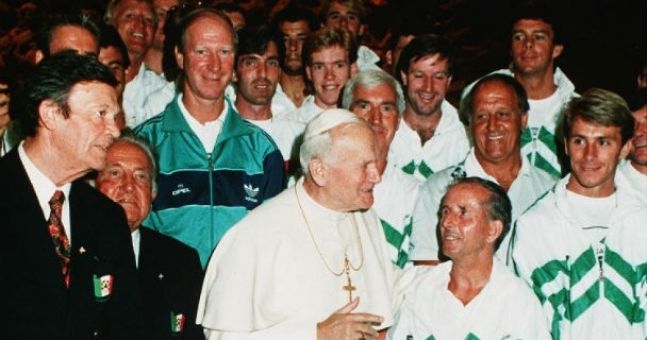
ThePope