‘Puskas on Puskas: The Life and Times of a Footballing Legend’ edited by Rogan Taylor and Klara Jamrich (1997)

“Virtually his entire playing career – over twenty years – was spent not just at the top, but at the very top of his profession.  He never stepped down from that summit.  And whatever he touched in the footballing world turned to gold”. 

Ferenc Puskas sits alongside Alfredo di Stefano in being widely regarded as the best player in the pre-Pele football era.   His achievements were remarkable – as well as being a top player right up to his 40th birthday, he played in two of the most famous (non-World Cup) matches ever to take place on British soil, captained arguably the greatest international football team never to win a World Cup (Cruyff might have disagreed) and even coached Panathinaikos to the European Cup final. Add in 83 goals in 84 internationals, an Olympic gold medal and the fact that the FIFA Goal of the Season award is named after him, and you get some sense of his accomplishments. puskas 1
Puskas on Puskas is an oral history of Puskas’ career, told mainly in his own words.  Taylor and Jamrich supplement Puskas’ own memories with those of his contemporaries – players, coaches, administrators, and journalists.  These reflections are supplemented by the editors providing an overview of the times Puskas lived and played in.  It’s an interesting and informative approach to telling the story of Puskas, the Golden Squad and Hungary under Communist rule.

Puskas comes across as a lively, charming and determined figure. Away from football Puskas was a master smuggler, political rebel and not afraid to speak his mind. On the field he was not just a world-class player but also a charismatic leader, a committed team-mate and a tactical innovator.

Puskas starred in some of the most famous matches in history beginning with the England-Hungary 6-3 match of 1953 that is often (wrongly) portrayed as England’s first ever defeat on home soil (that honour goes to Ireland following a 2-0 win in 1949).  He also played in the controversial 1954 World Cup final (the so-called Miracle of Berne) where West Germany improbably inflicted the only defeat Hungary would suffer over a 6 year period with some help from the British ref and linesman.  If that wasn’t enough for one man, he scored 4 goals in the famous 1960 European Cup final in Glasgow, which saw Real Madrid beat Eintract Frankfurt 7-3 to win their 5th straight European Cup.
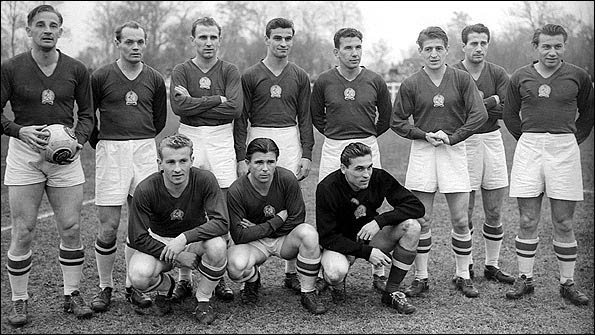
hungary

The book, brings to life not only the achievements of the players but also the tactical innovations of the Hungarian team and the challenges of the totalitarian regime that controlled the country.  Puskas recognised and exploited the power he had, certainly before the 1954 World Cup, in a team which the Communist authorities were eager to use to demonstrate the superiority of the “Socialist Man”

There a few hints that we don’t see every side of the man – certainly some of the British players interviewed suggest he may have had a wandering eye.  But the book doesn’t claim to be a comprehensive biography – rather is an oral history told mostly in the great man’s own words.

What makes the book a real treasure is the lack of other English language comprehensive books on Puskas – Taylor and Jamrich did a superb job in capturing the great man’s memories and using them to pull together an entertaining, informative book that is a fantastic read.


puskas-hung_59cs-8b5e-1347606340

‘Tiger Woods’ by Jeff Benedict and Armen Keteyian (2018)

Tiger Woods is the second collaboration by Benedict and Keteyian following on from their very enjoyable deep dive into US college football in The System.

tiger1

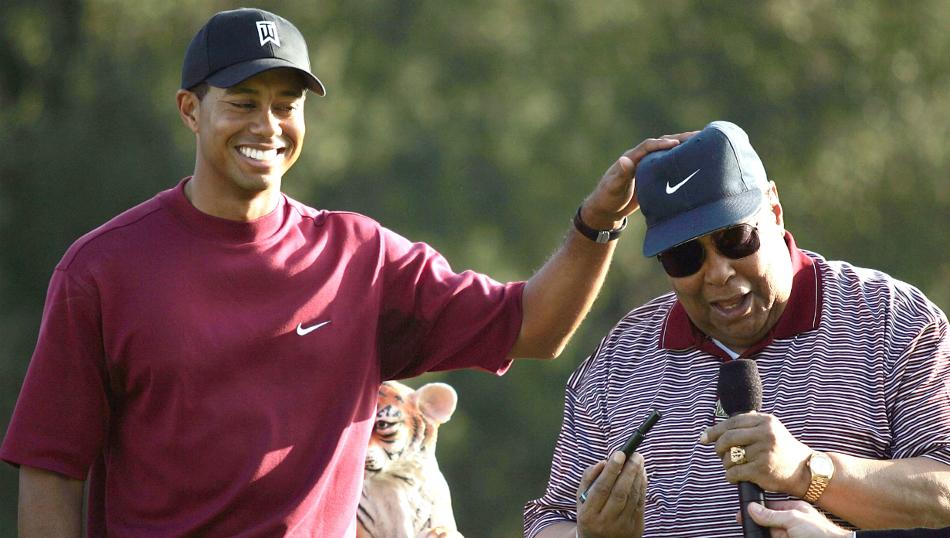
This book is a comprehensive, well researched, biography of the most famous sportsman on the planet.  Building on over 20 previous books and countless thousands of magazine profiles, the authors tell the comprehensive account of the rise and fall (and maybe redemption?) of Tiger Woods.  Woods impact on the game of golf is obvious and well known but his own personal story hasn’t before been told so comprehensively in one volume.

The advance coverage of the book focused on stories of Tiger’s notorious cheapness and rudeness.  In the book, Tiger comes across as a fascinating, if largely unlikable individual – but you get the feeling that the authors have attempted to be fair to Woods.

The book shines a light on the toxic influence of Tiger’s father Earl – the missed childhood as he focused on golf, the willingness to cut people out of his life on his father’s say-so and Tiger’s eventual mirroring of his father’s worst habits.  Tiger appears as a very intelligent introvert who would have been much better served without Earl’s constant boasting that he was going to change the world.  His difficulties with keeping long term relationships – largely through his own neglect of other’s emotional needs – makes me somewhat sympathetic for Tiger who clearly needs affection yet sabotages every important relationships in his life (bar his mother).

tiger 4

Tiger’s focus and perfectionism are fascinating.  To be able to deal with the hype of being the highest rated and most scrutinised player immediately upon turning pro.  To seek to rebuild his swing almost immediately after his 1997 Masters win is the type of move a mere mortal wouldn’t even contemplate let alone attempt.  To be able to play the best golf of his life while his private life was unraveling behind the scenes was beyond remarkable.   His ability and determination to play through pain is mind boggling.

Tiger’s fall from grace has been well covered, and the stories are well told and set in context here – painting a clear picture of how Tiger managed to remain on the top even when he knew tabloids were on to his affairs.   His attempts since that fateful Thanksgiving to rebuild his career are set out in the last section of the book.  It seems that his DUI arrest and worldwide humiliation in 2017 has proved a catalyst for some actual changes in Tiger – which have coincided with improved health helping him to play golf again.  The book left me hoping that this redemption is real, and long lasting.

It was welcome to see a detailed discussion on the possibility of Woods using Performance Enhancing Drugs – no athlete with such an impressive physique and connections to dodgy doctors should be above suspicion.   There is only so much the author’s can say without any substantial evidence but it does highlight the need for better testing in professional golf.

tiger 3

I was disappointed to see such little focus on team events like the Ryder Cup (less than a page) although maybe that’s a sign of how little the event meant to Tiger relative to individual honours.

Tiger’s story has always been about the golf first and foremast.  The celebrity off the course has always been secondary to the magic and drama of watching Woods at his best on the big occasion.  One passage best sums up Tiger and the world’s attitude towards him – “As a human being, he might not have been lovable – or even likable –but as a performer he possessed unsurpassed talents that he honed through a lifetime of practice .  On a Sunday afternoon, he shared his gifts with millions enabling them to forget reality and vicariously experience thrills that were more exhilarating than anything felt in a church pew.  Golf had never meant so much to so many”.

The book is well written and very enjoyable.  At times depressing, it is never anything but compelling. Highly recommended.

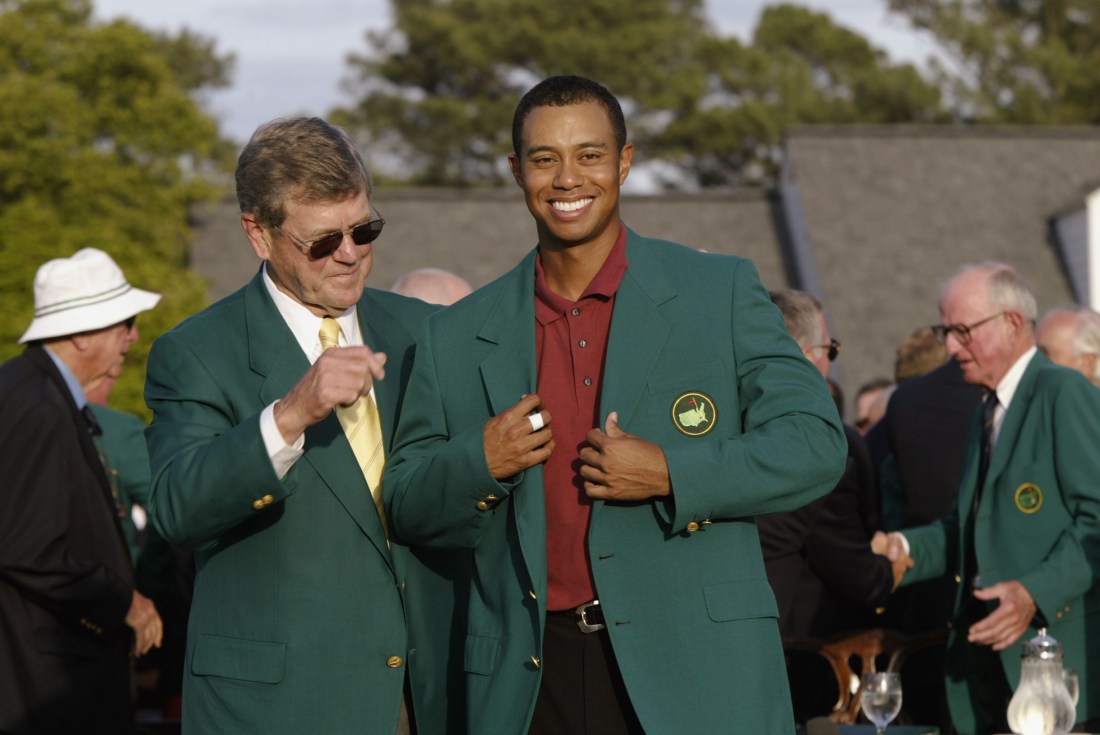
Chairman Hootie Johnson presents the green jacket to Tiger Woods

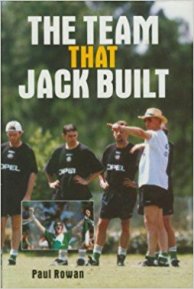
‘The Team That Jack Built’ by Paul Rowan (1994)

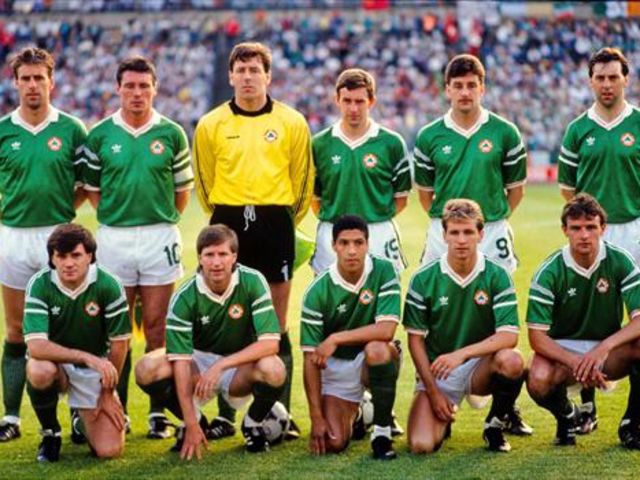
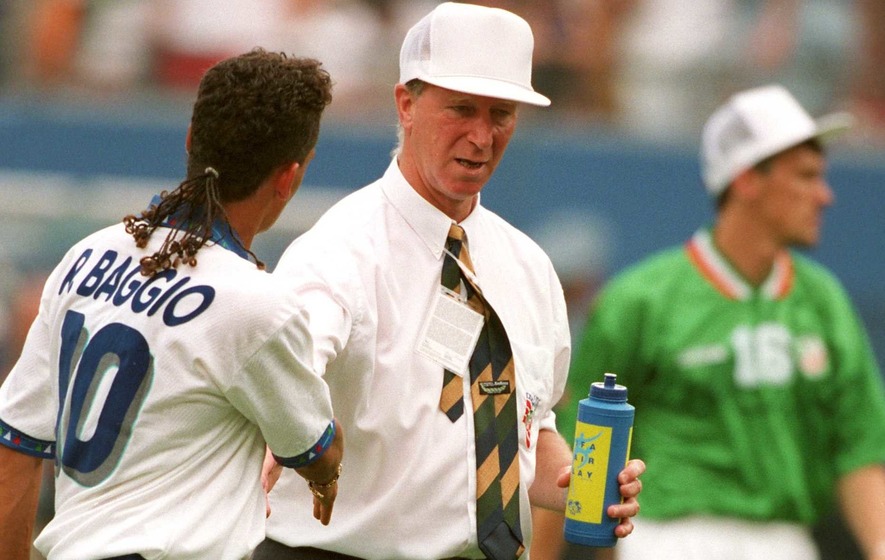
The Team That Jack Built was first published in 1994 shortly following Ireland’s second appearance in the World Cup finals – a level Ireland have only once returned to.

This isn’t a book about Ireland’s performances in the three major tournaments that the team played during Jack Charlton’s reign.  Indeed, the actual games at Euro 88 are covered in less than a page. Instead is about the how – how did Ireland go from nearly-rans to qualifying for back to back World Cups.  The book is all the better for the focus on the off-field aspects.  The team that jack

Rowan recounts the series of managers who had led the Irish team prior to Charlton’s appointment and this third of the book was really interesting for me as someone who was too young to remember any of the pre-Charlton era. Rowan also entertainingly details the backroom shenanigans in the FAI.  The constant jolies to Poland, the bizarre voting process and the battles with the players over money and endorsement rights.   Rowan paints a picture of the FAI that is not flattering and will be depressingly familiar to Irish fans of any era.

The highlight of the book is when Rowan lets Charlton describe his tactical approach in his own words – its a great, simple overview of the style which brought great success while boring the rest of the world.

eire

The main issue addressed in the book is FIFAs laws of eligibility -allowing non-Irish-born players to qualify for the Irish team because Ireland was the birthplace of a parent or grandparent.  Rowan addresses the conflicting views that Ireland had (and largely still has) about our relationship with the Brits and the Irish diaspora that identifies as both British and Irish.  He doesn’t come down on either side – but it is interesting to see how open many of the players were about England being their first choice.  It remains a highly relevant issue when we see players like Jack Grealish switch back to England, and fans fretting over whether Declan Rice would follow suit.

Overall, The Team That Jack Built is a hugely interesting, entertaining and well written account of the Irish football team in the 30 years leading up to 1994.  Its the off-field story of how a team built around the Irish diaspora came together under a charismatic manager to really shake ’em up.

jack3

‘Klopp: Bring the Noise’ by Raphael Honigstein (2017)

It’s always fascinated me how a manager’s character can shape the neutral fan’s perception of a football team.  Under previous Liverpool managers (especially Houlier) I found Liverpool quite dis-likable and certainly not a team I would root for.  Yet under Klopp its hard not to  have a soft spot for the free-flowing Liverpool team that plays in a manner

Klopp

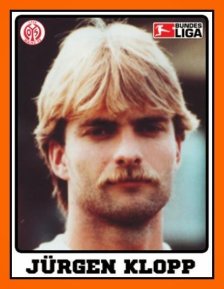
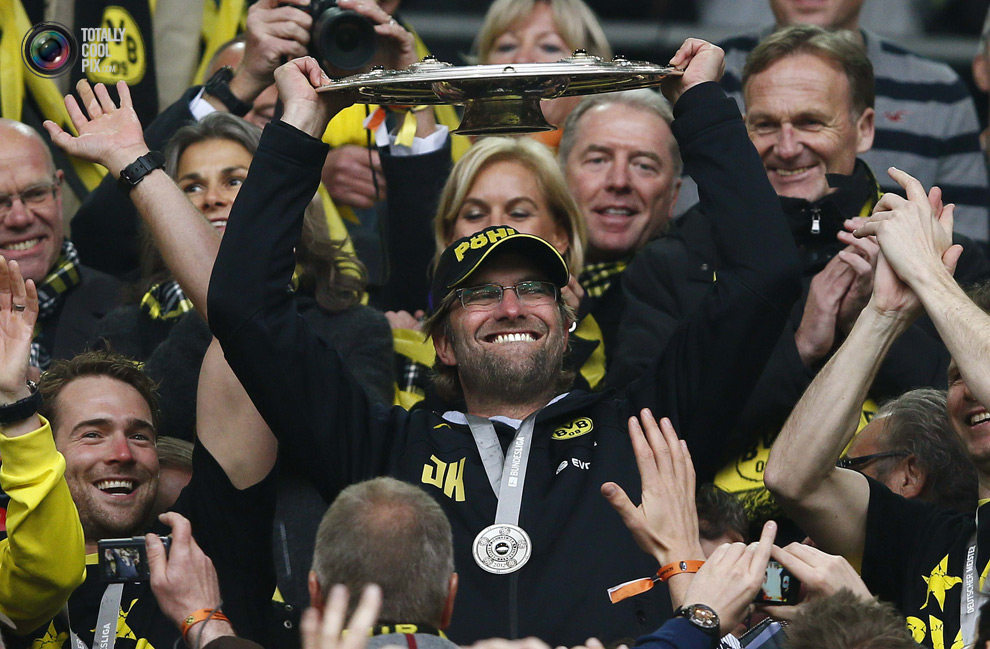
Klopp: Bring the Noise is a fun and detailed biography of the most charismatic manager in football – Jurgen “Kloppo” Klopp.  Honigstein details the key influences on Klopp’s career including his own limitations as a player and his one-time coach Wolfgang Frank.

Klopp comes across in the book in the same way he does on TV.  He clearly has a huge work ethic and builds a very  strong connection with his players.  The access that Honigstein had to so many people close to Klopp at different times of his life and career gives a great insight into his tactics and his management.

A clear pattern emerges – builds a fantastic team with meagre resources, performs well above expectations only to see a decline – either due to star players being headhunted or the rest of the league adopting his tactics.  It remains to be seen if his Liverpool team can compete in the Premier League and become more than a very good cup team.

I’m a big fan of Raphael Honigstein’s writing – in particular his book Das Reboot.  Like his other work, this book is well written, well researched and a very enjoyable read.

Klopp 2

There are a few areas in the book where more detail would have been interesting.  The section on the type of player Klopp looked to sign was very interesting but I would have like more detail on why certain players were signed – what was it about Lewandawski that made Dortmund pull the trigger for example when he was overlooked by other clubs?

I found the ordering of chapters a bit frustrating.  I understand what Honigstein was trying to achieve – linking his first days at each club together to enable the reader to make comparisons between his time at Mainz, Dortmund and Liverpool.  But for a reader not all that familiar with Klopp’s time at Mainz, the jumps back and forth were a bit disorientating.

Overall, I highly recommend this book for anyone interested in Klopp – and I can’t imagine why any football fan wouldn’t be interested in him!

klopp 3

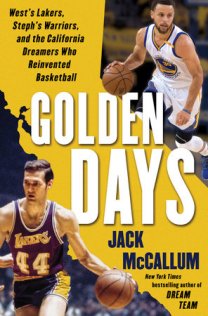
‘Golden Days: West’s Lakers, Steph’s Warriors, and the California Dreamers Who Reinvented Basketball’ by Jack McCallum (2017)

Golden Days is the story of two basketball teams from very different eras but with a huge amount in common.  The LA Lakers from 1971/72 and the modern-day Golden State Warriors share a California setting, the thrill of combing great players in one team, scarcely believable winning streaks and one very important man – Jerry ‘the Logo’ West.

golden days

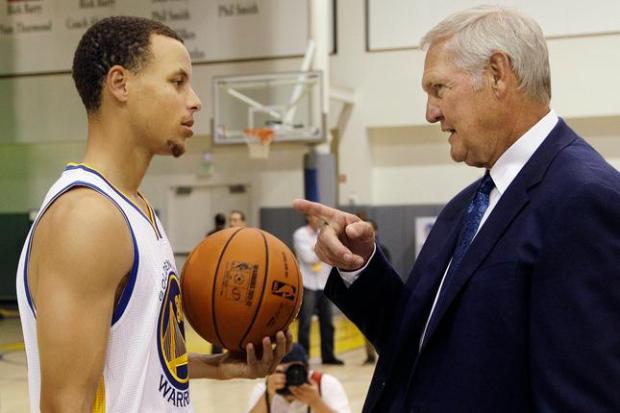
McCallum centres the book around West – a legendary player for the Lakers in the 60’s and 70’s who after 50 years of being a leading player, coach and executive, was an important consultant and scout for the Warriors as they built a team that is reinventing basketball.  In many ways, it’s a biography of two phases of West’s life – and it leaves you dying to read his own book, ‘West by West’ next.   West comes across as the most modern octogenarian there is – refusing to bask in ‘back in my day’ nostalgia and determined to keep working at the very top of the NBA.

The book jumps between the two teams from chapter to chapter and tells the story of the key figures from both eras.  Both tales are strengthened by the linkages drawn to the author.  McCallum is a great writer whose love of basketball shines through on every page.  His interview skills are the bedrock of his writing and he manages to get his subjects to open up in great detail.

west warriors

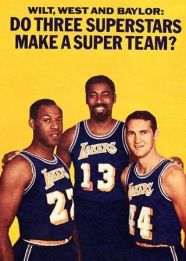
The characters from the 70’s unsurprisingly stand out as more entertaining and fun – none more so than Wilt Chamberlain.  It feels like the book is more about the Lakers than the Warriors – like McCallum really wanted to focus on those days but linking it to the Warriors and the Steph Curry phenomenon made the story much more saleable.

The material on the Warriors is interesting for a casual fan like me who hasn’t followed NBA too closely in recent years.  I’ve enjoyed watching the Warriors but wasn’t familiar with the behind the scenes story of how the team was built.  It will be fascinating to see can they repeat championship glory this year and prove that they differ from West’s Lakers in one major way – winning championships consistently.

McCallum has a very distinctive style – at times gossipy with plenty of asides from the author.  It might not be for everyone but I like it lot.  It flows well and is easy to read.  I’ve been a McCallum fan since I first encountered his work in Dream Team his excellent book on the 92 Olympic team that captured the world’s attention. Overall I highly recommend Golden Days for any fan of basketball past or present.

3 superstars

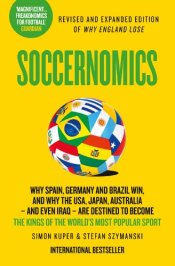
‘Soccernomics – 2018 World Cup edition’ by Simon Kuper and Stefan Szymanski (2018)

I read the first version of this book, then called Why England Lose, when it was first published and really enjoyed it.  The latest edition is even better. The authors avoided simply re-publishing the same old book, instead re-examining their conclusions and ensuring this edition is fresh and up to date.

soccernomics

The book is essentially Freakonomics applied to football, with some Moneyball thrown in.  The authors use statistics to disprove the prevailing wisdom on how football functions and how to be successful in the game. It covers a wide gambit of football related issues – ranging from how to play the transfer market well, what national teams overperform and how loyal fans really are.

The authors attempt to look globally in scope but the book focuses on European football largely because that is where the best data sources are found.  It is a long read and covers a huge amount of detail.  It is best enjoyed in chapter sized chunks to leave time to think about it rather than flying through and finding yourself overwhelmed in the detail.   Some chapters are better than others – discussions on which national team over performs got tiring, and felt like a repeat of the discussion on why England lose.  By contrast, the chapter on penalty shootouts and game theory was brilliant and insightful.

In particular, the book left me wanting to find a good book on the rise of Olympique Lyonnais and how they used clever transfers to dominate French football before the oil baron PSG took over.   The “wisdom of crowds” theory put forward in the book doesn’t really seem convincing to me as transfer committees at other clubs have been anything but successful. Any recommendations would be greatly welcome.

I enjoyed the book but in some ways I would hesitate to recommend it for everyone.  I’m not sure how much a non-nerdy fan would enjoy it.  It’s probably safe to say that if you think a “statistical look at football” sounds like fun, you’ll enjoy this book a lot.  Given its huge sales numbers there must be more of us football nerds out their than I thought!

‘A Lion’s Tale: Around the World in Spandex’ by Chris Jericho (2007)

There were brief periods of my childhood where I simply loved WWF – staying up all night to watch the Royal Rumble, refusing to fully accept it was scripted and staging highly dangerous wrestling matches with friends.  I don’t think I’ve seen 5 minutes of wrestling in the last 10 years or more.

Mick Foley’s Have a Nice Day launched a genre of wrestling autobiographies which many big name wrestler’s have been quick to cash in on.  There is something about these wrestling autobiographies that is just so entertaining  – the strange characters, the life on the road, the level of dedication needed to make it. And for me the nostalgia for how much I loved WWF once upon a time.

aliontale

A Lion’s Tale is the first in a series of autobiographies by Chris “Y2J” Jericho – a major name in WWF for most of the last 20 years.  It covers his early life and his wrestling career right up to the point he joined WWF.   Jericho details the many hardships and hilarious moments he went through on his quest to be a well-known professional wrestler.

The book is the story of a childhood dream fulfilled.   Jericho’s career takes him from wrestling in front of a handful of people in tiny Canadian towns to Mexico, Europe, Japan, ECW, and WCW.  It is also a chronicle of life on the road, a young man finding his place and enjoying the fruits of that success.

It’s a quick and enjoyable read.  At times there are too many in-jokes, but I think I got most of the old movie and wrestling references.  The ghost writer’s style can be annoying, but he clearly trying to achieve a conversational and jokey style.  It makes for easy, but at times clunky, reading.

I liked that Jericho left the references to Chris Benoit unaltered in the book – it was published just around the time Benoit killed his family in a murder suicide.  It would have been disingenous to pretend Benoit wasn’t a major figure in his life and the book feels more honest for Benoit remaining a central character.

Its not at the standard of Bret Hart or Mick Foley’s books but its a worth the read for anyone interested in another look at the bizarre world of wrestlers trying to make the big time.  I’m undecided whether to read Jericho’s later books – while I enjoyed this, I think the journey to the top is much more interesting than what happens once you get there.

screen-shot-2016-04-27-at-4-46-31-pm-e1461790064905

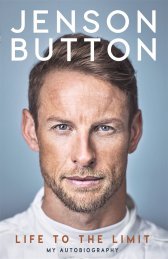
‘Life to the Limit: My Autobiography’ by Jenson Button (2017)

Life to the Limits is the story of Button’s relationship with motorsport and with his father.  It isn’t just about his F1 glory days – it’s about the trials and tribulations it took to get there.  Its an enjoyable read and an inside look into a world that seems so captivating from the outside. jensen button

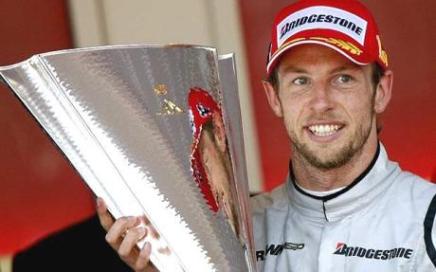
It begins with Button’s karting days, when he and his dad would travel the length of the UK competing.  He goes through his career through each of the levels and formulas, becoming F1 champion with Brawn before seeking a new challenge at Mercedes and eventually retiring.

It is a racing autobiography rather than a complete story of Jensen’s life.  It is obvious there is plenty of his personal life not covered – reported infidelity is ignored, and an abortion is covered only as a comment on how the press covered him.

The book is a great insight into the world of Formula 1 and the circus that surrounds it. Button gives interesting insights into some of the sports most fascinating characters – Flavio Briatorie most of all. He does not hold back his thoughts on other drivers and where he has made mistakes in his career. Shines a light on some of the stranger decisions in Jensen’s career – most notably his decision to leave Brawn just after wining the World Championship.

button1

At times there are two many technical details, and in places it can be a little bit like a recitation of results – in this race x,y,z, happened, I finished in x position.

The last 5th of the book becomes incredibly emotional.  Button’s relationship with his father was the defining relationship of his life and his career.  The end of his father’s life and the impact it had on Button is at times difficult to read.

Overall, this is a nicely written autobiography.  It is the absorbing story of a life dedicated to building a racing career and a fascinating insight into what that career entailed.  Finally it becomes a personal love letter to his father.  We don’t necessarily see the full real Jensen Button, but we see more than enough to make this an enjoyable and engrossing read.

2009-185444-jenson-button-gbr-brawn-gp-brazilian-grand-prix-friday-practice-sao-paulo-br1

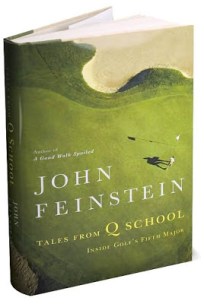
‘Tales from Q School: Inside Golf’s Fifth Major’ by John Feinstein (2007)

Tales from Q School tells the story of the 2005 Q school tournament through the eyes of a handful of the 1000’s of PGA Tour hopefuls who competed that year – some famous, others less so.  The book is packed full of interesting anecdotes about the qualifying school that lower-rung golfers had to go through to get to the PGA Tour.

Q school

At the time there were three stages at Q school – first stage, second stage, and finals.  Players paid close to $5,000 for a chance to compete in the tournaments and potentially win a place on the PGA Tour – or at least get playing privileges on the secondary tour.

Since 2012, Q School has stopped offering a route directly to the PGA Tour – instead it is a qualifier for the secondary tour and a separate 4 event tournament offers a route to get to or remain on the big tour.   So while Q school might be a different beast now, the vast majority of pro players operating today will have gone through Q school as it is chronicled by Feinstein.

John Feinstein is one of the most widely read authors of books on US sports with his back catalogue covering american football, basketball, baseball and golf.  It is clear he enjoys telling the stories of the less well known professional sportsmen and women as much as he does the superstar.

Feinstein deals with the human element of the tournament – the solitary and gutwrenching journey that the players faced to try and earn a place at the top table.  As he notes, only in golf can earning half a million dollars a year be considered a failure!

q-school

What emerges is a real sense of the importance of the mental element of the game, and indeed any top level professional sport. The margins are so fine between success and failure – one double bogey or one error off the tee can be the difference between life as a club pro or the opportunity for multiple million dollar riches.

It was a little confusing at times because the narrative jumps around. There is also repetition as players backgrounds are repeated as we encounter them again at a later stage.  While this repetition is understandable given the vast number of characters, it gets annoying if you read the book over a very short period.

Notwithstanding these points, I found the book to incredibly interesting and utterly absorbing. The stories of players missing out by one shot or one hole were heartbreaking.  Players who signed for the wrong score and missed their one big shot just like that.  Players who collapsed on the final 9 holes after playing masterfully for 13 and half rounds before then.

Feinstein, as is obvious across all his work, is a master interviewer who gets great quotes and detail from all of the golfers he covers.  Overall, a well-written, informative and enjoyable book.

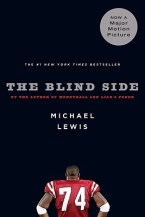
‘The Blind Side: The Evolution of the Game’ by Michael Lewis (2006)

You have probably already read this book or seen the movie.  If you haven’t then stop reading and go get the book.blind side

The Blind Side interweaves two stories. The first story is the evolution of American football towards a passing game where quarterbacks rose in value, became targets and finally needed greater protection.  The second is the story of a lost boy taken in by a white Southern family and given an opportunity to pursue his gifts that he seemed destined to be denied.  Those gifts just happened to make him ideally suited to provide the now much more valued quarter back protection.

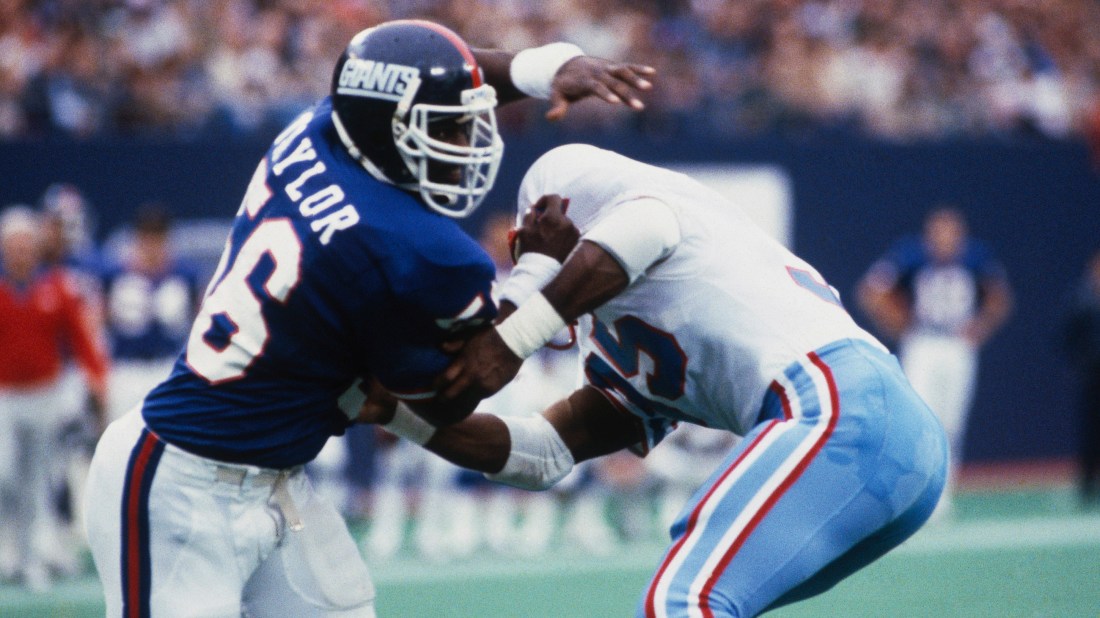
Lewis is a wonderful writer whose books are informed, accessible and entertaining.   The Blind Side works brilliantly as football history – Lewis traces the journey from Bill Walsh’s 49ers, through Lawrence Taylor and the rise of great linebackers to the realisation on the launch of free agency that teams would pay a lot more money for a left tackle than they were paying so far.  It’s the type of narrative that, as a casual NFL fan, I was unaware of and one I had not seen captured in the wonderful NFL / America’s Game TV series. Lewis is able to tell a compelling story and educate the less knowledgeable football fan without coming off as condescending,

Oilers v Giants

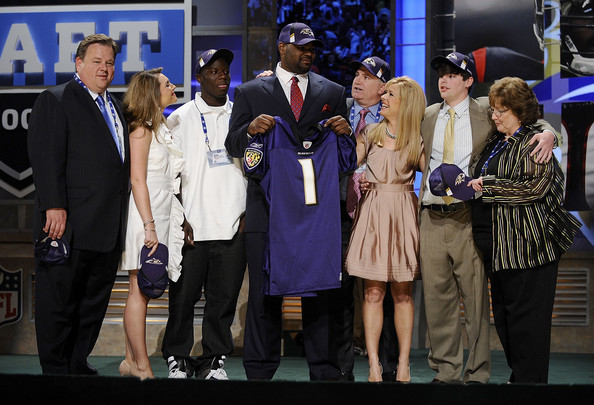
The heart of the book however is the story of Michael Oher – a kid who seemed destined to be a lost cause, born in a place and a system that was destined to fail him.  The Tuohy’s, who adopted Oher into their lives, emerge as a kind and loving family who belie the worst stereotypes of southern wealthy evangelicals.  While the book could be read as an uplifting tale of the difference that kindness can make in the life of someone less fortunate. For me however, the fact that it took such an unusual interest from a white family to give Oher any chance in life paints the United States economic system as the villain of the piece  –  a shocking state of affairs for the richest country in the world where inter-generational poverty is both expected and accepted.

The cynic in me can’t help but wonder about the motives of Sean Tuohy in taking Oher in.  Lewis is friends with Tuohy which makes him a less than objective judge.  However, on balance I choose to accept Lewis interpretation of the Tuohy’s motivations in taking Oher in.  It certainly seems evident that Leigh-Ann Tuohy went above and beyond in how she cared for Oher while he was in her care.

Overall, The Blind Side is simply a thoroughly enjoyable book and well deserves its regular placing on lists of the greatest sports books of all time.  While less influential than Lewis’ other great sports book Moneyball, it’s a more entertaining read for non-die hard fans of the relevant sport.  I can’t help feeling however that Lewis had an opportunity to go deeper into the reasons – socioeconomic, education, and the collegiate and professional sports system operating in the USA – why the outcome for Oher was different from the outcome for so many others.  Lewis touches on the key damning statistic around how many great athlete fail to take their lifeline due to the education system failing them.   Some deeper exploration would have been a welcome addition.

Michael+Oher+2009+NFL+Draft+e7nwHmucBHYl