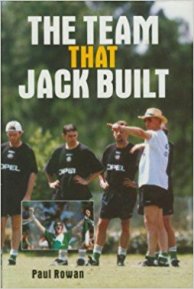
‘The Team That Jack Built’ by Paul Rowan (1994)

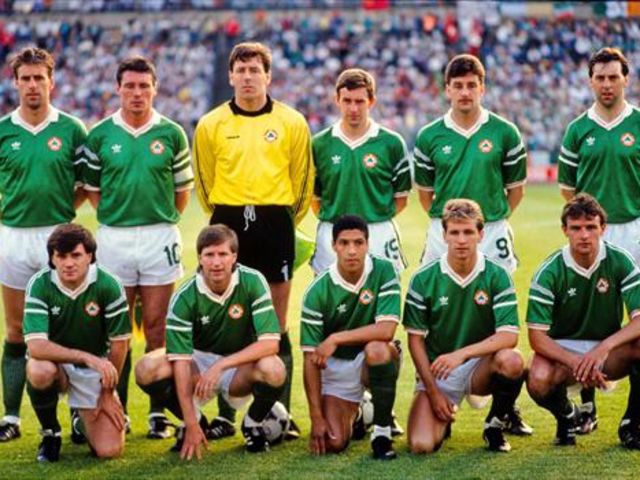
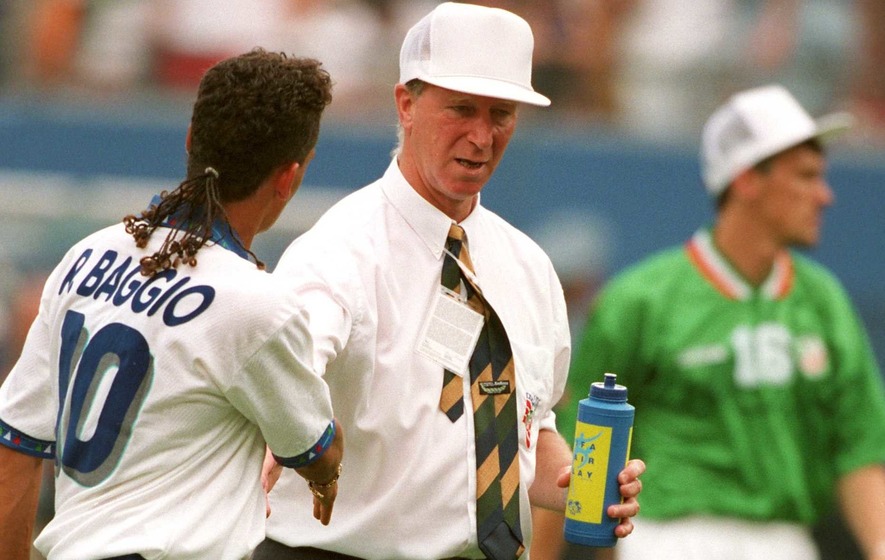
The Team That Jack Built was first published in 1994 shortly following Ireland’s second appearance in the World Cup finals – a level Ireland have only once returned to.

This isn’t a book about Ireland’s performances in the three major tournaments that the team played during Jack Charlton’s reign.  Indeed, the actual games at Euro 88 are covered in less than a page. Instead is about the how – how did Ireland go from nearly-rans to qualifying for back to back World Cups.  The book is all the better for the focus on the off-field aspects.  The team that jack

Rowan recounts the series of managers who had led the Irish team prior to Charlton’s appointment and this third of the book was really interesting for me as someone who was too young to remember any of the pre-Charlton era. Rowan also entertainingly details the backroom shenanigans in the FAI.  The constant jolies to Poland, the bizarre voting process and the battles with the players over money and endorsement rights.   Rowan paints a picture of the FAI that is not flattering and will be depressingly familiar to Irish fans of any era.

The highlight of the book is when Rowan lets Charlton describe his tactical approach in his own words – its a great, simple overview of the style which brought great success while boring the rest of the world.

eire

The main issue addressed in the book is FIFAs laws of eligibility -allowing non-Irish-born players to qualify for the Irish team because Ireland was the birthplace of a parent or grandparent.  Rowan addresses the conflicting views that Ireland had (and largely still has) about our relationship with the Brits and the Irish diaspora that identifies as both British and Irish.  He doesn’t come down on either side – but it is interesting to see how open many of the players were about England being their first choice.  It remains a highly relevant issue when we see players like Jack Grealish switch back to England, and fans fretting over whether Declan Rice would follow suit.

Overall, The Team That Jack Built is a hugely interesting, entertaining and well written account of the Irish football team in the 30 years leading up to 1994.  Its the off-field story of how a team built around the Irish diaspora came together under a charismatic manager to really shake ’em up.

jack3

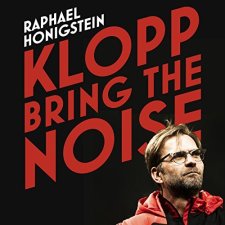
‘Klopp: Bring the Noise’ by Raphael Honigstein (2017)

It’s always fascinated me how a manager’s character can shape the neutral fan’s perception of a football team.  Under previous Liverpool managers (especially Houlier) I found Liverpool quite dis-likable and certainly not a team I would root for.  Yet under Klopp its hard not to  have a soft spot for the free-flowing Liverpool team that plays in a manner

Klopp

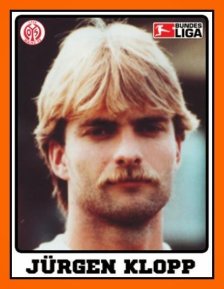
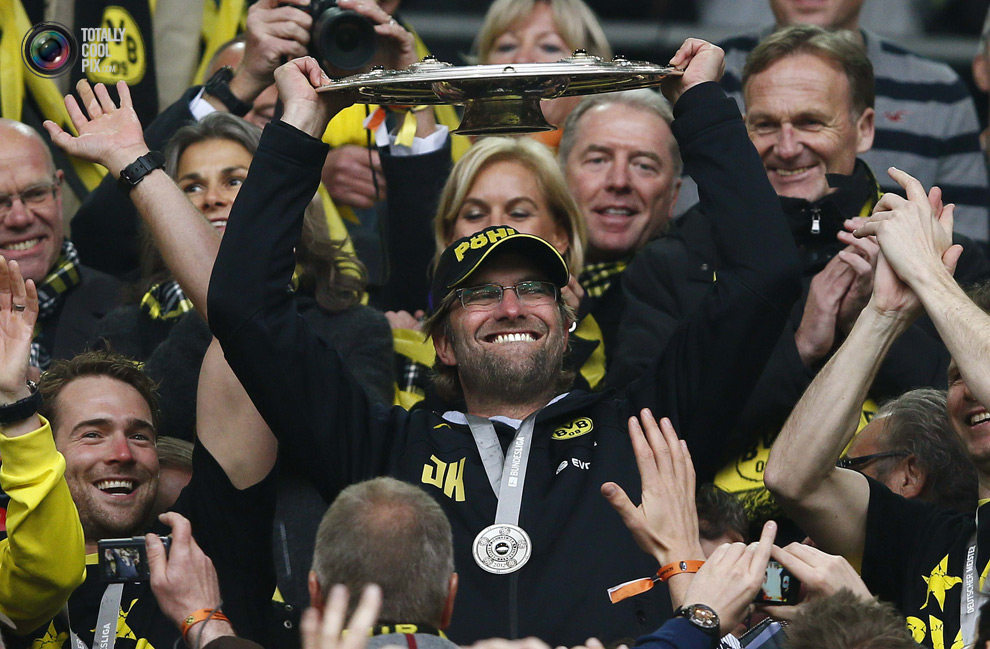
Klopp: Bring the Noise is a fun and detailed biography of the most charismatic manager in football – Jurgen “Kloppo” Klopp.  Honigstein details the key influences on Klopp’s career including his own limitations as a player and his one-time coach Wolfgang Frank.

Klopp comes across in the book in the same way he does on TV.  He clearly has a huge work ethic and builds a very  strong connection with his players.  The access that Honigstein had to so many people close to Klopp at different times of his life and career gives a great insight into his tactics and his management.

A clear pattern emerges – builds a fantastic team with meagre resources, performs well above expectations only to see a decline – either due to star players being headhunted or the rest of the league adopting his tactics.  It remains to be seen if his Liverpool team can compete in the Premier League and become more than a very good cup team.

I’m a big fan of Raphael Honigstein’s writing – in particular his book Das Reboot.  Like his other work, this book is well written, well researched and a very enjoyable read.

Klopp 2

There are a few areas in the book where more detail would have been interesting.  The section on the type of player Klopp looked to sign was very interesting but I would have like more detail on why certain players were signed – what was it about Lewandawski that made Dortmund pull the trigger for example when he was overlooked by other clubs?

I found the ordering of chapters a bit frustrating.  I understand what Honigstein was trying to achieve – linking his first days at each club together to enable the reader to make comparisons between his time at Mainz, Dortmund and Liverpool.  But for a reader not all that familiar with Klopp’s time at Mainz, the jumps back and forth were a bit disorientating.

Overall, I highly recommend this book for anyone interested in Klopp – and I can’t imagine why any football fan wouldn’t be interested in him!

klopp 3

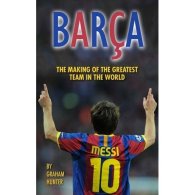
‘Barça: The Making of the Greatest Team in the World’ by Graham Hunter (2012)

Graham Hunter will be well-known to most English-speaking football fans as one of an ever-growing number of English speaking journalists covering La Liga.   I’ve long been a fan and his more recent venture into long-form interview podcasts (The Big Interview) has been a great success.barca gh

I first read Barça: The Making of the Greatest Team in the World not long after it was published in 2012 and thoroughly enjoyed it.  Rereading it now, in light of how both the team and Guardiola have continued to progress provides an interesting new context. Both have remained very successful, but that extra spark that leads to Champions League success has been repeated only once by Barca but not yet by Guardiola.  Despite Barca’s continued La Liga success, Real Madrid’s 3 Champions League successes in 4 years puts the Catalan team firmly in second place.

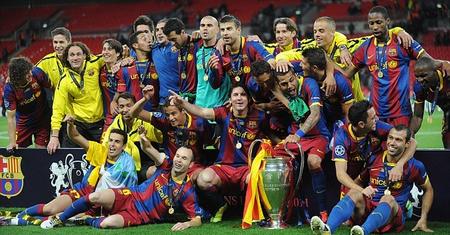
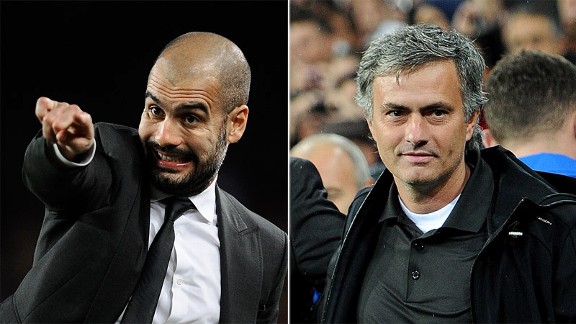
Hunter begins the book by focusing on the end of the 2010-2011 season when Clásico fever gripped us all as Barca squared off against Mourinho’s Real 4 times in a little over 2 weeks. At times those games felt like the battle for the soul of football – Guardiola’s possession game against Mourinho’s cynical counter attacking – as well as the latest battle in the war for ‘greatest player in the game’ between Messi & Ronaldo. Despite losing the Copa Del Rey final, Barca ultimately had the last laugh winning the La Liga and Champions League double.  Hunter paints a picture of the ultimate team at its peak and gives a great insight into Guardiola’s approach and the team’s mentality.

The following chapters weave entertainingly between mini-biographies of the key figures in this great Barca side (Messi, Xavi, Puyol etc), detailed retelling of Guardiola’s first 3 seasons, the political machinations behind the scenes, the Cruyffian origins of this team and Frank Rijkaard’s role in laying the groundwork.  Hunter includes his own experiences and interactions with the team and the players which adds an additional layer of insight.barca 2-11

Books about still active players and coaches always run the risk of being too sycophantic or shying away from controversy.  Hunter’s admiration for Pep and the players is obvious.   He is an unashamed supporter of Cruyff, Pep and Laporte (former Chairman).  While the book could have been more objective, this subjectivity does not feel like a major weakness – particularly as Hunter’s passion and knowledge gives credibility to his views.  Hunter does criticise the club hierarchy (both before and after Laporte) – the near failure to sign Messi, the war with Cruyff and more – but his discussion of the players is near universally positive. While I share Hunter’s admiration, I’m sure some Madrid fans would fine the praise over the top.

The book is full of interesting anecdotes and Hunter’s passion for his subject shines through.  It is a detailed, well-written and entertaining account of the greatest team modern football has seen.  Highly recommend for anyone who fondly remembers those 4 years when every Barca game was must see TV and you knew as it happened you were watching something very special.

soc_g_pep_jose_576

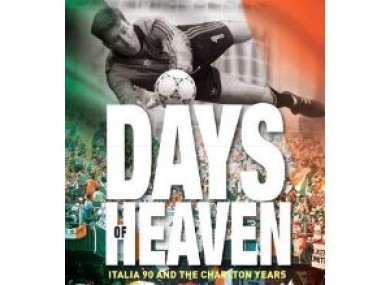
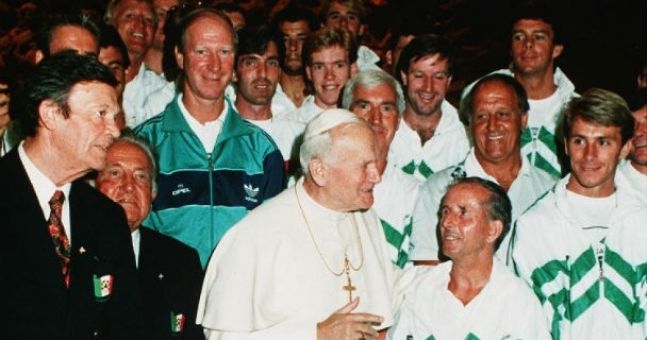
‘Days of Heaven: Italia 90 and the Charlton Years’ by Declan Lynch (2010)

“Look back on those days, on Euro 88 on Italia 90 and the rest of what we call the Charlton era, it certainly wasn’t about football.  It was an overwhelming combination of so many things, a journey the like of which we had never made before, and all we know for sure, is that very few of us made it entirely sober“.

I’m a huge fan of Declan Lynch’s writing.  I first read Days of Heaven not long after it came out in 2010 expecting a more standard telling of the Charlton era – an updated  version of Paul Rowan’s excellent Team That Jack Built. Instead, I found myself devouring an immensely well written look in the Irish psyche, our relationship with success, failure, alcohol and the world.  With some football in it.

doh

I was 6 during Italia 90, too young to fully grasp what has happening.  By the time USA 94 came around I was 10, and nothing had ever been as wonderful as that tournament.  I’m always amazed that anyone my age, or particularly slightly older, could have grown up in Ireland and not have an irrational obsession with the Irish international team.

So while I was too young to really remember the period Lynch writes about, the portrait of Irishness Lynch paints is instant recognisable to anyone who calls Ireland home.   Lynch looks into the soul of Irish people – and hits on home truths we all know, but maybe can’t or don’t want to admit.

Lynch evaluates the Celtic Tiger creation myth that Italia ’90 was the catalyst for Ireland’s emergence into the world and the boom era.  He recognises the role that failure, emigration and outsiders also had in our success.  In many ways, Lynch also extends the narrative to consider how Italia ’90 and the changes in Ireland at the time, also laid the seeds for the crash that would follow the Celtic Tiger.

As the book jacket says, Lynch considers the sporting, the social and the autobiographical as he paints a picture of a special time to be Irish and the lessons that time teaches us about ourselves.God

Alcohol plays a key part in the story – both in how it happened, and in how Lynch feels we should view it.  I’ve been reflecting on alcohol a lot of late and have given it up for 2018 to get a proper sense of when and why I would drink and the impact on my mental health. Lynch’s comments on alcohol really struck a chord with me.  Any look back on this period, or maybe any period, of modern Irish history would be incomplete without consideration of the role of alcohol.  Ultimately Lynch links the national drink problem with an immaturity as a country, the same immaturity to leads to bad political decision both on the part of politicians and the electorate.  Its a hard view to dispute.

Lynch captures so much of what it means to be an Ireland fan –  the dread, the worry, the hope and the brief unbelievable moments of joy.   He also captures the Ole Ole nature of away trips where its as much about the journey and the story as it is the football – although he is probably more critical of such jollies than I am.

Although I disagree with his lack of trust for those who identify as Ireland fans – you can love football without being overly attached to any one club side – for the most part Lynch is spot on in his observations – about our nation’s immaturity, our relationship with alcohol, and with our sense of ourselves in the world.

Overall, this a must read for any Irish sports fan or anyone seeking to understand how modern Ireland came to be.

ThePope

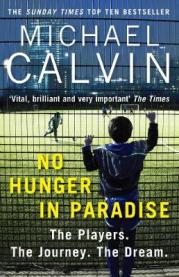
‘No Hunger in Paradise: The Players. The Journey. The Dream.’ by Michael Calvin (2017)

“It is impossible not to be struck by the sense of sadness, underpinned by anger.  The venality and vitriol of the senior game is a running sore, an open wound which seeps into youth football”.

Michael Calvin’s recent trilogy of books have established him as the great chronicler of modern British football.  He investigates the human stories of English football, shining a light on the real life experiences of those for whom the game is their actual or potential livelihood.

No Hunger in Paradise follows on from Living on the Volcano which focused on managers and The Nowhere Men which examined scouts.  This time it is youth football that is under the spotlight.

no hunger

This is an important book which shines a light on a system which fundamentally fails thousands of children.  Calvin interviews a wide range of people – from coaches and agents to parents and players.  Many of the chapters would make excellent stand alone stories – combined, they paint a depressing portrait of an industry in which children are seen as assets and often quickly discarded when they lose their perceived value.

Calvin, a very experienced journalist, is clearly a very talented interviewer who draws out the complexity of the stories of those he speaks to.  His own voice in the book is mainly one of empathy – its clear he cares passionately about the game and the people he meets.  Calvin also made a documentary with BT Sport based on his book which is well worth checking out.

The most striking fact presented is the young age at which players start to be recruited – Calvin repeatedly paints scenes that seem normal for adults or teenagers until he explains the players are 6 or 7 years old.  More than anything, if the book has a central thesis, its that this chasing of players at a younger and younger age is fundamentally wrong.

There is also an interesting contrast between old school and new school ways of thinking about youth coaching.  While better processes and procedures are undoubtedly important and necessary for safeguarding, you get a sense that Calvin and many of his interviewees feel the use of technology for technology’s sake hasn’t necessarily improved coaching outcomes.

While Calvin’s writing is very readable, this is not an easy read. Calvin constantly, rightly, reminds the reader of the problems in the game.  However, the book does focus on the good guys in a bad industry which gives some hope. Calvin highlights the good work done by many clubs, organisations and coaches who he sees as role models for how things could be improved across football.

At a time when there have been so much coverage of historic abuse within English football, reading this book you cannot help feeling that the football authorities in England have gotten their priorities all wrong.  Welfare must come first and outcomes second.   With the scale of money involved, its unlikely that message will be heard anytime soon.  Large scale change has proven possible when designed to improve the English national team – whether it could again prove possible to implement change designed to help those who ultimately don’t make the grade remains to be seen.

‘The Deal: Inside the World of a Super-Agent’ by Jon Smith & James Olley (2016)

“Is it wrong? By the law of the written word, yes. But questioning the morality of conducting deals in a certain way involving third parties or agents is a completely outmoded and backward way of thinking.”

Jon Smith is a self-described ‘Super Agent’ – a key figure in, and beneficiary of, the commercialisation of English, and global, football.  The Deal is part biography of Smith, part history of football’s commercialisation and part defence of the role of football agents.  It’s doubtful though whether it lives up to its sales pitch of being a “scintillating exposé” of how the football industry really functions.

the deal

The first few chapters operate almost as stand alone stories that could work better as magazine articles – an ill-fated trip to the Ukraine in an attempt to sell Sheffield Wednesday, a look behind-the-scenes on deadline day, a discussion of how agents generally operate and a justification of football agents and their “morality”.  These chapters contain interesting insights into how the business of football works, which is the real appeal of the book (and the reason I picked it up).  However, I get a very strong sense that the book only scratches the surface of what really goes on inside football.

These early chapters also include detailed, and repetitive attempts to justify the need for, and role of, agents.  Some of Smith’s views – particularly around structuring things in a tax efficient manner until Revenue shut them down or the need to make payoffs to players family and friends because it’s the “culture” – leave a bad taste in the mouth.  Obviously it would be totally naive to not expect this stuff to go on and it is admirable that Smith at least addresses the issue.  Lets just say I found his defence of plenty of the activities wholly unconvincing.

Like most businessmen, Smith is generally opposed to any piece of regulation he talks about, yet bemoans the fact that FIFA decided to step away and leave the industry largely unregulated (because it increased the competition presumably) – there is a definite sense of having his cake/5% and eating it too.

Jon-Smith-with-striker-Peter-Beardsley-celebrating-his-record

The rest of the book is mainly a biography of a very successful career in business – made glamorous by the connection to sport and entertainment.  Smith’s own life story is engaging – he struggled with his speech as a child and suffered personal tragedy while still in his 20s.  The stories of how he made his name with the England team and creative marketing are fascinating as are his ventures into other sports.  However, having come for an exposé on the business of sport, I was ultimately left a bit bored and unengaged in the rise and potential fall of a mutlimillionaire with a prizate zoo and homes around the world.

The best parts of the book contain  interesting insights into the business side of the game. As well as the first few chapters, these insights are sprinkled across the book. Smith discusses some well-known personalities and includes a lot of anecdotes about individual players and transfers.

Ultimately, the books biggest flaw is that it’s too much about the Super-Agent himself and not enough about the game.  Pretty quickly, Smith’s ego begins to grate – and its gets annoying reading about how successful and great Smith is.  There is a way of recounting how well you have done without quite saying it so baldly.  It’s understandable that any such book will exalt the author’s successes but often it feels like the line between telling and boasting is crossed.  Then again, if I had been Maradona’s agent and achieved nothing else in life I’d probably have no shortage of ego!

Overall The Deal suffers from trying to be too much in one.  It does contain an interesting behind the scenes look at the business side of professional football.  Smith has had a very interesting career and football fans will find much of the book enjoyable.   It has its flaws, but is a decent, if overlong, read.

Maradona_vs_england

‘The Education of a Coach’ by David Halberstam (2005)

It is a very rare gift to turn your hand from being a defining voice on foreign policy to writing truly great sports books.  Possibly as difficult as winning 5 Super Bowls. In terms of achieving their own personal greatness, Halberstam and Belichick make a perfect match.

Written in 2005, The Education of a Coach is not a simple biography of Belichick.  It is first and foremost a Halberstam book – it jumps around in time and place, it digs deep into his family history and contains chapters that would stand alone as superb and insightful magazine profile pieces.

education.jpg

The title is apt – Halberstam primarily seeks to understand how Belichick was formed as a coach.  Its a focus on a him as a person and coach with less discussion on the impact that Belichick had on the game of football than you might expect.

What emerges is a portrait of a singular man who wants to be the best coach he can be. He emerges very much as his father’s son, having begun his education at a young age at his father’s side. Steve Belichick was a legendary scout and coach who proved the perfect role-model for his son. As Halberstam himself notes, it is a book about two journeys; the Belichick family’s journey into the centre of American life after their arrival from Croatia and Belichick’s own journey to the top in the world of professional football.

Other key influences on Belichick were his friendships with fellow football obsessives, in particular his long time assistant coach Ernie Adams. Halberstam captures something that Belichick learned from each of the coaches he worked with. In particular, his complex relationship with Bill Parcells is analysed with the senior Bill emerging in my less favorable light.  The book only begins to look at his success at the Patriots in the final 2/3rd’s – as by then Belichick had learned the lessons that would help him achieve such great things.

It is a relatively short book – less ambitious in scope and length as Halberstam’s basketball masterpieces.  As with all of Halberstam’s books, it is superbly well written, incredibly easy to read and thoroughly enjoyable. It leaves with a real sense of a man  obsessed with his sport and destined to be successful.   Halberstam clearly likes his subject, but the book feels like a fair and honest telling of how Belichick became Belichick.

bill bel.jpg

It is hard to overstate the level of Belichick’s achievement.  Its rare the coach (or person) that merits a significant biography who then continues to achieve great things for more than 13 years after that biography was published.  In terms of seminal achievements, only Sir Alex Ferguson springs to mind.

There is another great book to be written capturing the greatness of what Belichick has ultimately achieved at the Patriots.  The Education of a Coach was published in 2005 after Belichick and the Patriots had won 3 Super Bowls in 4 years.  In an era where the sport was designed to prevent dynasties, the odds on the Patriots remaining at the top of their game post 2005 must have seemed low.  Yet, as we all know, Belichick would go on to reach 5 more Super Bowls (so far), winning 2 of them.  The Education of a Coach is a highly recommend starting point for anyone seeking to understand Belichick and the Patriots.

Any recommendations on later books on Belichick would be greatly appreciated. And if you enjoy this, do seek out all of Halberstram’s other great books.

super

‘Football Against the Enemy’ by Simon Kuper (1994)

Simon Kuper once got me a job.  I’ve never met him and he doesn’t knew who I am.  His move from sports writing to general pontificating for the Financial Times, however, saved me when I lied in a job interview about reading the FT everyday and was challenged to name my favourite FT writer.  My knowledge of obscure new FT columnists, I was told afterwards, apparently proved my keen interest in financial news and pushed me over the competitors.

But before he was an esteemed columnist, Simon Kuper was a backpacking globe-trotter in his early twenties who managed to write a classic sports book along the way.  Football Against the Enemy is regularly cited on lists of greatest sports books of all time.  It fully deserves the praise.

Kuper

Kuper traveled around the world on a shoestring budget meeting football people of all stripes and sizes.  From players and managers, to club officials and ordinary fans, Kuper unearths a story in each country that says something profound about the way football influences that society and how that society influences its football.

Written in the early 90’s he book captures a very particular time, both in football and in politics.  I first read Football Against the Enemy a couple of years after it came out when I was 13 years old.  It blew my mind.  It introduced me to a wider football world I really barely new existed – Barcelona as a symbol for Catalonian independence, that clubs called Dynamo all had KGB connections, and so so much more.  The scope of the book is incredible, with 22 chapters covering countries across the globe.

Re-reading it this week, it shocks me just how much impact this book had on my sports reading over the years.  It opened my eyes to sport as sociology, politics and history.  It is probably impossible for me to give an objective review of this book, and I don’t want to do that.  I mainly want to express my love for it, the feeling of discovery it gave me and my joy at reading so many of the books it clearly inspired.

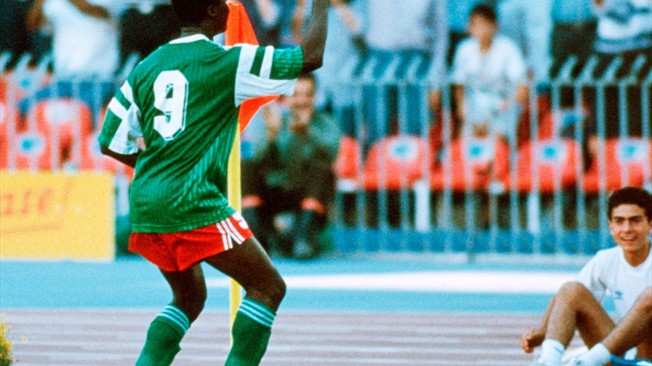
milla

Football wise, the book captured a time before the total and complete globalisation of the game/world.  Local attitudes and cultures could still impact the way the game was played more than today.  Society wise, he in particular captured the new era of independence among many Eastern European countries.

Simply put it is a remarkable book that captures the essence of what football means in many different parts of the world.  Its a book of its time and place that tantalisingly introduces scores of topics that deserve (and many now have) books in their own right.  Hard to believe that when Kuper was in Barcelona there hadn’t been a serious work published about the club in 20 years – now I plan to do a post on the 7 or 8 books on FC Barcelona I’ve read myself!

For those interested in more background, Kuper recounts the making of, and the initial reaction to, the book excellently in a podcast interview for “Between the Lines” podcast which is well worth checking out.

10 outta 10

barcelona-fined-catalan-flags-champions-league-final-1437725969-800

And here’s 12 I prepared earlier

Before starting this blog, I very occasionally reviewed books on Goodreads.  This post captures 12 long ago, and in many cases forgotten, musings on a wide selection of sports books.  Some of these are in the re-read pile and will get a fuller, updated review when I get to enjoy them again.  These 12 cover a range of topics including: Boxing’s 4 Kings, Brazilian and German football, Irish cycling and drugs in sport.
Ringside.jpg    Drama     fifa.jpg  brazil

1) ‘A Ringside Affair: Boxing’s Last Golden Age’ by James Lawton

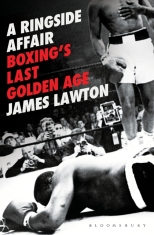
A Ringside Affair is a love letter to boxing from one of the UK’s great sportswriters. Each chapter covers one of the great fights or fighters that Lawton had the immense pleasure of witnessing throughout his career. It’s clear that the era of the Four Kings
(Leonard, Hearns, Hagler and Duran) stands out as the golden age of the title, but it’s the career of Iron Mike Tyson which clearly shines through in the book. Lawton’s admiration for young Tyson’s talent is only topped by his disappointment at the Tyson’s eventual troubles and crimes.

Lawton’s accounts really bring the fights to life as well as placing them clearly in their time and place. His passion and love for the sport shines through. Its a work of remembrance and of celebration as Lawton reflects on his career.

For all fight fans the book is a fantastic summary of 30 years of top level boxing. It’s excellently written and will make you want to pull out the you tube videos and track down the great boxing books.  I highly recommend it.

2) ‘Drama in the Bahamas’ by Dave Hannigan

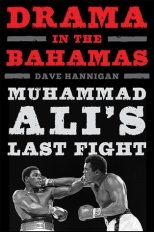
An entertaining and in-depth look at Ali’s last fight and the sad spectacle it was. The book is best enjoyed by someone well versed in Ali’s life story – it paints some characters a bit too thinly for anyone coming to Ali;s story without a reasonable knowledge of the cast of characters that surrounded the Champ.

Hannigan paints a picture of an Ali who is his own worst enemy.  It is apparent that there is no is villain guiding Ali to fight one last time. It really appears to be Ali himself and his own desire for attention and love that motivates him to take one more totally unnecessary and disproportionate risk.

Like all Hannigan’s work, it’s an enjoyable read and a welcome addition to the library of Ali books.

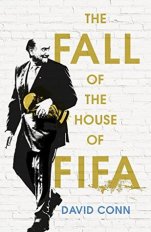
3) ‘The Fall of the House of Fifa: The Multimillion-Dollar Corruption at the Heart of Global Soccer’ by David Conn

I greatly enjoyed this book on FIFA’s troubled history. Its extensively researched and well written. As a follower of David’s writing in the Guardian the book lives up to expectations.

Its a sad reminder of the scale of corruption and the breath of individuals involved. Blatter emerges as not quite the villain but rather the enabler and master politician. There is plenty of new material even for those following FIFA closely, especially a fascinating interview with a post retirement Blatter.

The only criticism is that it is a bit too detailed at times. Sometimes the narrative could be shortened and there is a bit of repetition at times.

All in all its a highly recommend for anyone interest in football politics or just good journalism.

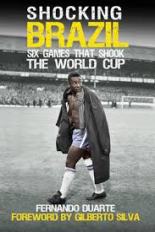
4) ‘Shocking Brazil: Six Games That Shook the World Cup’ by Fernando Duarte

Very enjoyable history of Brazilian football. Examining the most successful team in history by focusing on their lowest moments, Durate paints a convincing narrative of the impact each of these games had on shaping the team.

One of many books to come out in the lead up to the Brazil World Cup, Durate captured a lessor seen angle of the 5 times champions.   Considering that the worst defeat of all was yet to come – who will ever forget that 7 – 1 – its a timely book and one that will remain relevant as Brazil try to rise again in Russia.

The writer is also a very entertaining journalist and great as a guest on football podcasts.
Das reboot   Match  vol  nowehere

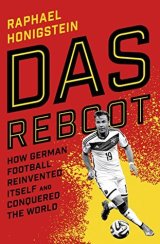
5) ‘Das Reboot: How German Football Reinvented Itself and Conquered the World’ by Raphael Honigstein

A really enjoyable read with great insight into the rise and rise of German football.  At times the narrative jumps between time periods and between the national team and domestic games in a confusing manner.   A good companion piece to ‘Tor! The Story of German Football’ by Ulrich Hesse to complete the picture of how the world champions became the world champions.

6)’Matchdays: The Hidden Story of the Bundesliga’ by Ronald Reng

Ronald Reng is the author of the heart-breaking, beautiful book ‘A Life Too Short’ about the late Robert Enke.

His second book to be translated to English, Matchdays, is a biography of Heinz Hoher – a real journeyman of German football – a bit of a Wes Hoolihan as a player (talented but often stuck as a flair player in second division) and a bit of an Alan Pardew as a manager (decent at bottom half/middle table teams) but a complete ****.  Hoher is quite the character – quitting jobs on a whim, drinking to the point of collapsing on first day of a new job, just missing out on Dortmund job to Hitzfeld.

Reng uses Hoher’s story to tell the story of the Bundesliga from its inception in the 60’s to current day – how it has changed and how the German public’s attitude towards it evolved.

All round an enjoyable, if slightly overlong, read.  The style takes a bit of getting use to – although I’m not sure if it that is the author’s style or a result of the translation.

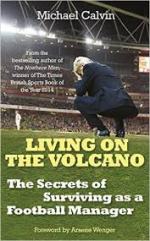
7) ‘Living on the Volcano: The Secrets of Surviving as a Football Manager’ by Michael Calvin

Michael Calvin is modern footballer’s great chronicler.  He examines the less beautiful side of English football shining a light on the real life experiences of those who live and breath the game.  Living on the Volcano focuses on the stresses of football management – showing the cost, the emotion and the real lived experience of managers at almost every level of the game.  It is an interesting and enjoyable read that offers a unique perspective of the job we all love to try on a computer game.

The book does suffer from Calvin at times being a bit too close to some of the subjects.  Its hard not to get the sense that he lets the fact he grows to like many of his interviewees/subjects as people get in the way of his objectivity as a football journalist.

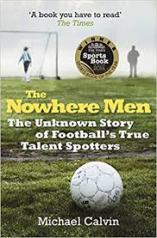
8) ‘The Nowhere Men’ by Michael Calvin

Before data, analytics and youtube, talent needed to be scouted. Calvin’s book offers a fascinating insight into the enclosed world of football scouts in the UK

It chronicles a profession teetering on the edge – slowly being replaced by technology (and those who use it) yet a profession that continues to prove that data alone can’t tell you everything.

Above all, the love of football some of the scouts who work for mileage only is amazing, inspiring and heart-breaking all at the same time.
roche   Race   Running with Fire   Nike

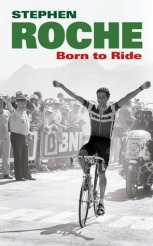
9) ‘Born to Ride’ by Stephen Roche

Very interesting and enjoyable book. A chronicle of a time when Irish cyclists ruled the world.  Roche really was some rider had an incredible career and I wish I had been older in 1987 to have been swept up in the Roche/Kelly era.  Roche’s book is well worth a read for any cycling fan.

As with all cycling books, the issue of drugs hangs over every story like a bad smell.  Roche does at least address the drugs controversy which emerged after he retired.  His position is not entirely convincing and it is very hard not to believe his accusers.  Roche may have been part of the problem, and is definitely not willing to be part of the solution, but his achievements should not be underesimated.  If he was clean, its doubtful there has ever been a greater Irish sportsman.

Hunger by Sean Kelly is a very good companion book to give Kelly’s perspective of days that Irish cycling will never see again.

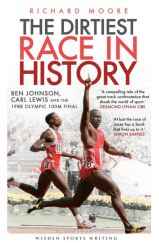
10) ‘The Dirtiest Race in History’ by Richard Moore

Moore is better known as a cycling journalist and writer.  Here, he moves away from cycling to the other sport dominated by drugs.  He crafts the story of the 1988 Olympic 100m final where Ben Johnson smashed the world record then dramatically failed a drug test.  Will there ever be another Olympic final where so many competitors had their legacies tarnished as the testers caught up with the cheats?

The book provides an in-depth look at Johnson’s rivalry with Carl Lewis and both of their journey’s to Seoul.  Johnson’s assertion that, while he was on lots of drugs, he never actually took the drug that the test found creates a bizarre and intriguing story.

It is well written, well researched and entertaining.  It provides an interesting look at drugs in sport in general – although Moore’s eagerness to believe in Team Sky over the years totally unfairly taints his comments on drugs in sport in my eyes.   Highly recommend.

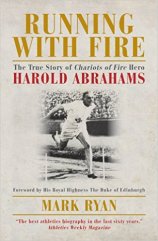
11) ‘Running with Fire: The True Story of Harold Abrahams’ by Manterrk Ryan 

Very enjoyable biography of the 100m Olympic gold medalist and legend of athletics officialdom. Charts the prejudice he faced for being Jewish, his fantastic athletic career and even more successful (and interesting) administration career after he retired.

A must read for any fans of Chariots of Fire.

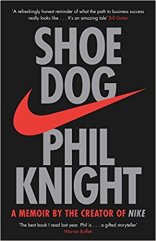
12) ‘Shoe Dog’ by Phil Knight.

Every long lasting company needs its origin myth.  What is unusual is the founder telling his story so long after the fact. Shoe Dog is both a sports book and a business book.  It is much better than I would have expected.

Knight tells the story of the founding of Nike and its early years before it broke into the big time.  It ticks the usual boxes of near disaster, dramatic recovery and eventually incredible growth.

What becomes clear is that for Knight, the early years are where is heart remains. It is a loving reflection on the days before he became a bazillionaire and a love letter to Steve Prefontaine.

I would have liked it to go a little further and look at the signing of Jordan and the groundbreaking nature of that change for Nike and for sport.

Bowerman and the Men of Oregon by Kenny Moore is a great companion piece to round out the story of the technical genius that combined with Knight’s business brain to change the sporting world.



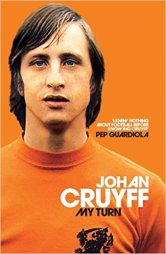
‘My Turn’ by Johan Cruyff (2016)

Cruyff was a genius who played a huge role in reinventing football both as a player and a coach. His death rightly prompted a wave of remembrance and reflection on his achievements.

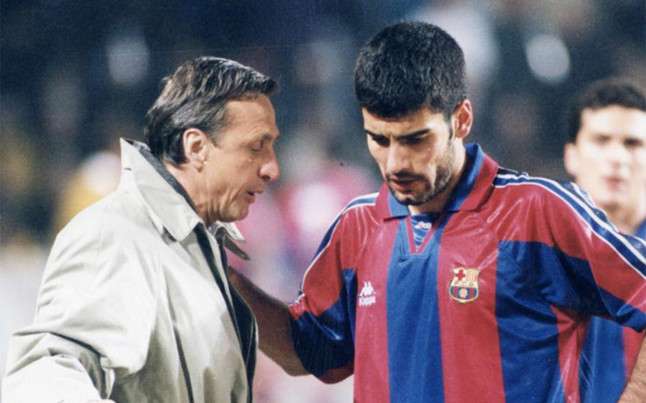
I was too young to see Cruyff play, or to really remember his greatest teams as a coach.  But his influence has loomed large over my football watching – none more so than Pep Guardiola’s magnificent career at Barca, Bayern and Man City.   In the 90’s Eurosport used to show replays of the best World Cup matches from the 70’s and 80’s with modern commentators acting as if the game was live, yet the players had somehow lived another 20 years. Can’t beat lines like “What will Cruyff do next, oh what a pass, it is such a shame that he doesn’t play in the next World Cup”.

One the first great football books I read was Ajax, Barcelona, Cruyff by Frits-Barend and Henk Van Dorp.  This unusual, intriguing book is the closest we have come to a footballing biography / autobiography of Cruyff before My Turn.  Indeed my early football reading was heavily Dutch/Ajax/Cruyff influenced with Simon Kuper’s Ajax, the Dutch, the War and David Winner’s Brilliant Orange also among the books I read in my late teens/early 20’s – all three books deserve a reread and a separate blog post.   I also have a keen picture of Cruyff from the various Barcelona books I’ve read over the years, none more so than the excellent Barca: A People’s Passion by Jimmy Burns.  What is clear is that almost everyone reading My Turn will have a preconceived notion of Cruyff – brilliant, arrogant, temperamental, power hungry and lots lots more.

cruyff

What is clear is that My Turn could not have been written at any other time in Cruyff’s life.  It is inevitable that his diagnosis with lung cancer led to a period of reflection and consideration of his life’s work.   This book is not a typical footballer’s autobiography.  The book seems to reflect what was on Cruyff’s mind in the years before he died, with more space given over to both the politicking behind the scenes at Ajax from 2010 to 2015 and to Cruyff’s general worldview than is given to the great Ajax side that won 3 European Cups.

His childhood is very much the story of his relationship with Ajax and the many surrogate fathers he found along the way.  He dwells very little on the key matches or moments of his playing career – instead focusing on his relationship with his coaches – the legendary Rinus Michels and the equally important (to Cruyff) Jany Van Der Veen.

The various slights that have led Cruyff to abruptly depart both Barca and Ajax more than once are both covered.  While Cruyff recognises he can be difficult, it is clear Cruyff felt wronged on each occasion and still believes his own actions were the inevitable result of others actions.  He certainly had a sense of his own importance – but then many us are plenty arrogant without 1% of Cruyff’s achievements to back it up.

turn

His discussion on family is fairly limited – with a focus being on Jordi’s playing career and the impact Cruyff’s own moves had on his son – until the final chapter, but his relationship with his wife is clearly the most significant of his life.   At every point, Cruyff describes events through the prism of his relationships with others though  – Nunez at Barcelona, the board at Ajax, the directors at Washington Diplomats etc.

What shines through most of all is Cruyff’s vision of football.  I felt this was a bit lacking in the book until the last 50 pages when Total Football and how to play it is given the space it deserves.  Anyone who has watched Man City play this season (or Guardiola’s previous teams) will clearly recognise the template. His commitment to this style of play and his willingness to fall out with everyone when it is not achieved is somewhat endearing to me.  Having gone to an Ajax game in 2013 and nearly fallen asleep during a 0-0 draw, I certainty understand where he is coming from in his later discussions on the fall of the Ajax he knew and helped to build.

There are some great and slightly odd anecdotes throughout the book – from his desire to sign Cyril Regis at Ajax, to his involvement with the proposal to move Wimbledon to Dublin (as a peace initiative apparently!).

Part of the book is clearly Cruyff’s attempt to shape his legacy.  But is endearing is that to him the Cruyff Foundation is what counts – he shows less interest in reshaping the narrative of his career than I would have expected other than correcting ‘fake news’ as we would call it today.

Its a book that jumps from the story of a great footballer, to that of a great coach, to that of a celebrity searching for a legacy.  Overall, the book is an insight into the mind of one of arguably football’s greatest genius.  Like the man it probably gets too caught up in personality clashes – I’d have loved more detail on the three European Cup winning team – but is also singular in its vision.  In many ways, the book is Cruyff’s last call to action – play football and play it the right way.

Pep and Cruyff