‘Puskas on Puskas: The Life and Times of a Footballing Legend’ edited by Rogan Taylor and Klara Jamrich (1997)

“Virtually his entire playing career – over twenty years – was spent not just at the top, but at the very top of his profession.  He never stepped down from that summit.  And whatever he touched in the footballing world turned to gold”. 

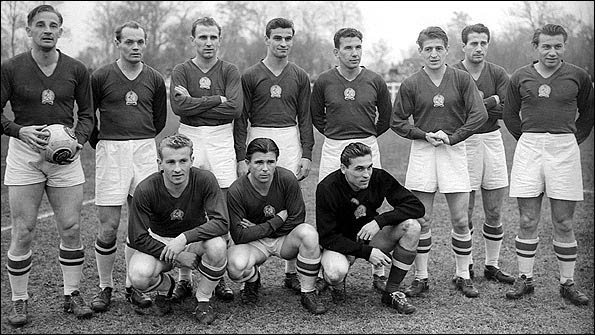
Ferenc Puskas sits alongside Alfredo di Stefano in being widely regarded as the best player in the pre-Pele football era.   His achievements were remarkable – as well as being a top player right up to his 40th birthday, he played in two of the most famous (non-World Cup) matches ever to take place on British soil, captained arguably the greatest international football team never to win a World Cup (Cruyff might have disagreed) and even coached Panathinaikos to the European Cup final. Add in 83 goals in 84 internationals, an Olympic gold medal and the fact that the FIFA Goal of the Season award is named after him, and you get some sense of his accomplishments. puskas 1
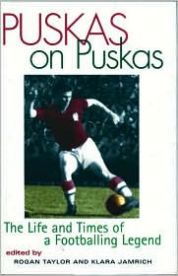
Puskas on Puskas is an oral history of Puskas’ career, told mainly in his own words.  Taylor and Jamrich supplement Puskas’ own memories with those of his contemporaries – players, coaches, administrators, and journalists.  These reflections are supplemented by the editors providing an overview of the times Puskas lived and played in.  It’s an interesting and informative approach to telling the story of Puskas, the Golden Squad and Hungary under Communist rule.

Puskas comes across as a lively, charming and determined figure. Away from football Puskas was a master smuggler, political rebel and not afraid to speak his mind. On the field he was not just a world-class player but also a charismatic leader, a committed team-mate and a tactical innovator.

Puskas starred in some of the most famous matches in history beginning with the England-Hungary 6-3 match of 1953 that is often (wrongly) portrayed as England’s first ever defeat on home soil (that honour goes to Ireland following a 2-0 win in 1949).  He also played in the controversial 1954 World Cup final (the so-called Miracle of Berne) where West Germany improbably inflicted the only defeat Hungary would suffer over a 6 year period with some help from the British ref and linesman.  If that wasn’t enough for one man, he scored 4 goals in the famous 1960 European Cup final in Glasgow, which saw Real Madrid beat Eintract Frankfurt 7-3 to win their 5th straight European Cup.
hungary

The book, brings to life not only the achievements of the players but also the tactical innovations of the Hungarian team and the challenges of the totalitarian regime that controlled the country.  Puskas recognised and exploited the power he had, certainly before the 1954 World Cup, in a team which the Communist authorities were eager to use to demonstrate the superiority of the “Socialist Man”

There a few hints that we don’t see every side of the man – certainly some of the British players interviewed suggest he may have had a wandering eye.  But the book doesn’t claim to be a comprehensive biography – rather is an oral history told mostly in the great man’s own words.

What makes the book a real treasure is the lack of other English language comprehensive books on Puskas – Taylor and Jamrich did a superb job in capturing the great man’s memories and using them to pull together an entertaining, informative book that is a fantastic read.
puskas-hung_59cs-8b5e-1347606340

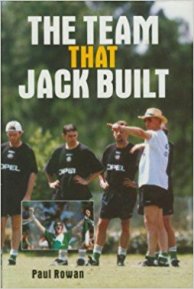
‘The Team That Jack Built’ by Paul Rowan (1994)

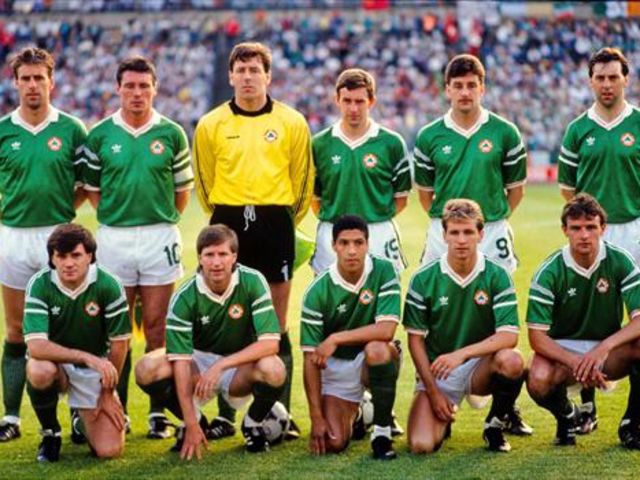
The Team That Jack Built was first published in 1994 shortly following Ireland’s second appearance in the World Cup finals – a level Ireland have only once returned to.

This isn’t a book about Ireland’s performances in the three major tournaments that the team played during Jack Charlton’s reign.  Indeed, the actual games at Euro 88 are covered in less than a page. Instead is about the how – how did Ireland go from nearly-rans to qualifying for back to back World Cups.  The book is all the better for the focus on the off-field aspects.  The team that jack

Rowan recounts the series of managers who had led the Irish team prior to Charlton’s appointment and this third of the book was really interesting for me as someone who was too young to remember any of the pre-Charlton era. Rowan also entertainingly details the backroom shenanigans in the FAI.  The constant jolies to Poland, the bizarre voting process and the battles with the players over money and endorsement rights.   Rowan paints a picture of the FAI that is not flattering and will be depressingly familiar to Irish fans of any era.

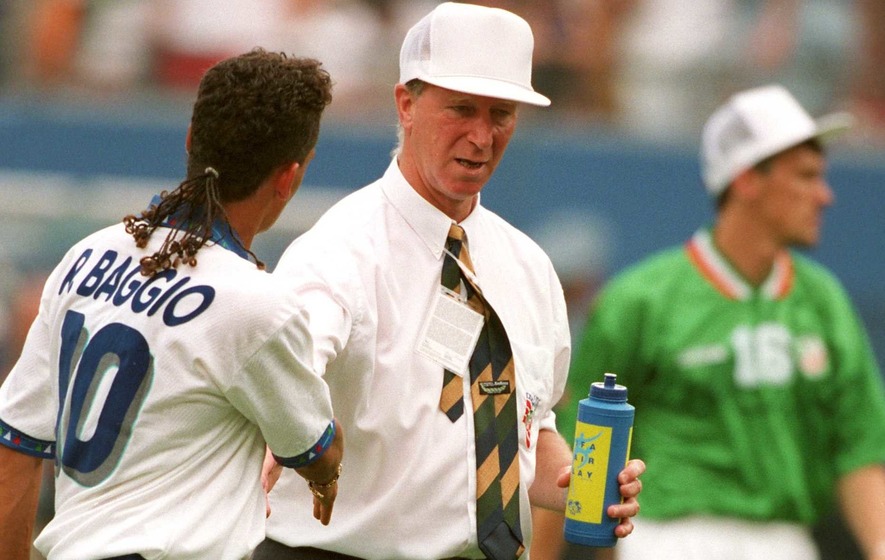
The highlight of the book is when Rowan lets Charlton describe his tactical approach in his own words – its a great, simple overview of the style which brought great success while boring the rest of the world.

eire

The main issue addressed in the book is FIFAs laws of eligibility -allowing non-Irish-born players to qualify for the Irish team because Ireland was the birthplace of a parent or grandparent.  Rowan addresses the conflicting views that Ireland had (and largely still has) about our relationship with the Brits and the Irish diaspora that identifies as both British and Irish.  He doesn’t come down on either side – but it is interesting to see how open many of the players were about England being their first choice.  It remains a highly relevant issue when we see players like Jack Grealish switch back to England, and fans fretting over whether Declan Rice would follow suit.

Overall, The Team That Jack Built is a hugely interesting, entertaining and well written account of the Irish football team in the 30 years leading up to 1994.  Its the off-field story of how a team built around the Irish diaspora came together under a charismatic manager to really shake ’em up.

jack3

‘Klopp: Bring the Noise’ by Raphael Honigstein (2017)

It’s always fascinated me how a manager’s character can shape the neutral fan’s perception of a football team.  Under previous Liverpool managers (especially Houlier) I found Liverpool quite dis-likable and certainly not a team I would root for.  Yet under Klopp its hard not to  have a soft spot for the free-flowing Liverpool team that plays in a manner

Klopp

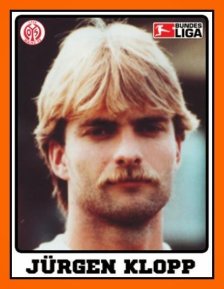
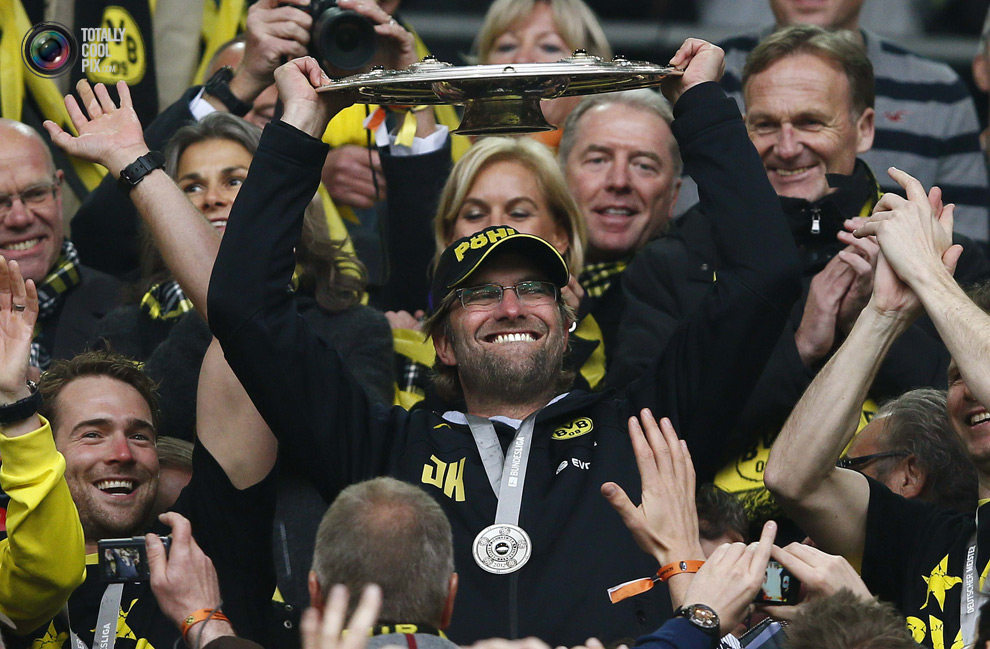
Klopp: Bring the Noise is a fun and detailed biography of the most charismatic manager in football – Jurgen “Kloppo” Klopp.  Honigstein details the key influences on Klopp’s career including his own limitations as a player and his one-time coach Wolfgang Frank.

Klopp comes across in the book in the same way he does on TV.  He clearly has a huge work ethic and builds a very  strong connection with his players.  The access that Honigstein had to so many people close to Klopp at different times of his life and career gives a great insight into his tactics and his management.

A clear pattern emerges – builds a fantastic team with meagre resources, performs well above expectations only to see a decline – either due to star players being headhunted or the rest of the league adopting his tactics.  It remains to be seen if his Liverpool team can compete in the Premier League and become more than a very good cup team.

I’m a big fan of Raphael Honigstein’s writing – in particular his book Das Reboot.  Like his other work, this book is well written, well researched and a very enjoyable read.

Klopp 2

There are a few areas in the book where more detail would have been interesting.  The section on the type of player Klopp looked to sign was very interesting but I would have like more detail on why certain players were signed – what was it about Lewandawski that made Dortmund pull the trigger for example when he was overlooked by other clubs?

I found the ordering of chapters a bit frustrating.  I understand what Honigstein was trying to achieve – linking his first days at each club together to enable the reader to make comparisons between his time at Mainz, Dortmund and Liverpool.  But for a reader not all that familiar with Klopp’s time at Mainz, the jumps back and forth were a bit disorientating.

Overall, I highly recommend this book for anyone interested in Klopp – and I can’t imagine why any football fan wouldn’t be interested in him!

klopp 3

‘Soccernomics – 2018 World Cup edition’ by Simon Kuper and Stefan Szymanski (2018)

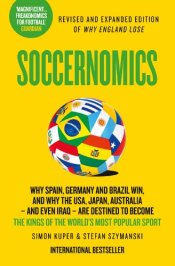
I read the first version of this book, then called Why England Lose, when it was first published and really enjoyed it.  The latest edition is even better. The authors avoided simply re-publishing the same old book, instead re-examining their conclusions and ensuring this edition is fresh and up to date.

soccernomics

The book is essentially Freakonomics applied to football, with some Moneyball thrown in.  The authors use statistics to disprove the prevailing wisdom on how football functions and how to be successful in the game. It covers a wide gambit of football related issues – ranging from how to play the transfer market well, what national teams overperform and how loyal fans really are.

The authors attempt to look globally in scope but the book focuses on European football largely because that is where the best data sources are found.  It is a long read and covers a huge amount of detail.  It is best enjoyed in chapter sized chunks to leave time to think about it rather than flying through and finding yourself overwhelmed in the detail.   Some chapters are better than others – discussions on which national team over performs got tiring, and felt like a repeat of the discussion on why England lose.  By contrast, the chapter on penalty shootouts and game theory was brilliant and insightful.

In particular, the book left me wanting to find a good book on the rise of Olympique Lyonnais and how they used clever transfers to dominate French football before the oil baron PSG took over.   The “wisdom of crowds” theory put forward in the book doesn’t really seem convincing to me as transfer committees at other clubs have been anything but successful. Any recommendations would be greatly welcome.

I enjoyed the book but in some ways I would hesitate to recommend it for everyone.  I’m not sure how much a non-nerdy fan would enjoy it.  It’s probably safe to say that if you think a “statistical look at football” sounds like fun, you’ll enjoy this book a lot.  Given its huge sales numbers there must be more of us football nerds out their than I thought!

‘Barça: The Making of the Greatest Team in the World’ by Graham Hunter (2012)

Graham Hunter will be well-known to most English-speaking football fans as one of an ever-growing number of English speaking journalists covering La Liga.   I’ve long been a fan and his more recent venture into long-form interview podcasts (The Big Interview) has been a great success.barca gh

I first read Barça: The Making of the Greatest Team in the World not long after it was published in 2012 and thoroughly enjoyed it.  Rereading it now, in light of how both the team and Guardiola have continued to progress provides an interesting new context. Both have remained very successful, but that extra spark that leads to Champions League success has been repeated only once by Barca but not yet by Guardiola.  Despite Barca’s continued La Liga success, Real Madrid’s 3 Champions League successes in 4 years puts the Catalan team firmly in second place.

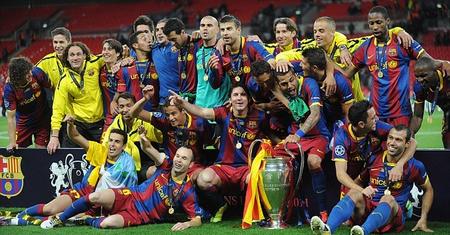
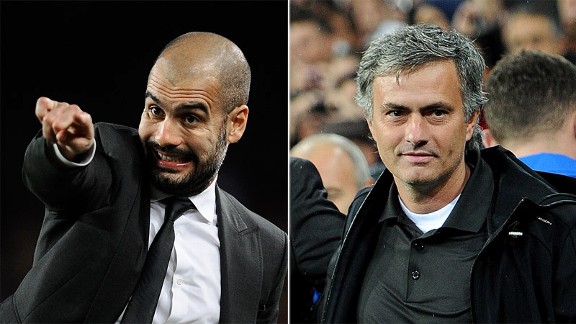
Hunter begins the book by focusing on the end of the 2010-2011 season when Clásico fever gripped us all as Barca squared off against Mourinho’s Real 4 times in a little over 2 weeks. At times those games felt like the battle for the soul of football – Guardiola’s possession game against Mourinho’s cynical counter attacking – as well as the latest battle in the war for ‘greatest player in the game’ between Messi & Ronaldo. Despite losing the Copa Del Rey final, Barca ultimately had the last laugh winning the La Liga and Champions League double.  Hunter paints a picture of the ultimate team at its peak and gives a great insight into Guardiola’s approach and the team’s mentality.

The following chapters weave entertainingly between mini-biographies of the key figures in this great Barca side (Messi, Xavi, Puyol etc), detailed retelling of Guardiola’s first 3 seasons, the political machinations behind the scenes, the Cruyffian origins of this team and Frank Rijkaard’s role in laying the groundwork.  Hunter includes his own experiences and interactions with the team and the players which adds an additional layer of insight.barca 2-11

Books about still active players and coaches always run the risk of being too sycophantic or shying away from controversy.  Hunter’s admiration for Pep and the players is obvious.   He is an unashamed supporter of Cruyff, Pep and Laporte (former Chairman).  While the book could have been more objective, this subjectivity does not feel like a major weakness – particularly as Hunter’s passion and knowledge gives credibility to his views.  Hunter does criticise the club hierarchy (both before and after Laporte) – the near failure to sign Messi, the war with Cruyff and more – but his discussion of the players is near universally positive. While I share Hunter’s admiration, I’m sure some Madrid fans would fine the praise over the top.

The book is full of interesting anecdotes and Hunter’s passion for his subject shines through.  It is a detailed, well-written and entertaining account of the greatest team modern football has seen.  Highly recommend for anyone who fondly remembers those 4 years when every Barca game was must see TV and you knew as it happened you were watching something very special.

soc_g_pep_jose_576

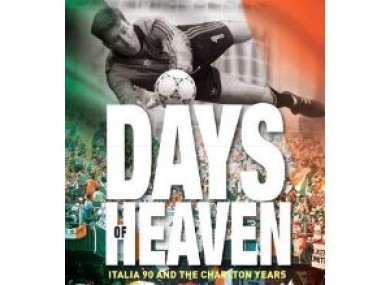
‘Days of Heaven: Italia 90 and the Charlton Years’ by Declan Lynch (2010)

“Look back on those days, on Euro 88 on Italia 90 and the rest of what we call the Charlton era, it certainly wasn’t about football.  It was an overwhelming combination of so many things, a journey the like of which we had never made before, and all we know for sure, is that very few of us made it entirely sober“.

I’m a huge fan of Declan Lynch’s writing.  I first read Days of Heaven not long after it came out in 2010 expecting a more standard telling of the Charlton era – an updated  version of Paul Rowan’s excellent Team That Jack Built. Instead, I found myself devouring an immensely well written look in the Irish psyche, our relationship with success, failure, alcohol and the world.  With some football in it.

doh

I was 6 during Italia 90, too young to fully grasp what has happening.  By the time USA 94 came around I was 10, and nothing had ever been as wonderful as that tournament.  I’m always amazed that anyone my age, or particularly slightly older, could have grown up in Ireland and not have an irrational obsession with the Irish international team.

So while I was too young to really remember the period Lynch writes about, the portrait of Irishness Lynch paints is instant recognisable to anyone who calls Ireland home.   Lynch looks into the soul of Irish people – and hits on home truths we all know, but maybe can’t or don’t want to admit.

Lynch evaluates the Celtic Tiger creation myth that Italia ’90 was the catalyst for Ireland’s emergence into the world and the boom era.  He recognises the role that failure, emigration and outsiders also had in our success.  In many ways, Lynch also extends the narrative to consider how Italia ’90 and the changes in Ireland at the time, also laid the seeds for the crash that would follow the Celtic Tiger.

As the book jacket says, Lynch considers the sporting, the social and the autobiographical as he paints a picture of a special time to be Irish and the lessons that time teaches us about ourselves.God

Alcohol plays a key part in the story – both in how it happened, and in how Lynch feels we should view it.  I’ve been reflecting on alcohol a lot of late and have given it up for 2018 to get a proper sense of when and why I would drink and the impact on my mental health. Lynch’s comments on alcohol really struck a chord with me.  Any look back on this period, or maybe any period, of modern Irish history would be incomplete without consideration of the role of alcohol.  Ultimately Lynch links the national drink problem with an immaturity as a country, the same immaturity to leads to bad political decision both on the part of politicians and the electorate.  Its a hard view to dispute.

Lynch captures so much of what it means to be an Ireland fan –  the dread, the worry, the hope and the brief unbelievable moments of joy.   He also captures the Ole Ole nature of away trips where its as much about the journey and the story as it is the football – although he is probably more critical of such jollies than I am.

Although I disagree with his lack of trust for those who identify as Ireland fans – you can love football without being overly attached to any one club side – for the most part Lynch is spot on in his observations – about our nation’s immaturity, our relationship with alcohol, and with our sense of ourselves in the world.

Overall, this a must read for any Irish sports fan or anyone seeking to understand how modern Ireland came to be.

ThePope

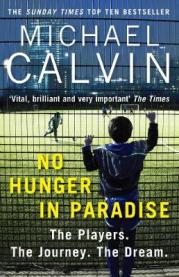
‘No Hunger in Paradise: The Players. The Journey. The Dream.’ by Michael Calvin (2017)

“It is impossible not to be struck by the sense of sadness, underpinned by anger.  The venality and vitriol of the senior game is a running sore, an open wound which seeps into youth football”.

Michael Calvin’s recent trilogy of books have established him as the great chronicler of modern British football.  He investigates the human stories of English football, shining a light on the real life experiences of those for whom the game is their actual or potential livelihood.

No Hunger in Paradise follows on from Living on the Volcano which focused on managers and The Nowhere Men which examined scouts.  This time it is youth football that is under the spotlight.

no hunger

This is an important book which shines a light on a system which fundamentally fails thousands of children.  Calvin interviews a wide range of people – from coaches and agents to parents and players.  Many of the chapters would make excellent stand alone stories – combined, they paint a depressing portrait of an industry in which children are seen as assets and often quickly discarded when they lose their perceived value.

Calvin, a very experienced journalist, is clearly a very talented interviewer who draws out the complexity of the stories of those he speaks to.  His own voice in the book is mainly one of empathy – its clear he cares passionately about the game and the people he meets.  Calvin also made a documentary with BT Sport based on his book which is well worth checking out.

The most striking fact presented is the young age at which players start to be recruited – Calvin repeatedly paints scenes that seem normal for adults or teenagers until he explains the players are 6 or 7 years old.  More than anything, if the book has a central thesis, its that this chasing of players at a younger and younger age is fundamentally wrong.

There is also an interesting contrast between old school and new school ways of thinking about youth coaching.  While better processes and procedures are undoubtedly important and necessary for safeguarding, you get a sense that Calvin and many of his interviewees feel the use of technology for technology’s sake hasn’t necessarily improved coaching outcomes.

While Calvin’s writing is very readable, this is not an easy read. Calvin constantly, rightly, reminds the reader of the problems in the game.  However, the book does focus on the good guys in a bad industry which gives some hope. Calvin highlights the good work done by many clubs, organisations and coaches who he sees as role models for how things could be improved across football.

At a time when there have been so much coverage of historic abuse within English football, reading this book you cannot help feeling that the football authorities in England have gotten their priorities all wrong.  Welfare must come first and outcomes second.   With the scale of money involved, its unlikely that message will be heard anytime soon.  Large scale change has proven possible when designed to improve the English national team – whether it could again prove possible to implement change designed to help those who ultimately don’t make the grade remains to be seen.

‘The Deal: Inside the World of a Super-Agent’ by Jon Smith & James Olley (2016)

“Is it wrong? By the law of the written word, yes. But questioning the morality of conducting deals in a certain way involving third parties or agents is a completely outmoded and backward way of thinking.”

Jon Smith is a self-described ‘Super Agent’ – a key figure in, and beneficiary of, the commercialisation of English, and global, football.  The Deal is part biography of Smith, part history of football’s commercialisation and part defence of the role of football agents.  It’s doubtful though whether it lives up to its sales pitch of being a “scintillating exposé” of how the football industry really functions.

the deal

The first few chapters operate almost as stand alone stories that could work better as magazine articles – an ill-fated trip to the Ukraine in an attempt to sell Sheffield Wednesday, a look behind-the-scenes on deadline day, a discussion of how agents generally operate and a justification of football agents and their “morality”.  These chapters contain interesting insights into how the business of football works, which is the real appeal of the book (and the reason I picked it up).  However, I get a very strong sense that the book only scratches the surface of what really goes on inside football.

These early chapters also include detailed, and repetitive attempts to justify the need for, and role of, agents.  Some of Smith’s views – particularly around structuring things in a tax efficient manner until Revenue shut them down or the need to make payoffs to players family and friends because it’s the “culture” – leave a bad taste in the mouth.  Obviously it would be totally naive to not expect this stuff to go on and it is admirable that Smith at least addresses the issue.  Lets just say I found his defence of plenty of the activities wholly unconvincing.

Like most businessmen, Smith is generally opposed to any piece of regulation he talks about, yet bemoans the fact that FIFA decided to step away and leave the industry largely unregulated (because it increased the competition presumably) – there is a definite sense of having his cake/5% and eating it too.

Jon-Smith-with-striker-Peter-Beardsley-celebrating-his-record

The rest of the book is mainly a biography of a very successful career in business – made glamorous by the connection to sport and entertainment.  Smith’s own life story is engaging – he struggled with his speech as a child and suffered personal tragedy while still in his 20s.  The stories of how he made his name with the England team and creative marketing are fascinating as are his ventures into other sports.  However, having come for an exposé on the business of sport, I was ultimately left a bit bored and unengaged in the rise and potential fall of a mutlimillionaire with a prizate zoo and homes around the world.

The best parts of the book contain  interesting insights into the business side of the game. As well as the first few chapters, these insights are sprinkled across the book. Smith discusses some well-known personalities and includes a lot of anecdotes about individual players and transfers.

Ultimately, the books biggest flaw is that it’s too much about the Super-Agent himself and not enough about the game.  Pretty quickly, Smith’s ego begins to grate – and its gets annoying reading about how successful and great Smith is.  There is a way of recounting how well you have done without quite saying it so baldly.  It’s understandable that any such book will exalt the author’s successes but often it feels like the line between telling and boasting is crossed.  Then again, if I had been Maradona’s agent and achieved nothing else in life I’d probably have no shortage of ego!

Overall The Deal suffers from trying to be too much in one.  It does contain an interesting behind the scenes look at the business side of professional football.  Smith has had a very interesting career and football fans will find much of the book enjoyable.   It has its flaws, but is a decent, if overlong, read.

Maradona_vs_england

‘Football Against the Enemy’ by Simon Kuper (1994)

Simon Kuper once got me a job.  I’ve never met him and he doesn’t knew who I am.  His move from sports writing to general pontificating for the Financial Times, however, saved me when I lied in a job interview about reading the FT everyday and was challenged to name my favourite FT writer.  My knowledge of obscure new FT columnists, I was told afterwards, apparently proved my keen interest in financial news and pushed me over the competitors.

But before he was an esteemed columnist, Simon Kuper was a backpacking globe-trotter in his early twenties who managed to write a classic sports book along the way.  Football Against the Enemy is regularly cited on lists of greatest sports books of all time.  It fully deserves the praise.

Kuper

Kuper traveled around the world on a shoestring budget meeting football people of all stripes and sizes.  From players and managers, to club officials and ordinary fans, Kuper unearths a story in each country that says something profound about the way football influences that society and how that society influences its football.

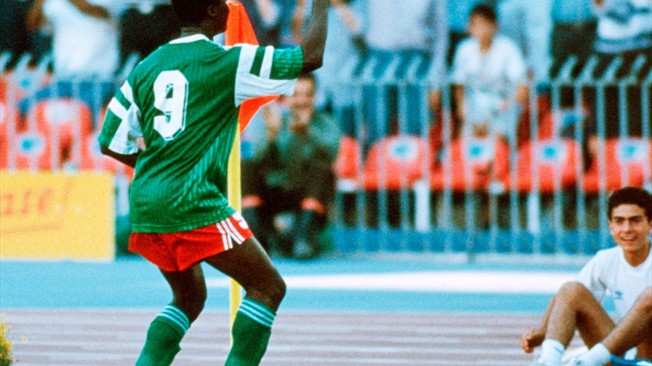
Written in the early 90’s he book captures a very particular time, both in football and in politics.  I first read Football Against the Enemy a couple of years after it came out when I was 13 years old.  It blew my mind.  It introduced me to a wider football world I really barely new existed – Barcelona as a symbol for Catalonian independence, that clubs called Dynamo all had KGB connections, and so so much more.  The scope of the book is incredible, with 22 chapters covering countries across the globe.

Re-reading it this week, it shocks me just how much impact this book had on my sports reading over the years.  It opened my eyes to sport as sociology, politics and history.  It is probably impossible for me to give an objective review of this book, and I don’t want to do that.  I mainly want to express my love for it, the feeling of discovery it gave me and my joy at reading so many of the books it clearly inspired.

milla

Football wise, the book captured a time before the total and complete globalisation of the game/world.  Local attitudes and cultures could still impact the way the game was played more than today.  Society wise, he in particular captured the new era of independence among many Eastern European countries.

Simply put it is a remarkable book that captures the essence of what football means in many different parts of the world.  Its a book of its time and place that tantalisingly introduces scores of topics that deserve (and many now have) books in their own right.  Hard to believe that when Kuper was in Barcelona there hadn’t been a serious work published about the club in 20 years – now I plan to do a post on the 7 or 8 books on FC Barcelona I’ve read myself!

For those interested in more background, Kuper recounts the making of, and the initial reaction to, the book excellently in a podcast interview for “Between the Lines” podcast which is well worth checking out.

10 outta 10

barcelona-fined-catalan-flags-champions-league-final-1437725969-800

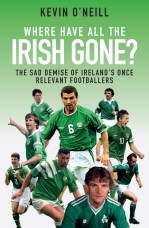
‘Where have all the Irish gone? The sad demise of Ireland’s once relevant footballers’ by Kevin O’Neill (2017)

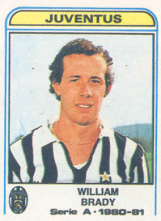
It goes without question that no player on the current Irish national football team are likely to get signed by Juventus or Inter Milan. Or earn the nickname ‘God’ at a club that has won the European Cup. Or even smash the British transfer record.

Kevin O’Neill’s book, Where have all the Irish gone? The sad demise of Ireland’s once relevant footballers, starts with the important (to Irish football fans) question of why this is the case? Why do we not have players like Liam Brady, Robbie Keane, Paul McGrath, or Roy Keane?

Irish.jpg

O’Neill appears to be very similar to me – Ireland fan, child of the 80’s, who spends too much time thinking about the Ireland team. At times O’Neill is a bit too much like me in that passion may cloud serious analysis.

The answers to the central question – more competition in the Premier League and the total lack of investment in the Irish game/coaches aren’t rocket science but each is discussed in detail.

O’Neill could have done with better editing. The first few chapters jump around from diagnosing the causes of the problem to reliving the glorious past. The book jumps too much – with Liam Brady’s career, for example, talked about in two completely different segments. While parts of the nostalgia trip are enjoyable, it feels a bit too much like reading the wikipedia entries on the careers of Keane, Quinn etc. The chapters are reasonably long and paragraphs flow into each other in a way that jars. A few breaks for new segments would have helped put some structure on what can be a slightly rambling narrative.

brady2.png

The book is at its best in Chapter 3 and 4 when O’Neill interviews a series of people connected to the game who don’t normally get the spotlight shined on them – players who never made it and youth coaches in particular. These chapters add genuine insight in to the challenges for young Irish players and are the best part of the book.

When O’Neill turns his gaze to the FAI and the structures to improve the game, he makes a reasonably simple diagnosis – bring back Brian Kerr (most successful underage manager in our history and a man steeped in the Irish game). However, he then doesn’t point out anything that the man in the job, the wonderfully named Ruud Docktor, is actually doing wrong. It seems O’Neill would just feel more confident if Kerr had the job. While I agree its a disgrace that Kerr is not involved in some capacity with the FAI, I think its a bit too simplistic to point to him as such a major part of any solution. The comparisons to Iceland and Belgium are justified however.

kerr

The book turns to wistful nostalgia of days gone by – when kids played ball on the streets (is it better to be poor but have better footballers to cheer on?). O’Neill talks about some of the great South American players as examples of how street football (poverty?) helps create great players. In reality though, it should probably be pointed out that a continent with more than 400 million people where football is a very popular sport is likely to produce 100 great players for every 1 Irish star.

O’Neill’s passion for Irish football is evident and his worries are genuine. The book gives a good insight into the lives of those who made it and those who didn’t. It doesn’t offer too much in terms of where we should go (beyond Kerr and summer football) – its instead a realistic chronicling of the woes rather than much of a diagnosis for where to go from here.

The interviews in the book capturing many previous unheard voices make it a welcome addition to the library of football books in Ireland. However, I can’t help feeling there is a better book in there waiting to get out.

Brady