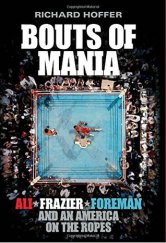
‘Bouts of Mania: Ali, Frazier, Foreman and an America on the Ropes’ by Richard Hoffer (2014)

“The luck of having these three fighters in one place at one time is undeserved, of course.  Any one of them – Muhammad Ali, Joe Frazier or George Foreman – should have been bonanza enough.  But all three? Together? Just then? Well, now we have the makings of a book”.

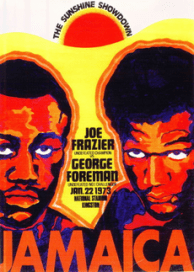
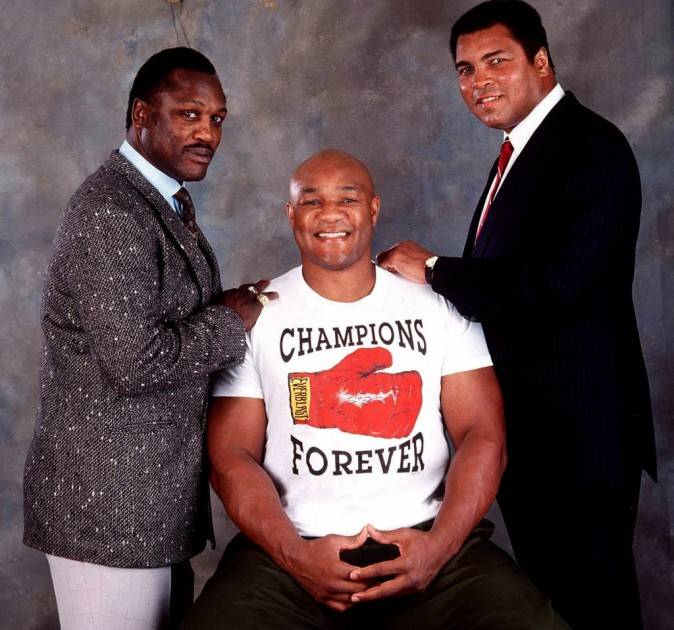
Bouts of Mania by Richard Hoffer examines the Golden Age of heavyweight boxing – the period from 1970 to 1975. Ali was on the comeback trail and Joe Frazier and George Foreman were ready to stake their claim for the title.  Hoffer places these 3 boxers, and their 5 great fights, at the centre of American life during an incredibly turbulent period.

bouts

Ali overshadows everything else in the book – which is only fitting as Ali overshadowed everything he ever came into contact with. As the public mood turned against Vietnam, Ali, previously public enemy no. 1, became a hero for large swaths of the American public.  Always a star, he became a cultural icon of his generation.   While becoming major celebrities in their own right, Foreman and Frazier’s boxing careers would (at least until Foreman’s comeback in his 40’s) be largely defined by their fights with Ali.

The book’s cover compares Hoffer’s work to King of the World by David Remnick – a bold claim, but one that isn’t too far wide of the mark.  Bouts of Mania benefits from its narrow focus. It touches on the need for entertainment at a time of national decline (in the US) but doesn’t overly dwell on, or try to force, linkages between the fighters and their time.  Knowledge of Ali’s backstory is largely assumed, with the backstories of Frazier and Foreman expertly weaved through the narratives of the 5 fights.

A clear difficulty for Hoffer, writing around 40 years after the main events in the book took place, was that so many of the protaganists are no longer with us.  This meant his interview list was much shorter than would have been the case for books written in the 90’s and 2000’s on these fighters.  I suspect this limitation contributed to a greater emphasis on Foreman, who he could interview, and this is a real strength of the book.  The image of the menacing young Foreman racked with self-doubt is fascinating as is the contrast between Foreman then and the more lovable Foreman of later years.  There were some avoidable minor factual errors (like claiming Ali fought a hometown favourite when in Dublin) but these are few and far between.

Frazier_vs_Foreman

Hoffer is more critical of Ali than many writers – with a lot of focus on how he mistreated Fraizer.  This is no bad thing as it is easy to overlook the troubling side of Ali’s behaviour.  Hoffer’s description of how America felt about Ali at the time of the Atlanta Olympics is very interesting – it’s the first moment I remember being exposed to Ali aged 12 and being bemused by the exceptional level of sentiment.  Hoffer captures perfectly the sense of people in some ways rediscovering their affection for (as opposed to fascination with) Ali at a time when he had become as much legend as a real person.

Bout of Mania is written in a fast paced, engaging and entertaining style.  It captures the tension and excitement of the fights and the strange atmospheres as the Ali carnival hit countries of all types.  Hoffer paints a vivid and memorable picture of the fighters as well as the context in which they fought.

Overall this is a very enjoyable read and a welcome addition to the ever growing library of books that centre around The Greatest.  It seeks to give some much deserved attention to the legacies of Foreman and Frazier, without whom Ali’s greatest days could never have happened.

3 kings


‘No Hunger in Paradise: The Players. The Journey. The Dream.’ by Michael Calvin (2017)

“It is impossible not to be struck by the sense of sadness, underpinned by anger.  The venality and vitriol of the senior game is a running sore, an open wound which seeps into youth football”.

Michael Calvin’s recent trilogy of books have established him as the great chronicler of modern British football.  He investigates the human stories of English football, shining a light on the real life experiences of those for whom the game is their actual or potential livelihood.

No Hunger in Paradise follows on from Living on the Volcano which focused on managers and The Nowhere Men which examined scouts.  This time it is youth football that is under the spotlight.

no hunger

This is an important book which shines a light on a system which fundamentally fails thousands of children.  Calvin interviews a wide range of people – from coaches and agents to parents and players.  Many of the chapters would make excellent stand alone stories – combined, they paint a depressing portrait of an industry in which children are seen as assets and often quickly discarded when they lose their perceived value.

Calvin, a very experienced journalist, is clearly a very talented interviewer who draws out the complexity of the stories of those he speaks to.  His own voice in the book is mainly one of empathy – its clear he cares passionately about the game and the people he meets.  Calvin also made a documentary with BT Sport based on his book which is well worth checking out.

The most striking fact presented is the young age at which players start to be recruited – Calvin repeatedly paints scenes that seem normal for adults or teenagers until he explains the players are 6 or 7 years old.  More than anything, if the book has a central thesis, its that this chasing of players at a younger and younger age is fundamentally wrong.

There is also an interesting contrast between old school and new school ways of thinking about youth coaching.  While better processes and procedures are undoubtedly important and necessary for safeguarding, you get a sense that Calvin and many of his interviewees feel the use of technology for technology’s sake hasn’t necessarily improved coaching outcomes.

While Calvin’s writing is very readable, this is not an easy read. Calvin constantly, rightly, reminds the reader of the problems in the game.  However, the book does focus on the good guys in a bad industry which gives some hope. Calvin highlights the good work done by many clubs, organisations and coaches who he sees as role models for how things could be improved across football.

At a time when there have been so much coverage of historic abuse within English football, reading this book you cannot help feeling that the football authorities in England have gotten their priorities all wrong.  Welfare must come first and outcomes second.   With the scale of money involved, its unlikely that message will be heard anytime soon.  Large scale change has proven possible when designed to improve the English national team – whether it could again prove possible to implement change designed to help those who ultimately don’t make the grade remains to be seen.

‘The Deal: Inside the World of a Super-Agent’ by Jon Smith & James Olley (2016)

“Is it wrong? By the law of the written word, yes. But questioning the morality of conducting deals in a certain way involving third parties or agents is a completely outmoded and backward way of thinking.”

Jon Smith is a self-described ‘Super Agent’ – a key figure in, and beneficiary of, the commercialisation of English, and global, football.  The Deal is part biography of Smith, part history of football’s commercialisation and part defence of the role of football agents.  It’s doubtful though whether it lives up to its sales pitch of being a “scintillating exposé” of how the football industry really functions.

the deal

The first few chapters operate almost as stand alone stories that could work better as magazine articles – an ill-fated trip to the Ukraine in an attempt to sell Sheffield Wednesday, a look behind-the-scenes on deadline day, a discussion of how agents generally operate and a justification of football agents and their “morality”.  These chapters contain interesting insights into how the business of football works, which is the real appeal of the book (and the reason I picked it up).  However, I get a very strong sense that the book only scratches the surface of what really goes on inside football.

These early chapters also include detailed, and repetitive attempts to justify the need for, and role of, agents.  Some of Smith’s views – particularly around structuring things in a tax efficient manner until Revenue shut them down or the need to make payoffs to players family and friends because it’s the “culture” – leave a bad taste in the mouth.  Obviously it would be totally naive to not expect this stuff to go on and it is admirable that Smith at least addresses the issue.  Lets just say I found his defence of plenty of the activities wholly unconvincing.

Like most businessmen, Smith is generally opposed to any piece of regulation he talks about, yet bemoans the fact that FIFA decided to step away and leave the industry largely unregulated (because it increased the competition presumably) – there is a definite sense of having his cake/5% and eating it too.

Jon-Smith-with-striker-Peter-Beardsley-celebrating-his-record

The rest of the book is mainly a biography of a very successful career in business – made glamorous by the connection to sport and entertainment.  Smith’s own life story is engaging – he struggled with his speech as a child and suffered personal tragedy while still in his 20s.  The stories of how he made his name with the England team and creative marketing are fascinating as are his ventures into other sports.  However, having come for an exposé on the business of sport, I was ultimately left a bit bored and unengaged in the rise and potential fall of a mutlimillionaire with a prizate zoo and homes around the world.

The best parts of the book contain  interesting insights into the business side of the game. As well as the first few chapters, these insights are sprinkled across the book. Smith discusses some well-known personalities and includes a lot of anecdotes about individual players and transfers.

Ultimately, the books biggest flaw is that it’s too much about the Super-Agent himself and not enough about the game.  Pretty quickly, Smith’s ego begins to grate – and its gets annoying reading about how successful and great Smith is.  There is a way of recounting how well you have done without quite saying it so baldly.  It’s understandable that any such book will exalt the author’s successes but often it feels like the line between telling and boasting is crossed.  Then again, if I had been Maradona’s agent and achieved nothing else in life I’d probably have no shortage of ego!

Overall The Deal suffers from trying to be too much in one.  It does contain an interesting behind the scenes look at the business side of professional football.  Smith has had a very interesting career and football fans will find much of the book enjoyable.   It has its flaws, but is a decent, if overlong, read.

Maradona_vs_england

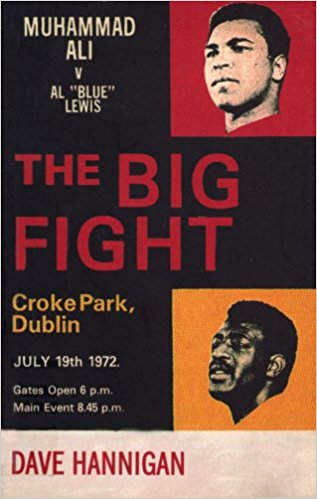
‘The Big Fight: Muhammad Ali v Al “Blue” Lewis’ by Dave Hannigan (2002)

“When you call somebody up to talk about their experience with Ali, whether fleeting or long-standing, you are asking them to revisit one of the genuinely epic moments from their own life” 

For nearly 20 years, Dave Hannigan has been Ireland’s sportswriter in residence in the United States.  First with the Sunday Tribune through to his ongoing America at Large column in the Irish Times, Hannigan’s articles are a must read for Irish sports fans (unless you’re a UFC or Conor McGregor fan in which case you probably won’t like him!)

big fight

Written in 2002, The Big Fight, chronicles a week that Muhammad Ali spent in Dublin and his fight with fight Al “Blue” Lewis in Croke Park in July 1972.  Hannigan tells the story of Ali in Ireland through the experiences of those who saw, met and interacted with him in Dublin.

At the time, Ali was on the comeback trail following his first fight, and loss, to Joe Frazier.  Given his long lay off while he refused to be drafted into the U.S. Army, it was unclear whether Ali would ever be the same fighter he once was.  He was still just 30 years of age however and it would turn out that his biggest days remained ahead of him.  He was, and would remain for a long time, the single biggest and best known figure in world sport.

The Big Fight captures the magic and charisma of Ali while also capturing some of the magic and uniqueness of Ireland. It is hard to imagine any figure capturing quite the same attention and affection that Ali did – perhaps only the reception achieved by another famous African-American with distant Irish heritage, Barack Obama, compares.

Some of the anecdotes are quintessentially Irish – thousands jumping the wall at the stadium to get into the fight free, old ladies inviting Ali in for cups of tea and the sheer excitement of any global celebrity being in little ole Dublin.  Ali took great delight in being invited to meet the Taoiseach, noting that Western countries usually didn’t invite him to meet the Prime Minister.

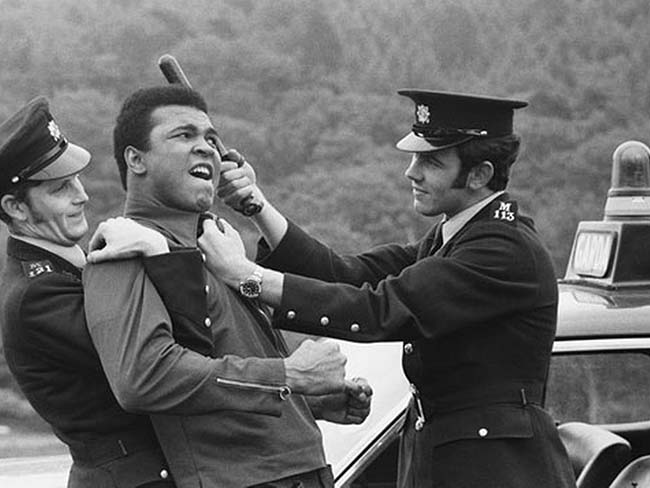
Ali Garda

This book is a joyous, uplifting and entertaining read.  It is full of fun and brilliant anecdotes that capture the people, the time and the place.  It’s surreal to imagine the most famous black man in the world walking through Dublin at a time when any scale of immigration was in the very distant future.  Hannigan captures a clear sense of a particular time in Dublin with the Troubles never far from anyone’s mind.

Those who spoke to Hannigan clearly cherished the memories of their interactions with Ali.  In particular, the book will make you want to seek out Paddy Monaghan’s own book – a London-born Irishman adopted into Ali’s entourage like so many other strays.  Hannigan also tells the fascinating stories of the promoters, Harold Conrod and Butty Sugrue, and Ali’s opponent in the fight, the reformed Al “Blue” Lewis whose own life story is fascinating.

There are some interesting thoughts on what impact Ireland may have had on Ali – did the love of an almost entirely white country help Ali to see that not all whites were “devils”?  Ali was clearly interested in the Troubles in Northern Ireland and the idea of the Irish as an oppressed people.  It couldn’t have hurt at least!

Hannigan recounts an interview Ali did on RTE One which captures Ali’s worldview at this time.  The entire interview is well worth checking out in the YouTube link below.

Ali interviewed on RTÉ

Over a decade later, Hannigan would revisit another Ali fight – his final fight – in Drama in the Bahamas (2016).  This later book is a grimmer, less joyful, tale that captures a fighter unable to say goodbye to the fame and adulation – that fame and adulation that is captured so well in The Big Fight which makes them an interesting pair of excellent books to read together.

The full Ali v Lewis fight is available on YouTube

‘The Education of a Coach’ by David Halberstam (2005)

It is a very rare gift to turn your hand from being a defining voice on foreign policy to writing truly great sports books.  Possibly as difficult as winning 5 Super Bowls. In terms of achieving their own personal greatness, Halberstam and Belichick make a perfect match.

Written in 2005, The Education of a Coach is not a simple biography of Belichick.  It is first and foremost a Halberstam book – it jumps around in time and place, it digs deep into his family history and contains chapters that would stand alone as superb and insightful magazine profile pieces.

education.jpg

The title is apt – Halberstam primarily seeks to understand how Belichick was formed as a coach.  Its a focus on a him as a person and coach with less discussion on the impact that Belichick had on the game of football than you might expect.

What emerges is a portrait of a singular man who wants to be the best coach he can be. He emerges very much as his father’s son, having begun his education at a young age at his father’s side. Steve Belichick was a legendary scout and coach who proved the perfect role-model for his son. As Halberstam himself notes, it is a book about two journeys; the Belichick family’s journey into the centre of American life after their arrival from Croatia and Belichick’s own journey to the top in the world of professional football.

Other key influences on Belichick were his friendships with fellow football obsessives, in particular his long time assistant coach Ernie Adams. Halberstam captures something that Belichick learned from each of the coaches he worked with. In particular, his complex relationship with Bill Parcells is analysed with the senior Bill emerging in my less favorable light.  The book only begins to look at his success at the Patriots in the final 2/3rd’s – as by then Belichick had learned the lessons that would help him achieve such great things.

It is a relatively short book – less ambitious in scope and length as Halberstam’s basketball masterpieces.  As with all of Halberstam’s books, it is superbly well written, incredibly easy to read and thoroughly enjoyable. It leaves with a real sense of a man  obsessed with his sport and destined to be successful.   Halberstam clearly likes his subject, but the book feels like a fair and honest telling of how Belichick became Belichick.

bill bel.jpg

It is hard to overstate the level of Belichick’s achievement.  Its rare the coach (or person) that merits a significant biography who then continues to achieve great things for more than 13 years after that biography was published.  In terms of seminal achievements, only Sir Alex Ferguson springs to mind.

There is another great book to be written capturing the greatness of what Belichick has ultimately achieved at the Patriots.  The Education of a Coach was published in 2005 after Belichick and the Patriots had won 3 Super Bowls in 4 years.  In an era where the sport was designed to prevent dynasties, the odds on the Patriots remaining at the top of their game post 2005 must have seemed low.  Yet, as we all know, Belichick would go on to reach 5 more Super Bowls (so far), winning 2 of them.  The Education of a Coach is a highly recommend starting point for anyone seeking to understand Belichick and the Patriots.

Any recommendations on later books on Belichick would be greatly appreciated. And if you enjoy this, do seek out all of Halberstram’s other great books.

super

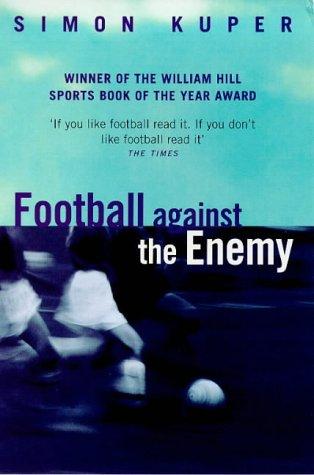
‘Football Against the Enemy’ by Simon Kuper (1994)

Simon Kuper once got me a job.  I’ve never met him and he doesn’t knew who I am.  His move from sports writing to general pontificating for the Financial Times, however, saved me when I lied in a job interview about reading the FT everyday and was challenged to name my favourite FT writer.  My knowledge of obscure new FT columnists, I was told afterwards, apparently proved my keen interest in financial news and pushed me over the competitors.

But before he was an esteemed columnist, Simon Kuper was a backpacking globe-trotter in his early twenties who managed to write a classic sports book along the way.  Football Against the Enemy is regularly cited on lists of greatest sports books of all time.  It fully deserves the praise.

Kuper

Kuper traveled around the world on a shoestring budget meeting football people of all stripes and sizes.  From players and managers, to club officials and ordinary fans, Kuper unearths a story in each country that says something profound about the way football influences that society and how that society influences its football.

Written in the early 90’s he book captures a very particular time, both in football and in politics.  I first read Football Against the Enemy a couple of years after it came out when I was 13 years old.  It blew my mind.  It introduced me to a wider football world I really barely new existed – Barcelona as a symbol for Catalonian independence, that clubs called Dynamo all had KGB connections, and so so much more.  The scope of the book is incredible, with 22 chapters covering countries across the globe.

Re-reading it this week, it shocks me just how much impact this book had on my sports reading over the years.  It opened my eyes to sport as sociology, politics and history.  It is probably impossible for me to give an objective review of this book, and I don’t want to do that.  I mainly want to express my love for it, the feeling of discovery it gave me and my joy at reading so many of the books it clearly inspired.

milla

Football wise, the book captured a time before the total and complete globalisation of the game/world.  Local attitudes and cultures could still impact the way the game was played more than today.  Society wise, he in particular captured the new era of independence among many Eastern European countries.

Simply put it is a remarkable book that captures the essence of what football means in many different parts of the world.  Its a book of its time and place that tantalisingly introduces scores of topics that deserve (and many now have) books in their own right.  Hard to believe that when Kuper was in Barcelona there hadn’t been a serious work published about the club in 20 years – now I plan to do a post on the 7 or 8 books on FC Barcelona I’ve read myself!

For those interested in more background, Kuper recounts the making of, and the initial reaction to, the book excellently in a podcast interview for “Between the Lines” podcast which is well worth checking out.

10 outta 10

barcelona-fined-catalan-flags-champions-league-final-1437725969-800

‘The Murder of Sonny Liston: A Story of Fame, Heroin, Boxing and Las Vegas’ by Shaun Assael (2016)

“As time passed, Sonny stayed in the conversation but not as an icon on his own. Eventually he became part of other people’s stories. He was the springboard for Ali, the model for Foreman, the guy who always scared (but not faced) Frazier”

Charles “Sonny” Liston was the 25th of 26 kids who grew up with no birth cert and no prospects.  Boxing became his escape, albeit temporarily, from a life of crime that saw him serve time in prison for assaulting a cop.  His career was dominated by  mob control and overshadowed almost entirely by the emergence of Ali, Foreman and Frazier.

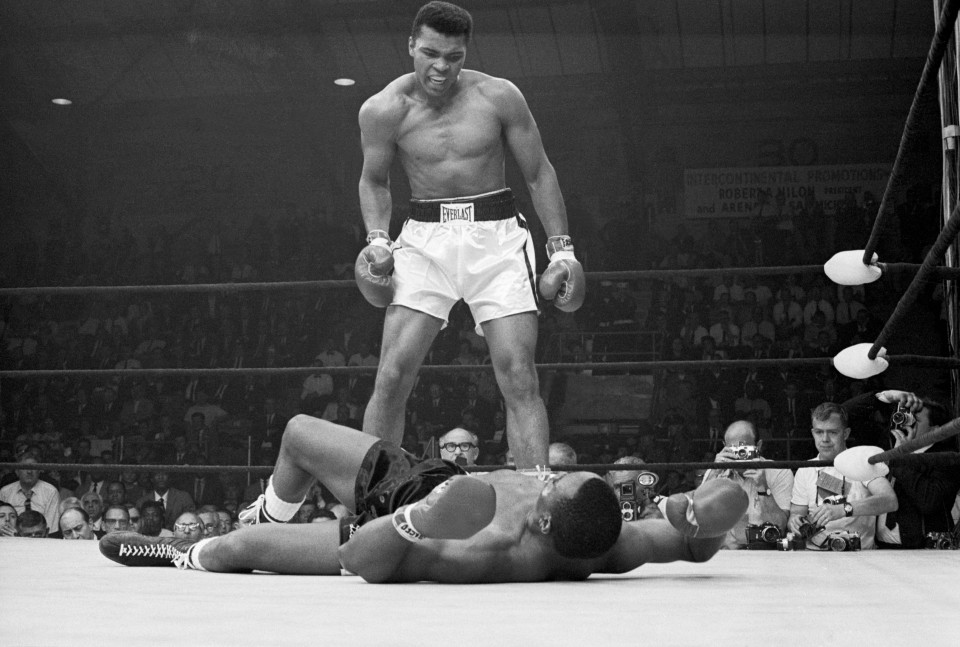
Liston is best know for two things – quitting on his chair in Ali-Liston 1, and being the guy on the canvas in the iconic photo of Ali from Ali-Liston 2. A life defined by defeats rather than the tale of a desperately poor, illiterate kid who became World Champion. A life defined by where he fits in the narrative of other, better remembered figures.

Sonny canvas

I was fascinated by Liston from the first time I saw the classic photo.  I grew more interested when I first read the wonderful King of the World by David Remnick. It led me to Night Train by Nick Tosches which I adored as a teenager for its dark moodiness (whether it holds up particularly well, I’m eager to find out).

Recently published, The Murder of Sonny Liston is part sports book, part true crime, part conspiracy theory.  It looks back at Liston’s life primarily through the time and place – Las Vegas in the early 1970s – of his final few years and the (potential) mystery surrounding his death. Las Vegas is as much the central character as Liston is and the two seem perfect for each other. Assael paints a picture of the various low level mobsters and the even more intriguing cops who tried to either stop them or join them. The book, partiularly the first third, oozes noir – the setting is dark, gritty with the smell of booze, sex and drugs almost wafting through the pages.

This is a mini biography of Liston with a bit about his childhood and more of a focus on the later years of his career – particularly post his fights with Ali. Reading this book without the Liston backstory might leave you a little short as to where he fits in to American life at the time. Assael covers the key points – his lack of a birth cert, his poor education, his status as the ‘bad guy’ morphing into the ‘not as bad as Ali guy” (for white America at least) “trouble-making black man”.  Liston’s mob connections are touched on but the book doesn’t get into detail on how Liston, and much of boxing, ended up controlled by mob.

This picture of Liston’s later years is depressing.  Yet in some ways, Liston had it better than many of his fellow retired prizefighters did. He had a nice house, a wife who tolerated his misdeeds, and he appeared to still have his faculties. He undoubtedly was cheated out of plenty of money, but he didn’t become a shambling wreck despite continuing to fight until he was nearly (probably) 50.

Sonny cover

Overall, The Murder of Sonny Liston, is an enjoyable and entertaining read which loses is way in the final third.  It works better when its about Liston and Vegas than when its about The Murder. There is more on Ali’s return to boxing post suspension than there needs to be, but its always entertaining to read about Ali.

Ultimately the book becomes more crime than sports orientated. As suggested by the title, it becomes more about a death than about a life. The speculation mounts as to whether Liston was actually murdered rather than died of natural causes. Assael builds an interesting but not totally convincing case and lays out the prime suspects.  There is no ‘aha’ moment, no realisation of overlooked evidence.  Just the grim reality that Liston appeared on an inevitable path towards a dark ending.

Some of the conspiracy theories are probably too readily accepted – I just don’t believe the Nation of Islam promised Liston a cut of Ali’s future fights if he threw their second bout.

By the end of the book, its hard not to feel that Assael is more interested in the cops and drug dealer tales from 70’s Vegas than he ever is in Sonny Liston. Even in a book about his death, Liston still becomes simply a part of other people’s stories.

liston ticket

And here’s 12 I prepared earlier

Before starting this blog, I very occasionally reviewed books on Goodreads.  This post captures 12 long ago, and in many cases forgotten, musings on a wide selection of sports books.  Some of these are in the re-read pile and will get a fuller, updated review when I get to enjoy them again.  These 12 cover a range of topics including: Boxing’s 4 Kings, Brazilian and German football, Irish cycling and drugs in sport.

Ringside.jpg    Drama     fifa.jpg  brazil

1) ‘A Ringside Affair: Boxing’s Last Golden Age’ by James Lawton

A Ringside Affair is a love letter to boxing from one of the UK’s great sportswriters. Each chapter covers one of the great fights or fighters that Lawton had the immense pleasure of witnessing throughout his career. It’s clear that the era of the Four Kings
(Leonard, Hearns, Hagler and Duran) stands out as the golden age of the title, but it’s the career of Iron Mike Tyson which clearly shines through in the book. Lawton’s admiration for young Tyson’s talent is only topped by his disappointment at the Tyson’s eventual troubles and crimes.

Lawton’s accounts really bring the fights to life as well as placing them clearly in their time and place. His passion and love for the sport shines through. Its a work of remembrance and of celebration as Lawton reflects on his career.

For all fight fans the book is a fantastic summary of 30 years of top level boxing. It’s excellently written and will make you want to pull out the you tube videos and track down the great boxing books.  I highly recommend it.

2) ‘Drama in the Bahamas’ by Dave Hannigan

An entertaining and in-depth look at Ali’s last fight and the sad spectacle it was. The book is best enjoyed by someone well versed in Ali’s life story – it paints some characters a bit too thinly for anyone coming to Ali;s story without a reasonable knowledge of the cast of characters that surrounded the Champ.

Hannigan paints a picture of an Ali who is his own worst enemy.  It is apparent that there is no is villain guiding Ali to fight one last time. It really appears to be Ali himself and his own desire for attention and love that motivates him to take one more totally unnecessary and disproportionate risk.

Like all Hannigan’s work, it’s an enjoyable read and a welcome addition to the library of Ali books.

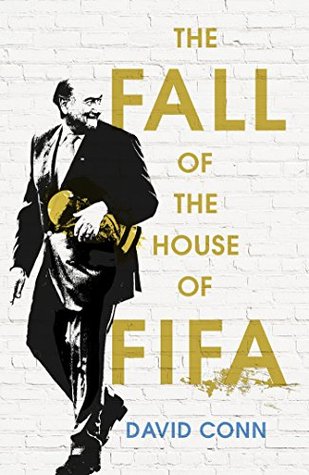
3) ‘The Fall of the House of Fifa: The Multimillion-Dollar Corruption at the Heart of Global Soccer’ by David Conn

I greatly enjoyed this book on FIFA’s troubled history. Its extensively researched and well written. As a follower of David’s writing in the Guardian the book lives up to expectations.

Its a sad reminder of the scale of corruption and the breath of individuals involved. Blatter emerges as not quite the villain but rather the enabler and master politician. There is plenty of new material even for those following FIFA closely, especially a fascinating interview with a post retirement Blatter.

The only criticism is that it is a bit too detailed at times. Sometimes the narrative could be shortened and there is a bit of repetition at times.

All in all its a highly recommend for anyone interest in football politics or just good journalism.

4) ‘Shocking Brazil: Six Games That Shook the World Cup’ by Fernando Duarte

Very enjoyable history of Brazilian football. Examining the most successful team in history by focusing on their lowest moments, Durate paints a convincing narrative of the impact each of these games had on shaping the team.

One of many books to come out in the lead up to the Brazil World Cup, Durate captured a lessor seen angle of the 5 times champions.   Considering that the worst defeat of all was yet to come – who will ever forget that 7 – 1 – its a timely book and one that will remain relevant as Brazil try to rise again in Russia.

The writer is also a very entertaining journalist and great as a guest on football podcasts.
Das reboot   Match  vol  nowehere

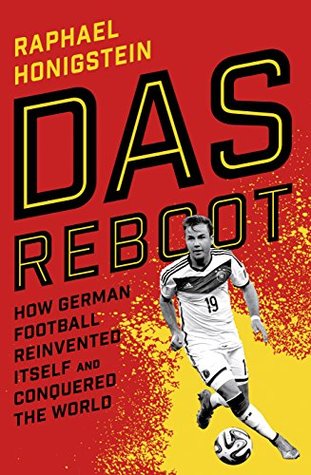
5) ‘Das Reboot: How German Football Reinvented Itself and Conquered the World’ by Raphael Honigstein

A really enjoyable read with great insight into the rise and rise of German football.  At times the narrative jumps between time periods and between the national team and domestic games in a confusing manner.   A good companion piece to ‘Tor! The Story of German Football’ by Ulrich Hesse to complete the picture of how the world champions became the world champions.

6)’Matchdays: The Hidden Story of the Bundesliga’ by Ronald Reng

Ronald Reng is the author of the heart-breaking, beautiful book ‘A Life Too Short’ about the late Robert Enke.

His second book to be translated to English, Matchdays, is a biography of Heinz Hoher – a real journeyman of German football – a bit of a Wes Hoolihan as a player (talented but often stuck as a flair player in second division) and a bit of an Alan Pardew as a manager (decent at bottom half/middle table teams) but a complete ****.  Hoher is quite the character – quitting jobs on a whim, drinking to the point of collapsing on first day of a new job, just missing out on Dortmund job to Hitzfeld.

Reng uses Hoher’s story to tell the story of the Bundesliga from its inception in the 60’s to current day – how it has changed and how the German public’s attitude towards it evolved.

All round an enjoyable, if slightly overlong, read.  The style takes a bit of getting use to – although I’m not sure if it that is the author’s style or a result of the translation.

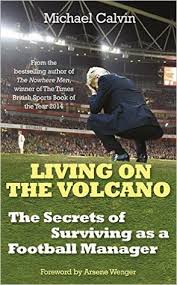
7) ‘Living on the Volcano: The Secrets of Surviving as a Football Manager’ by Michael Calvin

Michael Calvin is modern footballer’s great chronicler.  He examines the less beautiful side of English football shining a light on the real life experiences of those who live and breath the game.  Living on the Volcano focuses on the stresses of football management – showing the cost, the emotion and the real lived experience of managers at almost every level of the game.  It is an interesting and enjoyable read that offers a unique perspective of the job we all love to try on a computer game.

The book does suffer from Calvin at times being a bit too close to some of the subjects.  Its hard not to get the sense that he lets the fact he grows to like many of his interviewees/subjects as people get in the way of his objectivity as a football journalist.

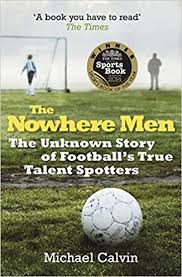
8) ‘The Nowhere Men’ by Michael Calvin

Before data, analytics and youtube, talent needed to be scouted. Calvin’s book offers a fascinating insight into the enclosed world of football scouts in the UK

It chronicles a profession teetering on the edge – slowly being replaced by technology (and those who use it) yet a profession that continues to prove that data alone can’t tell you everything.

Above all, the love of football some of the scouts who work for mileage only is amazing, inspiring and heart-breaking all at the same time.

roche   Race   Running with Fire   Nike

9) ‘Born to Ride’ by Stephen Roche

Very interesting and enjoyable book. A chronicle of a time when Irish cyclists ruled the world.  Roche really was some rider had an incredible career and I wish I had been older in 1987 to have been swept up in the Roche/Kelly era.  Roche’s book is well worth a read for any cycling fan.

As with all cycling books, the issue of drugs hangs over every story like a bad smell.  Roche does at least address the drugs controversy which emerged after he retired.  His position is not entirely convincing and it is very hard not to believe his accusers.  Roche may have been part of the problem, and is definitely not willing to be part of the solution, but his achievements should not be underesimated.  If he was clean, its doubtful there has ever been a greater Irish sportsman.

Hunger by Sean Kelly is a very good companion book to give Kelly’s perspective of days that Irish cycling will never see again.

10) ‘The Dirtiest Race in History’ by Richard Moore

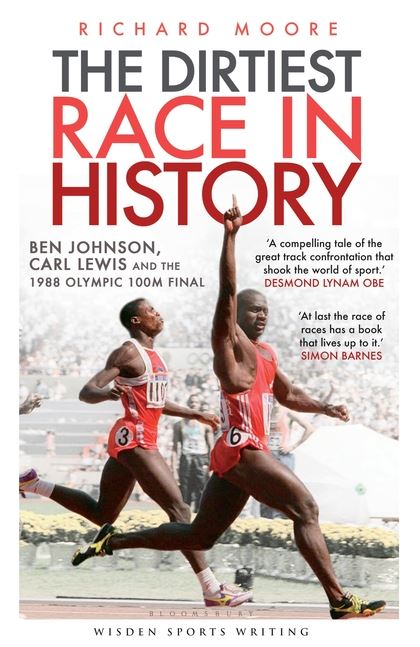
Moore is better known as a cycling journalist and writer.  Here, he moves away from cycling to the other sport dominated by drugs.  He crafts the story of the 1988 Olympic 100m final where Ben Johnson smashed the world record then dramatically failed a drug test.  Will there ever be another Olympic final where so many competitors had their legacies tarnished as the testers caught up with the cheats?

The book provides an in-depth look at Johnson’s rivalry with Carl Lewis and both of their journey’s to Seoul.  Johnson’s assertion that, while he was on lots of drugs, he never actually took the drug that the test found creates a bizarre and intriguing story.

It is well written, well researched and entertaining.  It provides an interesting look at drugs in sport in general – although Moore’s eagerness to believe in Team Sky over the years totally unfairly taints his comments on drugs in sport in my eyes.   Highly recommend.

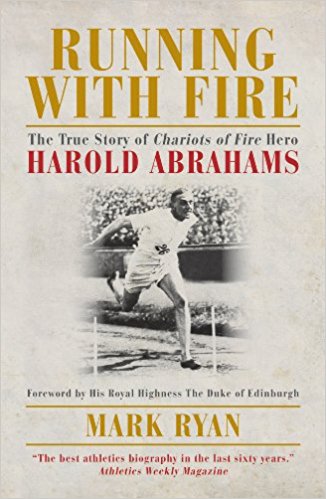
11) ‘Running with Fire: The True Story of Harold Abrahams’ by Manterrk Ryan 

Very enjoyable biography of the 100m Olympic gold medalist and legend of athletics officialdom. Charts the prejudice he faced for being Jewish, his fantastic athletic career and even more successful (and interesting) administration career after he retired.

A must read for any fans of Chariots of Fire.

12) ‘Shoe Dog’ by Phil Knight.

Every long lasting company needs its origin myth.  What is unusual is the founder telling his story so long after the fact. Shoe Dog is both a sports book and a business book.  It is much better than I would have expected.

Knight tells the story of the founding of Nike and its early years before it broke into the big time.  It ticks the usual boxes of near disaster, dramatic recovery and eventually incredible growth.

What becomes clear is that for Knight, the early years are where is heart remains. It is a loving reflection on the days before he became a bazillionaire and a love letter to Steve Prefontaine.

I would have liked it to go a little further and look at the signing of Jordan and the groundbreaking nature of that change for Nike and for sport.

Bowerman and the Men of Oregon by Kenny Moore is a great companion piece to round out the story of the technical genius that combined with Knight’s business brain to change the sporting world.



‘Where have all the Irish gone? The sad demise of Ireland’s once relevant footballers’ by Kevin O’Neill (2017)

It goes without question that no player on the current Irish national football team are likely to get signed by Juventus or Inter Milan. Or earn the nickname ‘God’ at a club that has won the European Cup. Or even smash the British transfer record.

Kevin O’Neill’s book, Where have all the Irish gone? The sad demise of Ireland’s once relevant footballers, starts with the important (to Irish football fans) question of why this is the case? Why do we not have players like Liam Brady, Robbie Keane, Paul McGrath, or Roy Keane?

Irish.jpg

O’Neill appears to be very similar to me – Ireland fan, child of the 80’s, who spends too much time thinking about the Ireland team. At times O’Neill is a bit too much like me in that passion may cloud serious analysis.

The answers to the central question – more competition in the Premier League and the total lack of investment in the Irish game/coaches aren’t rocket science but each is discussed in detail.

O’Neill could have done with better editing. The first few chapters jump around from diagnosing the causes of the problem to reliving the glorious past. The book jumps too much – with Liam Brady’s career, for example, talked about in two completely different segments. While parts of the nostalgia trip are enjoyable, it feels a bit too much like reading the wikipedia entries on the careers of Keane, Quinn etc. The chapters are reasonably long and paragraphs flow into each other in a way that jars. A few breaks for new segments would have helped put some structure on what can be a slightly rambling narrative.

brady2.png

The book is at its best in Chapter 3 and 4 when O’Neill interviews a series of people connected to the game who don’t normally get the spotlight shined on them – players who never made it and youth coaches in particular. These chapters add genuine insight in to the challenges for young Irish players and are the best part of the book.

When O’Neill turns his gaze to the FAI and the structures to improve the game, he makes a reasonably simple diagnosis – bring back Brian Kerr (most successful underage manager in our history and a man steeped in the Irish game). However, he then doesn’t point out anything that the man in the job, the wonderfully named Ruud Docktor, is actually doing wrong. It seems O’Neill would just feel more confident if Kerr had the job. While I agree its a disgrace that Kerr is not involved in some capacity with the FAI, I think its a bit too simplistic to point to him as such a major part of any solution. The comparisons to Iceland and Belgium are justified however.

kerr

The book turns to wistful nostalgia of days gone by – when kids played ball on the streets (is it better to be poor but have better footballers to cheer on?). O’Neill talks about some of the great South American players as examples of how street football (poverty?) helps create great players. In reality though, it should probably be pointed out that a continent with more than 400 million people where football is a very popular sport is likely to produce 100 great players for every 1 Irish star.

O’Neill’s passion for Irish football is evident and his worries are genuine. The book gives a good insight into the lives of those who made it and those who didn’t. It doesn’t offer too much in terms of where we should go (beyond Kerr and summer football) – its instead a realistic chronicling of the woes rather than much of a diagnosis for where to go from here.

The interviews in the book capturing many previous unheard voices make it a welcome addition to the library of football books in Ireland. However, I can’t help feeling there is a better book in there waiting to get out.

Brady

The good, the great and the gossipy – my favourite basketball books

I’m convinced that every sports fan has an era for each different sport that stands out as the time when they knew so much about the game. When that sport shone brighter than ever and that, when asked to name a favourite ever player, they return to. For many men, I suspect that age is early teens – for me it, it varies per sport a little but its basically the 90s.  In football, it was USA ’94, the Cantona years of the English Premiership, the Milan side of Baresi and Van Basten merging into the team of Desailly and Weah and great the Ajax side of 1995.  In cricket, it was the Ashes in the era when Australia couldn’t be beaten with the likes of  Glenn McGrath, Shane Warne and Ricky Ponting.  In Boxing it was Collins v Eubank in 1995 and Tyson’s post prison career.

In Basketball it was Channel 4’s decision in 1995 to start showing the NBA (three years after the same channel had introduced me to the wonders of 1990’s Serie A) although the 1992 Dream Team which an 8 year old me has bizarrely clear memories of had wet my appetite for some hoops.

nba.png

NBA on TV combined with NBA Jam on the Super Nintendo, the Atlanta Olympics and my own 3 game basketball career (one amazing game, one alright game, and one game so bad that I retired from the sport at age 12) meant that very briefly I really loved the NBA. The Bulls of Jordan’s second stint were the dominant team with Shaq led Orlando Magic also a particular favourite. Tim Hardaway, Karl Malone, Tim Duncan and Allan Inversion are the other names that immediately spring to mind. Its only in recent years, through spending a lot of time in the US (particularity during March Madness) and ESPN 30 for 30s that I have rekindled an interest in the sport.

So in reading basketball books I’ve very much been drawn to that era and those players. And in that era one man looms large over basketball and popular culture – Michael “Air” Jordan.  All of which is a long winded way of getting to my first book – Playing for Keeps: Michael Jordan and the World He Made by David Halberstam. Halberstram is a writer I found through this book and I fell in love with his work. I’ve seen Halberstam described as being to sports books what Robert Caro is to political biographies and Paul McGrath is to centre backs (i.e God basically) which I fully agree. He is simply a wonderful writer.

PfK

Playing for Keeps was written before Jordan retired for the second (but not final) time. The book is about Jordan, the phenomenon that was/is Michael Jordan, NBA of the 80s and 90s and the people in that world. Its as much about the impact of Jordan as it is about the actions of Jordan. Halberstram gives plenty of backstory on the various supporting players (Phil Jackson, Scottie Pippen, Dennis Rodman, Larry Bird, the wonderfully entertaining Pistons, just to name a few) to create a full, and compelling portrait of the Bulls and the NBA of the time. The Jordan that emerges is complex, headstrong, incredibly hard working and above all driven – driven perhaps like nobody before or since in any sport. Its a detailed, engrossing read and one that I would recommend to anybody.

My only criticism is that it reads at times a bit too much of a love letter about Jordan – although its hard to think of a sportsman who came to define his sport more than Jordan.  Like all Halberstam’s books it is wonderfully well written and tells as much about the society at the time (particularly the changing US attitudes to race) as it does the protagonist.

A very different book looking at the Jordon phenomenon is the gossipy and entertaining The Jordan Rules by Sam Smith. The book details the internal workings of the Chicago Bulls during the 1990/91 season as they won their first NBA Championship. Jordan doesn’t come across particularly well. Most surprising to me at least was his attitude to basketball – he seems to really just have wanted to retire and play golf.  There are definitely question marks over how accurate it is – the Fire and Fury of its day when the most famous man in America was thankfully just a sports star!  Its a very different book to Playing for Keeps written by a lesser writer (but who isn’t a lesser writer than Halberstram). But its enjoyable and entertaining.  Its not a classic, but its a fun read and a fascinating snapshot of nearly 30 years ago.

J r.jpg

Jordon looms large in another great basketball book covering the same era, Dream Team by Jack McCallum. Its an enjoyable book on the Dream Team from the 92 Olympics.  It really was some amazing collection of cultural icons with Magic, Micheal Johnson, Larry Bird and Charles Barkley among others.  McCallum had amazing access to the players both at the time and years later – including Jordan who seems to rarely talk to journalists for these type of books.  Brought back some great memories of watching the Barcelona Olympics as an 8 year old and loving both the Dream Team and the amazing multicoloured, Grateful Dead inspired, jerseys worn by recently independent Lithuania.

lith.jpg

A good insight into the players, their relationships with each other and the ultimate impact the team had on basketball.  McCallum recounts many entertaining behind-the-scenes stories of the Dream Teamers when they weren’t defeating their opponents by embarrassingly large margins. The backstage stuff is the value of the book – reading about a 40 point victory isn’t exactly thrilling.

One of the highlights is the coverage of “The Greatest Game that Nobody Ever Saw,” the infamous team practice match that Coach Chuck Daly organized at the team’s practice facility in Monte Carlo. The greatest collection of basketball players ever going at each other. McCallum goes play-by-play through this exhibition, and brings to life on the rare great sports moments you can’t find on youtube!

Moving from Jordon to his predecessor as the biggest star in sports – Magic Johnson – another classic is Showtime: Magic, Kareem, Riley, and the Los Angeles Lakers Dynasty of the 1980s by Jeff Pearlman.  I never liked the Lakers. I started watching the sport after the Showtime era and I can’t help feeling I may have liked them a lot more had I been a little older. Showtime covers the team that won five championships in a 9-year span. It tells the story of the great team led by Pat Riley that dominated the sport before the lulls of the 1990s and the return to the top under Phil Jackson.

sh

Pearlman has carved a bit of a niche in chronicling the bad guys in sport – with previous books Boys will be Boys and the Bad Guys Won covering the questionably behaved Cowboys and Mets.  His books are gossipy and entertaining – definitely more Jordon Rules than Playing for Keeps – and I love them. Pearlman does a great job of bringing the the 80’s era Lakers to life – from the beginning to the sad (but thankfully not tragic) end when Magic announced his HIV diagnosis. It is a very entertaining read which pulls no punches – a lot of drugs and a lot of women – through many interesting and sensational anecdotes. Who wants to read about a well behaved team after all?

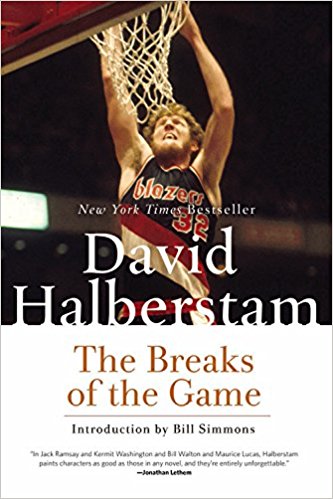
A number of the players who are veterans in Showtime also featured heavily in David Halberstram’s other basketball masterpiece Breaks of the Game.  Younger versions of Kareem and Jerry West are key players which makes this a fascinating companion piece with Showtime. That and the fact that the writing styles are very different – broadsheet vs tabloid to some degree (while both still excellent books). Breaks of the Game is one of the all time great sports books.  Halberstram follows the Portland Trail Blazers NBA team for a season in the 80s.  The book chronicles the teams slow decline rather than the earlier rise. At the heart of the book is Bill Walton, the supremely talented, politically active, white centre – a college legend whose pro career was more injury dominated than dominant on the court.

The book captured an era of change – the birth of the modern NBA. Magic and Bird were rookies, the NBA had swallowed the ABA and more and more black players were being signed and leading teams. The team and players are used as means to explore every aspect of NBA life – money, the strains of the season, injuries and most of all race. Simply wonderful writing and a fascinating study of America and pro sports at the time.

BoTG

Away from the pros, its arguable that even better books can be found – great books on high school hoops offer a slice of American life that is compelling, depressing and all to common.  Very recently I read the The Last Shot: City Streets, Basketball Dreams by Darcy Frey. First published in 1994, the book looks at Lincoln High School in Coney Island, New York – a deprived area that became heavily ghettoised from the 70’s on. The book focuses on 3 incoming high school seniors with huge potential and the possibility of college. The 4th star is a 14 year future NBA star Stephen Maybury.  Its a gritty and dark look at life in the projects and the depressing reality that only sport offers a potential escape to the lucky few. The book contains very little game by game action and highlights that the attempts to get a high enough mark in the SATs after years of educational neglect is a bigger challenge and far more important than any city or State title. The 2004 version contains an epilogue of where the players ended up which puts a new slant on the story.  Well written, thoughtful, compelling and insightful, it deserves its place on the list of greatest sports books.  last shot

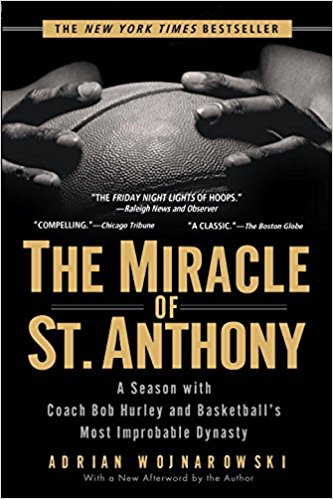
But there may be a high school book that sits above it in the pantheon – The Miracle of St. Anthony: A Season with Coach Bob Hurley and Basketball’s Most Improbable Dynasty by Adrian Wojnarowski.   I adore this book and am desperate to reread it once I figure out who I lent it to!  Wojnarowski follows legendary Coach Bob Hurley and his St. Anthony High School team through an incredible season.  Not only is the writing fantastic but the story is amazing.  Hurley is an old school coach who motivates through discipline but his loyalty to his players and his determination to improve their lives is inspiring.  The season plays out like a novel keeping the reader gripped as the life stories of the coach, the sisters who run the school and the players unfold.

st an

A number of the books above are due a reread, and there are a number of basketball books on the to-read pile – I plan to do individual blog posts for each book and eventually update / repost this.